

What Should Graduates Do If Their Academic Transcript Contains Incorrect Information?
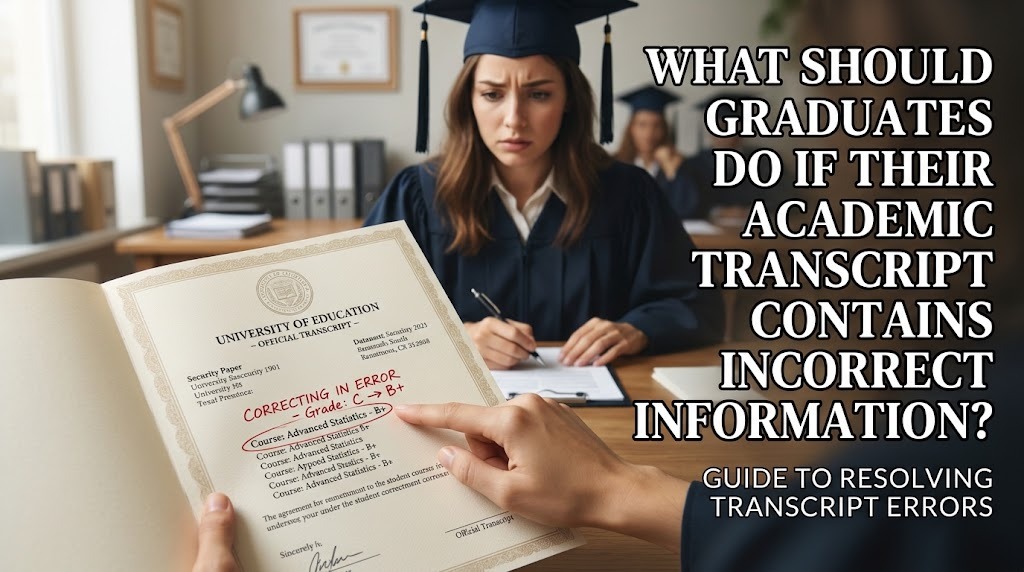
An academic transcript is an important official document that records a graduate's educational achievements throughout university studies. It contains essential information, including personal details, completed courses, academic grades, credit hours, and Grade Point Average (GPA). Graduates often need this document when applying for employment, scholarships, postgraduate education, and professional opportunities. However, mistakes in academic transcripts can sometimes occur because of administrative errors, inaccurate data entry, or incomplete academic records. When graduates discover incorrect information, they should take appropriate steps to request corrections and ensure that their official academic documents accurately represent their educational achievements.
IDENTIFYING AND CHECKING ERRORS IN THE ACADEMIC TRANSCRIPT
The first step graduates should take is carefully reviewing the academic transcript to identify any incorrect information. Common mistakes include misspelled names, incorrect student identification numbers, missing courses, inaccurate grades, and errors in credit hour calculations. Even small administrative mistakes can create difficulties when graduates use their transcripts for important applications.
Graduates should compare the information in their transcripts with previous semester grade reports, university academic records, and personal identification documents. They should also check whether the final GPA matches the results recorded by the university. Identifying the exact location and type of error makes it easier to explain the problem to the academic administration office. A careful review can also prevent graduates from submitting documents that contain inaccurate information.
CONTACTING THE UNIVERSITY'S ACADEMIC ADMINISTRATION OFFICE
After identifying an error, graduates should contact the university's academic administration office or the department responsible for issuing official transcripts. These offices generally manage student academic records and handle requests for document corrections. Graduates should explain the problem clearly and provide specific information about the incorrect details.
Communication can usually be conducted through an official email address, university student service center, or direct visit to the administration office. Graduates should avoid relying on unofficial communication channels because academic document corrections require proper administrative procedures. They should also ask about the required documents, processing time, and correction policies. Contacting the appropriate department early can help prevent unnecessary delays.
PREPARING SUPPORTING DOCUMENTS FOR CORRECTION REQUESTS
Universities generally require supporting documents before approving changes to academic transcripts. These documents help administrators verify whether the requested corrections are accurate and supported by official records. Common requirements may include a copy of the incorrect transcript, student identification information, identity card, previous grade reports, and an official correction request form.
If the error involves a course grade, graduates may need supporting evidence from the university's academic information system or the relevant lecturer's official records. For mistakes involving personal information, identity documents or previously registered student data may be necessary. Graduates should ensure that all submitted documents are clear, complete, and consistent. Preparing accurate supporting evidence can make the verification process more efficient and reduce the possibility of rejected requests.
SUBMITTING AN OFFICIAL REQUEST TO CORRECT ACADEMIC INFORMATION
Once the required documents are prepared, graduates should submit a formal correction request according to university regulations. Some institutions provide specific application forms, while others require graduates to submit written requests through the academic administration office. The request should explain the incorrect information, provide the correct details, and include supporting evidence.
Graduates should also keep copies of submitted documents and any application confirmation or reference numbers. These records can be useful when following up on the correction process. In some cases, the university may need to coordinate with lecturers, faculty administrators, or academic record management staff before approving changes. Graduates should follow the official procedure and avoid attempting to modify the transcript themselves because unauthorized alterations can affect the document's authenticity.
MONITORING THE CORRECTION PROCESS AND VERIFYING THE REVISED TRANSCRIPT
After submitting a correction request, graduates should monitor its progress through the university's official communication channels. Processing times can vary depending on the type of error, verification requirements, and administrative workload. If the process takes longer than expected, graduates can politely contact the responsible department to request an update.
Once the correction is approved, graduates should carefully review the revised academic transcript. They need to confirm that the corrected information is accurate and that no additional errors have appeared during document reissuance. It is also important to check whether the revised document contains the appropriate university authentication, such as an authorized signature, official stamp, or digital verification feature. Keeping the corrected version and following the university's instructions regarding the previous document can help prevent confusion when submitting academic records in the future.
PREVENTING FUTURE ERRORS IN OFFICIAL ACADEMIC DOCUMENTS
Although not every administrative error can be avoided, graduates can take several steps to reduce the risk of problems with their academic records. One useful practice is checking personal information and semester grades regularly through the university's academic information system. Reporting incorrect data before graduation can make the final transcript verification process easier.
Graduates should also maintain copies of semester grade reports, academic approval documents, and other relevant educational records. These documents can serve as supporting evidence if discrepancies appear in the final transcript. Before requesting official academic documents, graduates should ensure that all graduation requirements and academic records have been properly completed. Developing good document management habits can help protect important educational information and reduce future administrative difficulties.
CONCLUSION
Graduates who discover incorrect information in their academic transcripts should address the problem immediately through official university procedures. The necessary steps include identifying errors, contacting the academic administration office, preparing supporting documents, submitting a formal correction request, and verifying the revised transcript. Graduates should never modify official academic documents independently because this can compromise their authenticity and create further problems. By maintaining accurate educational records and communicating with the university through authorized channels, graduates can ensure that their academic transcripts correctly represent their qualifications and remain suitable for future employment and educational applications.
Recent Posts
Risiko Kuliah Cepat yang Perlu Dipertimbangkan... 19.11.2026/64 View

Bagaimana Cara Membangun Komunikasi yang Baik... 18.11.2026/76 View

Mengapa Keluarga Cemara Mengajarkan Arti Kebahagiaan... 18.11.2026/82 View

Mengapa Tradisi Keluarga Penting untuk Mempererat... 18.11.2026/82 View

Apa yang Membuat Keluarga Cemara Tetap... 18.11.2026/80 View
