

What Should Lecturers Prepare Before Attending an Academic Seminar?
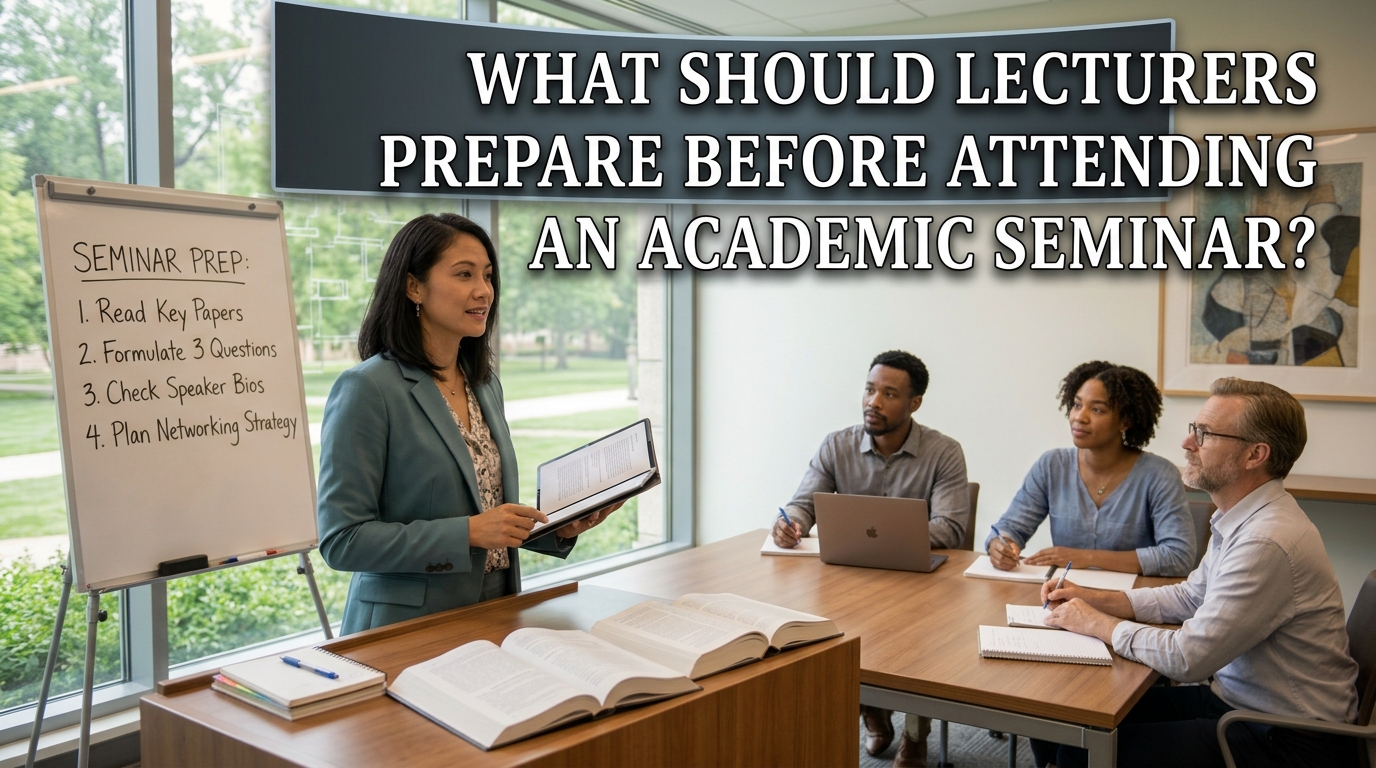
Attending an academic seminar is an important opportunity for lecturers to expand their knowledge, exchange ideas, and develop their professional skills. However, getting the most out of a seminar requires more than simply registering and showing up. Proper preparation helps lecturers understand the topics, participate in discussions, and build valuable academic connections. By preparing in advance, lecturers can make their seminar experience more productive and apply the knowledge they gain to teaching and research.
UNDERSTAND THE SEMINAR TOPIC AND OBJECTIVES
Before attending an academic seminar, lecturers should understand its main topic, objectives, and expected outcomes. Reading the event description helps them identify the issues that will be discussed and determine how the seminar relates to their academic interests. They should also review the speaker's background and become familiar with any important concepts mentioned in the program. This preparation makes it easier to follow presentations and understand complex information.
Lecturers can also identify specific questions they want the seminar to answer. For example, a seminar about educational technology may help them explore ways to improve digital learning activities. Having clear learning goals allows lecturers to focus on the most relevant information. Understanding the seminar objectives is the first step toward gaining practical value from the event.
REVIEW RELEVANT ACADEMIC MATERIALS
Reviewing relevant academic materials before a seminar can improve lecturers' understanding of the subject. They can read research articles, books, conference papers, or reliable academic publications related to the seminar topic. This background knowledge helps them recognize important arguments and connect new information with existing research. It also makes academic discussions easier to follow.
Lecturers do not need to read every available publication before attending. Instead, they should prioritize recent and credible sources that directly relate to the seminar's main subject. Taking brief notes about important findings, theories, or unanswered questions can also be useful. With adequate preparation, lecturers can participate more confidently and contribute informed perspectives.
PREPARE QUESTIONS AND DISCUSSION POINTS
Preparing questions is an effective way to participate actively in an academic seminar. Lecturers should identify issues they want to understand more deeply, especially those related to teaching methods, research findings, or challenges in higher education. Good questions are clear, relevant, and based on the seminar topic. They can help speakers explain difficult concepts or provide practical examples.
Lecturers may also prepare discussion points based on their own teaching or research experiences. For instance, they could ask how a research method applies to a particular academic field or how a teaching strategy can be adapted to different student needs. Preparing questions does not mean every question must be asked during the event. However, it encourages critical thinking, meaningful discussion, and active participation.
PREPARE PRESENTATION MATERIALS IF NECESSARY
Some academic seminars invite lecturers to present research findings, share teaching experiences, or contribute to panel discussions. In these situations, lecturers should prepare their presentation materials well before the event. Materials may include slides, research summaries, supporting data, and references to relevant publications. They should ensure that the content is accurate, logically organized, and appropriate for the intended audience.
A good presentation should communicate its main message clearly without overwhelming participants with too much text or unnecessary details. Lecturers should check spelling, figures, citations, and visual elements before submitting or presenting their work. Practicing the presentation can also help them manage their time and respond to questions. Well-prepared academic materials demonstrate professionalism and make research findings easier to understand.
CHECK THE SEMINAR SCHEDULE AND TECHNICAL REQUIREMENTS
Lecturers should review the seminar schedule, venue, registration instructions, and session times before the event. Knowing the agenda helps them identify important sessions and plan their participation accordingly. They should also check whether the seminar requires advance registration, identification, presentation submissions, or other documents. Preparing these requirements early can prevent unnecessary delays.
For online or hybrid seminars, lecturers should test their internet connection, microphone, camera, and access to the meeting platform. They should also prepare a suitable device, charger, and a quiet location if they are joining remotely. Keeping contact information for the organizer can help them resolve unexpected problems. Checking logistical and technical requirements allows lecturers to focus on learning rather than dealing with avoidable difficulties.
PREPARE A NOTE TAKING SYSTEM
Taking notes during an academic seminar helps lecturers remember important information and organize new ideas. They can use a notebook, a digital document, or a note-taking application, depending on their preferences. Notes should focus on key arguments, useful examples, research findings, and recommendations rather than copying every word spoken by the presenter. Organizing information by session or topic makes it easier to review later.
Lecturers should also record questions that arise during presentations and note any resources they want to explore afterward. If speakers share publications or links, these can be added to the notes for future reference. They should always respect any restrictions on recording or distributing seminar materials. An effective note-taking system supports knowledge retention and future academic application.
SET CLEAR LEARNING GOALS
Before attending a seminar, lecturers should decide what they want to achieve. Their goals might include learning a new research method, discovering innovative teaching strategies, understanding changes in academic policy, or finding potential research partners. Clear goals help them prioritize sessions and use their time effectively. They also provide a basis for evaluating whether the seminar was useful.
These goals should be realistic and relevant to the lecturer's responsibilities. For example, a lecturer who wants to improve research quality may focus on sessions about methodology, data analysis, or academic publication. After the seminar, they can compare what they learned with their initial objectives. Setting learning goals turns seminar attendance into a purposeful professional development activity.
PLAN TO BUILD ACADEMIC NETWORKS
Academic seminars offer opportunities to connect with lecturers, researchers, and experts from different institutions. Before attending, lecturers can review the list of speakers and participants if it is available. They should consider which professional connections may support their teaching, research, or academic interests. Preparing a short introduction about their expertise can make conversations easier.
During the event, lecturers can exchange contact details with people who share similar research interests. They may also discuss potential collaborations, joint publications, or future academic activities. Professional networking should focus on building genuine relationships rather than simply collecting contacts. Academic networking can create opportunities for collaboration and long-term professional growth.
FOLLOW UP AFTER THE SEMINAR
Preparation should continue even after the seminar ends. Lecturers should review their notes, organize useful resources, and identify the most important lessons from the event. They can then decide which ideas are relevant to their teaching, research, or academic responsibilities. This process helps turn newly acquired knowledge into practical improvements.
Lecturers may also contact speakers or other participants to continue discussions, request recommended reading, or explore collaboration opportunities. If the seminar provides certificates or learning materials, they should store them appropriately for future reference. Applying useful insights is more valuable than simply attending the event. Post-seminar follow-up helps ensure that the knowledge gained contributes to continued academic development.
CONCLUSION
Preparing before attending an academic seminar helps lecturers participate more effectively and gain greater professional value from the experience. Important steps include understanding the topic, reviewing academic materials, preparing questions, checking technical requirements, and setting clear learning goals. Lecturers who will present research should also prepare accurate and well-organized materials.
In addition, taking useful notes, building academic networks, and following up after the event can strengthen the benefits of seminar participation. With careful preparation and active engagement, lecturers can expand their knowledge, improve their teaching and research practices, and develop meaningful professional relationships. Academic seminars become more valuable when lecturers approach them with clear objectives and a willingness to learn.
Recent Posts

Bagaimana Sistem SKS pada Program Kuliah... 22.11.2026/49 View

How Does Technology Make Daily Evaluation... 21.11.2026/76 View

Apa Strategi Menghadapi Kesenjangan antara Kompetensi... 21.11.2026/78 View

Mengapa Inventaris Aset Penting bagi Kelancaran... 21.11.2026/74 View

When Should Musicians Join a Record... 21.11.2026/78 View
