

What Should Students Prepare Before Semester Evaluation?
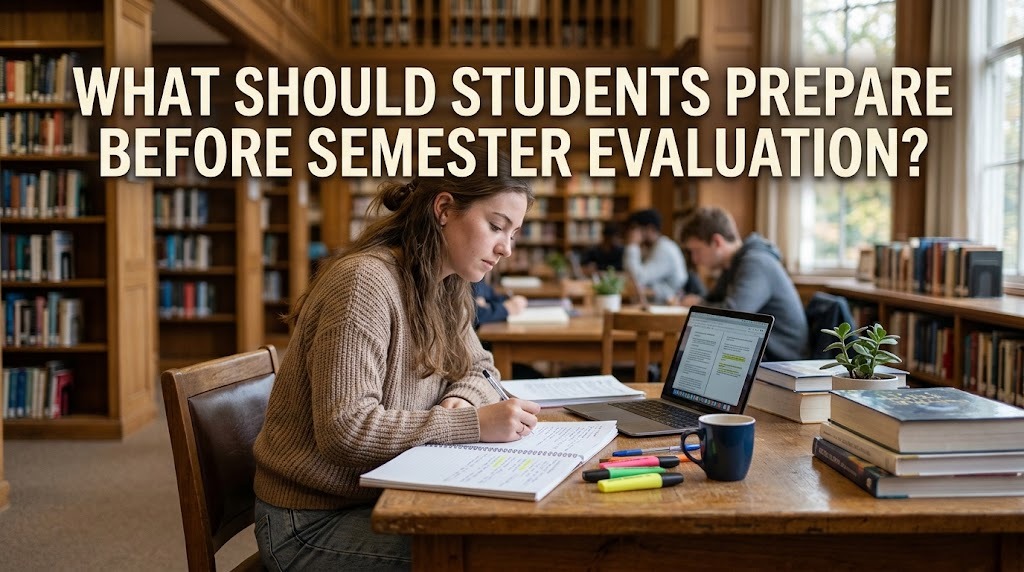
Preparing for a semester evaluation is an important step toward achieving better academic results. Students need to review their lessons, organize study materials, manage their time, and maintain good physical and mental health before taking examinations or completing other assessments. Proper preparation helps students understand the material more effectively and feel more confident when facing different types of questions. With a clear study plan and consistent effort, students can reduce unnecessary stress and improve their learning performance.
REVIEW ALL LEARNING MATERIALS
One of the most important preparations before semester evaluation is reviewing the learning materials covered throughout the semester. Students should revisit textbooks, classroom notes, assignments, presentations, and worksheets provided by their teachers. Reviewing these materials helps refresh their memory and identify concepts that may have been forgotten. Students should pay particular attention to topics that were difficult to understand during regular lessons.
Instead of memorizing every sentence, students should focus on understanding the main ideas and how different concepts relate to one another. Creating short summaries can make complicated information easier to remember. Students can also use mind maps, diagrams, or simple explanations in their own words to reinforce understanding. Regular review is generally more effective than trying to study everything in one long session immediately before an examination.
CREATE AN EFFECTIVE STUDY SCHEDULE
A study schedule helps students organize their preparation and allocate enough time for each subject. Before semester evaluation, students should identify examination dates, assessment requirements, and subjects that need the most attention. They can then divide their available study time into manageable sessions. A realistic schedule also helps prevent students from spending too much time on one subject while neglecting others.
Students should prioritize difficult topics without ignoring subjects they already understand. Short breaks between study sessions can help maintain concentration and reduce mental fatigue. It is also useful to include time for practice questions and reviewing previous mistakes. By following a consistent schedule, students can prepare gradually and avoid the pressure of last-minute studying.
UNDERSTAND THE EXAMINATION FORMAT AND REQUIREMENTS
Students should understand the format of their semester evaluation before beginning intensive preparation. Assessments may include multiple-choice questions, essays, practical examinations, presentations, projects, or a combination of different methods. Each format requires a different preparation strategy, so knowing what to expect can make studying more focused. Students should ask their teachers for clarification if the instructions or assessment criteria are unclear.
They should also check the examination schedule, required materials, submission deadlines, and any applicable school rules. For written examinations, students can practice answering questions within a specific time limit. For practical assessments or presentations, they should rehearse the required procedures and organize supporting materials in advance. Understanding the requirements helps students avoid preventable mistakes and concentrate on demonstrating their knowledge.
PRACTICE QUESTIONS AND REVIEW PREVIOUS MISTAKES
Practicing questions is an effective way to prepare for semester evaluation because it helps students apply what they have learned. Students can work through textbook exercises, teacher-provided worksheets, practice tests, and previous assignments. These activities help them become familiar with different question styles and identify topics that require additional practice. Practice also improves their ability to explain concepts and solve problems independently.
After completing each exercise, students should review their answers carefully. Understanding why an answer is incorrect is often more valuable than simply checking the final score. They should identify recurring mistakes, revisit the relevant lessons, and try similar questions again. This process strengthens understanding and helps students develop better problem-solving skills before the actual evaluation.
PREPARE STUDY TOOLS AND LEARNING RESOURCES
Having organized study tools makes preparation more convenient and efficient. Students should gather their textbooks, notebooks, stationery, calculators when permitted, and other resources required for studying. Keeping materials in one place reduces the time spent searching for important notes. Digital resources, such as educational videos and learning applications, can also help explain difficult concepts when used appropriately.
However, students should choose resources that match their learning objectives and are reliable. Using too many applications or switching between unrelated materials can create distractions. It is better to focus on a few useful resources and compare them with information provided by teachers. Before examination day, students should also prepare any permitted equipment and confirm that they understand the rules governing its use.
MAINTAIN PHYSICAL AND MENTAL HEALTH
Good physical and mental health can support concentration, memory, and learning performance during semester evaluation. Students should get sufficient sleep, eat balanced meals, drink enough water, and include appropriate physical activity in their routines. Staying awake all night to study may reduce alertness and make it harder to recall information. A healthy routine allows the brain and body to function more effectively during preparation and examinations.
Students should also manage stress by taking breaks, practicing relaxation techniques, and setting realistic expectations. Feeling nervous before an assessment is normal, but excessive worry can interfere with concentration. Talking to teachers, parents, or trusted friends may help students manage their concerns. Maintaining a balanced routine allows them to approach the evaluation with a clearer mind and greater confidence.
ASK FOR HELP AND STUDY WITH OTHERS
Students should seek help when they encounter topics they cannot understand independently. Teachers can clarify difficult concepts, explain assessment expectations, and recommend additional exercises. Asking questions early gives students more time to address learning gaps before semester evaluation begins. Students should not wait until the final day to seek clarification about important topics.
Studying with classmates can also provide useful opportunities to exchange explanations and compare problem-solving methods. Group discussions allow students to learn from different perspectives and identify misunderstandings. However, group study should remain focused on learning rather than unrelated conversations. Students should still practice answering questions independently to ensure that they can demonstrate their own understanding during the evaluation.
ORGANIZE EXAMINATION DAY PREPARATIONS
Preparing for examination day helps students avoid unnecessary problems and arrive ready to complete their assessments. They should confirm the examination date, starting time, location, and any instructions provided by the school. Required stationery, identification documents, and other permitted materials should be prepared in advance. Students should also plan their journey to school so they can arrive on time without rushing.
The night before the examination, students should review important summaries rather than attempting to learn every topic from the beginning. Getting enough sleep is more beneficial than staying awake for excessive last-minute study. In the morning, students should eat appropriately, check their belongings, and leave with sufficient time to reach the examination location. These simple habits can reduce stress and help them focus on answering questions carefully.
CONCLUSION
Students should prepare for semester evaluation by reviewing learning materials, creating a realistic study schedule, understanding assessment requirements, and practicing questions. They should also organize learning resources, maintain their health, seek help when necessary, and prepare everything needed for examination day. Consistent preparation is generally more effective than studying at the last minute. By combining effective study habits with sufficient rest and a positive mindset, students can approach semester evaluation with greater confidence and improve their academic performance.
Recent Posts

Bagaimana Sistem SKS pada Program Kuliah... 22.11.2026/60 View

How Does Technology Make Daily Evaluation... 21.11.2026/87 View

Apa Strategi Menghadapi Kesenjangan antara Kompetensi... 21.11.2026/85 View

Mengapa Inventaris Aset Penting bagi Kelancaran... 21.11.2026/83 View

When Should Musicians Join a Record... 21.11.2026/87 View
