

What Skills Are Needed to Succeed in the Future of the Industrial Revolution?
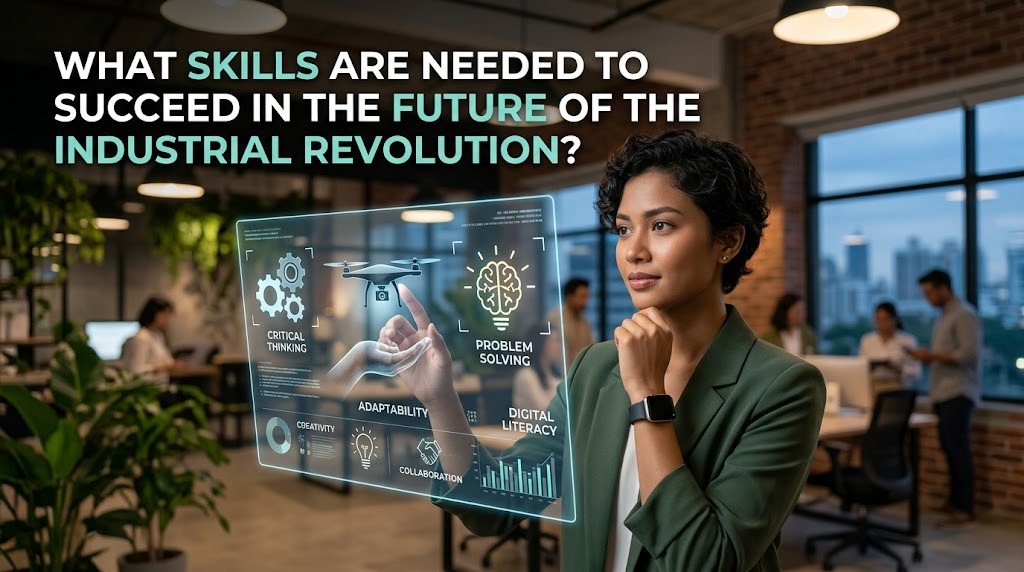
The Industrial Revolution continues to transform the way people work, communicate, and develop their careers. Advances in artificial intelligence, robotics, automation, and digital technology are changing the skills required in many industries. Jobs that once depended mainly on manual tasks increasingly involve computers, intelligent machines, and data-driven systems. As a result, workers need to develop relevant abilities to remain competitive and adapt to changing workplace demands.
Succeeding in the future of the Industrial Revolution requires more than technical knowledge. People also need critical thinking, creativity, communication, and the ability to learn continuously. These skills help workers solve problems, collaborate with others, and respond to technological changes. By combining digital literacy with human capabilities, individuals can prepare for new employment opportunities and build sustainable careers in an increasingly technology-driven economy.
DIGITAL LITERACY AND TECHNOLOGICAL COMPETENCE
Digital literacy is one of the most important skills for the future of the Industrial Revolution. It involves understanding how to use digital devices, software, online platforms, and information systems effectively and responsibly. As businesses adopt automation and digital workflows, employees increasingly need to work with computers, digital documents, online collaboration tools, and specialized applications. These abilities can improve productivity and make it easier to adapt to modern workplace requirements.
Beyond basic computer skills, workers may need knowledge of artificial intelligence, cloud computing, cybersecurity, and data management, depending on their occupations. For example, an administrative employee may use AI-assisted tools to organize information, while a manufacturing technician may operate computer-controlled machinery. People do not necessarily need to become programmers to benefit from technology, but they should understand how digital systems work and recognize their limitations. Developing digital literacy through courses, practical projects, and regular practice can help individuals remain prepared for technological change.
CRITICAL THINKING AND PROBLEM-SOLVING SKILLS
Critical thinking and problem-solving are essential because technology cannot independently resolve every workplace challenge. Employees must evaluate information, identify the causes of problems, compare possible solutions, and make reasonable decisions. In modern industries, workers may need to interpret reports, investigate production errors, or determine whether information generated by an AI system is accurate. These responsibilities require careful judgment rather than simply following instructions.
Problem-solving also helps employees respond to unexpected situations. For example, a factory technician may need to investigate why a machine is operating inefficiently, while a business analyst may identify reasons for declining sales. Both situations require logical reasoning, attention to detail, and the ability to consider different explanations. People can strengthen these skills by practicing case studies, asking thoughtful questions, analyzing evidence, and reflecting on the results of their decisions. Strong critical thinking enables workers to use technology more effectively and avoid relying on automated recommendations without proper evaluation.
CREATIVITY AND INNOVATION
Creativity and innovation are valuable skills in an economy increasingly influenced by automation. Machines can perform many repetitive tasks, but identifying new opportunities and developing original ideas often requires human imagination and an understanding of people's needs. Creative workers can help businesses design better products, improve services, and discover more effective ways to complete tasks. Innovation can also help organizations respond to changing customer expectations and market conditions.
For example, a marketing professional may develop a new campaign using customer insights, while an engineer may design a product that uses fewer materials. Entrepreneurs can combine digital tools with creative thinking to establish new businesses or improve existing services. Creativity does not always require inventing something completely new; it can also involve improving an existing process or finding a simpler solution to a familiar problem. People can develop this ability by exploring different perspectives, experimenting with ideas, and learning from mistakes. Combining creativity with technical knowledge can create valuable opportunities in future industries.
COMMUNICATION AND TEAMWORK
Although industrial technology continues to advance, communication and teamwork remain important in almost every profession. Employees often need to explain ideas, share information, coordinate tasks, and work with people from different backgrounds. Clear communication reduces misunderstandings and helps teams complete projects more efficiently. These skills are especially important when technical employees must explain complex information to colleagues, managers, or customers who have different levels of expertise.
Modern workplaces may also involve remote collaboration through video meetings, shared documents, and project management platforms. Workers need to communicate professionally online, provide constructive feedback, listen carefully, and manage disagreements respectfully. Teamwork is equally important because many industrial projects require cooperation among engineers, designers, technicians, data specialists, and business managers. Employees who combine technical competence with strong interpersonal skills can contribute more effectively to shared goals. Developing these abilities through group projects, presentations, workplace experience, and professional networking can improve long-term career prospects.
ADAPTABILITY AND LIFELONG LEARNING
Adaptability and lifelong learning are essential because industrial technology and job requirements continue to change. Skills that are valuable today may need to be updated as companies introduce new software, machines, and working methods. Employees who are willing to learn can adjust more effectively when their responsibilities change or when new opportunities emerge. Adaptability also helps people remain productive during organizational changes and unexpected challenges.
Lifelong learning can take many forms, including online courses, professional certifications, vocational training, workshops, and practical projects. Workers should identify the skills most relevant to their current occupations and future career goals instead of trying to learn every new technology. For example, a business professional may study data analysis, while a technician may learn to maintain automated equipment. Regularly reviewing personal progress can help identify knowledge gaps and establish realistic learning priorities. A willingness to receive feedback and improve over time can make individuals more resilient in a changing labor market.
DATA ANALYSIS AND ARTIFICIAL INTELLIGENCE SKILLS
The growth of artificial intelligence and data-driven decision-making has increased the value of data analysis skills. Businesses collect information about production, customers, sales, logistics, and operational performance. Employees who can interpret this information may help organizations identify trends, improve efficiency, and make better decisions. Basic data literacy includes understanding charts, comparing figures, recognizing patterns, and distinguishing reliable evidence from misleading conclusions.
Knowledge of AI tools is also becoming useful across many occupations. Employees can learn to use these tools to summarize information, generate ideas, organize tasks, or assist with routine analysis. However, AI-generated results may contain errors or reflect limitations in the available data. Workers must therefore verify important information, protect confidential data, and understand when human judgment is necessary. More specialized roles may require programming, statistical analysis, machine learning, or database management. By developing appropriate data and AI skills, individuals can increase their ability to contribute to technology-driven workplaces.
CONCLUSION
Succeeding in the future of the Industrial Revolution requires a balanced combination of technical and human skills. Digital literacy, critical thinking, creativity, communication, adaptability, and data analysis can help individuals respond to changing workplace demands. These abilities are valuable because modern industries need workers who can use technology effectively while making sound decisions and collaborating with others.
Preparing for the future does not mean mastering every new technology at once. Individuals should focus on skills relevant to their career goals, practice them consistently, and remain open to learning throughout their professional lives. Educational institutions, employers, and governments can support this process through accessible training and practical learning opportunities. By investing in continuous development, workers can improve their career prospects and contribute to a more innovative and productive economy.
Recent Posts

Bagaimana Sistem SKS pada Program Kuliah... 22.11.2026/50 View

How Does Technology Make Daily Evaluation... 21.11.2026/80 View

Apa Strategi Menghadapi Kesenjangan antara Kompetensi... 21.11.2026/79 View

Mengapa Inventaris Aset Penting bagi Kelancaran... 21.11.2026/75 View

When Should Musicians Join a Record... 21.11.2026/80 View
