

What Skills Can Lecturers Gain Through Professional Training Programs
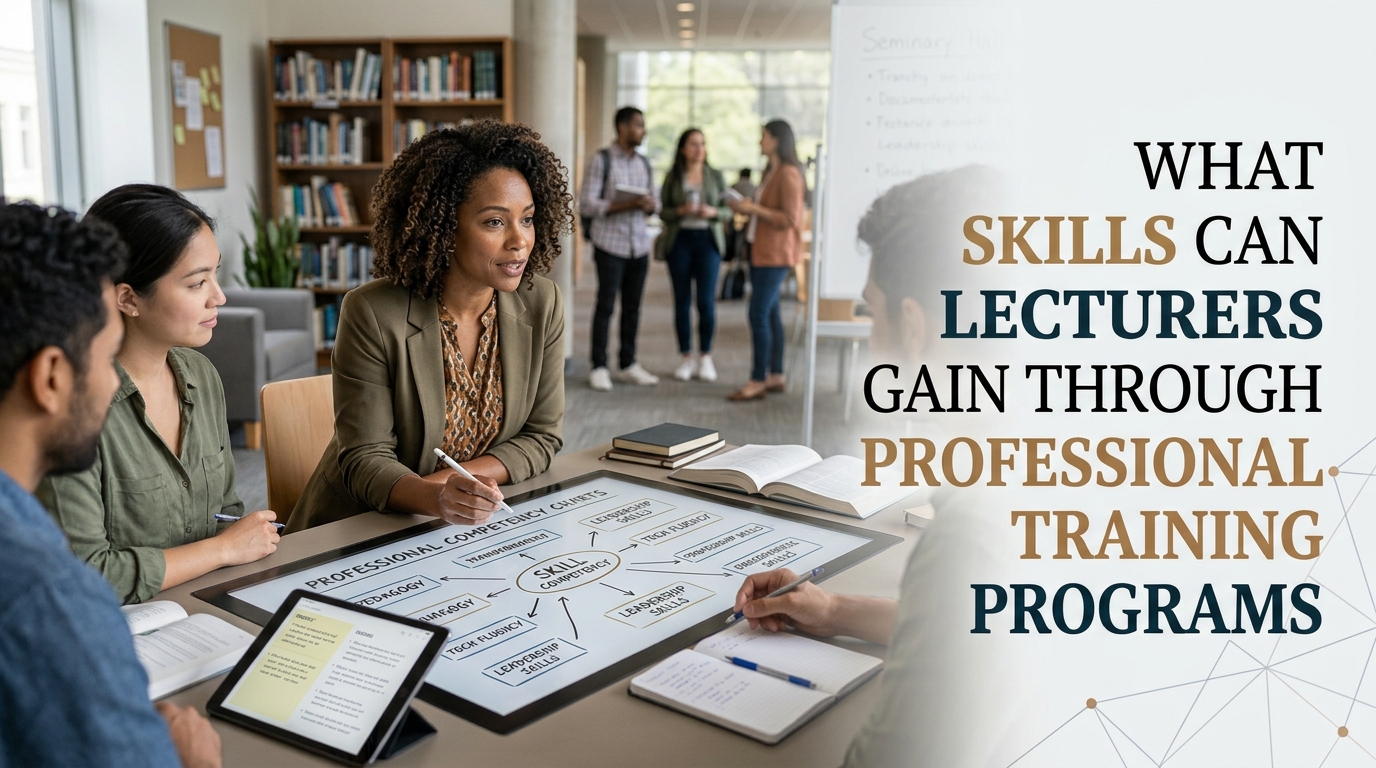
Professional training programs play an important role in helping lecturers improve their abilities and maintain high teaching standards. In higher education, lecturers are expected to deliver effective lessons, conduct research, guide students, and adapt to changes in educational technology. These responsibilities require more than subject knowledge alone. Professional training helps lecturers develop practical skills, strengthen their academic competencies, and improve their overall performance. By participating in relevant training programs, lecturers can become better prepared to meet the needs of modern education.
TEACHING AND PEDAGOGICAL SKILLS
One of the main skills lecturers can gain through professional training is pedagogical competence. This skill involves understanding how students learn, designing effective lessons, and choosing suitable teaching methods. Training programs can introduce lecturers to active learning, group discussions, project-based learning, and problem-solving activities. These methods encourage students to participate instead of simply listening to explanations. As a result, lecturers can create learning experiences that are more engaging and relevant.
Professional training also helps lecturers evaluate whether their teaching methods achieve the intended learning outcomes. They can learn to prepare clear lesson plans, organize course materials, and adjust explanations to suit different levels of understanding. Effective teaching requires the ability to communicate complex information in a simple and structured way. With stronger pedagogical skills, lecturers can support students in developing knowledge, confidence, and independent thinking.
COMMUNICATION AND PRESENTATION SKILLS
Communication skills are essential for lecturers because they need to explain academic concepts, lead discussions, and provide feedback. Professional training can help lecturers improve their speaking, listening, questioning, and presentation techniques. They can learn how to organize information logically and use examples that make difficult subjects easier to understand. These abilities are valuable in classrooms, academic meetings, seminars, and conferences. Clear communication also reduces misunderstandings between lecturers and students.
Training can also strengthen interpersonal communication and conflict management. Lecturers may encounter students with different opinions, learning needs, and communication styles. Learning to listen actively and respond respectfully helps lecturers create a more supportive academic environment. Good communication builds trust and encourages students to participate more confidently. These skills can also improve collaboration with colleagues and other educational professionals.
DIGITAL LITERACY AND TECHNOLOGY SKILLS
Modern education increasingly uses digital platforms and online learning resources. Through professional training, lecturers can develop digital literacy and learn to use educational technology more effectively. Training may cover learning management systems, video conferencing applications, interactive presentations, and online assessment tools. Lecturers can also learn to organize digital materials and manage virtual classrooms. These skills help them deliver learning activities in both face-to-face and online environments.
Professional development can also introduce lecturers to artificial intelligence tools and other emerging technologies. Lecturers need to understand their benefits, limitations, and appropriate uses in education. They should be able to evaluate digital information, protect student data, and follow academic integrity policies. Technology skills are most valuable when they improve learning rather than simply add digital features to a lesson. With proper training, lecturers can choose tools that match their teaching objectives and students' needs.
RESEARCH AND ACADEMIC WRITING SKILLS
Professional training programs can help lecturers strengthen their research skills. These skills include identifying research problems, reviewing academic literature, developing research questions, and selecting suitable methods. Lecturers may also learn how to collect and analyze data systematically. This knowledge supports the development of research that contributes to academic understanding and practical solutions. Strong research skills are particularly important for lecturers who want to remain active in their academic fields.
Training in academic writing can also help lecturers communicate their findings more clearly. They can learn how to structure research papers, cite sources correctly, avoid plagiarism, and prepare manuscripts for scholarly publication. Some programs also cover research ethics and responsible data management. Good research and writing skills improve the quality, credibility, and visibility of academic work. These competencies can support lecturers in contributing to scientific discussions and developing their professional careers.
ASSESSMENT AND EVALUATION SKILLS
Lecturers need assessment skills to measure student learning accurately and fairly. Professional training can teach them how to design examinations, assignments, presentations, and practical assessments that match learning objectives. They can also learn to develop clear grading criteria and use rubrics to improve consistency. These methods help students understand what is expected of them. Effective assessment measures not only what students remember but also how well they understand and apply knowledge.
Training can also improve lecturers' ability to provide constructive feedback. Instead of focusing only on mistakes, lecturers can explain what students have done well and how they can improve. Digital assessment tools may help organize results and identify learning difficulties, provided they are used appropriately. Lecturers can then use assessment findings to improve their teaching strategies. This process supports continuous improvement for both educators and students.
LEADERSHIP AND TEAMWORK SKILLS
Lecturers often take part in curriculum development, research projects, academic committees, and institutional activities. Professional training can help them develop leadership skills, including decision-making, delegation, problem-solving, and team coordination. These abilities are useful when lecturers lead academic projects or manage collaborative learning activities. Training can also help them understand how to set goals, distribute responsibilities, and evaluate progress. Strong leadership supports more organized and productive academic work.
Teamwork is equally important because higher education depends on cooperation among lecturers, researchers, administrators, and students. Professional development activities can improve collaboration, negotiation, and conflict resolution. Lecturers can learn how to exchange ideas, respect different perspectives, and work toward shared objectives. Effective teamwork encourages knowledge sharing and strengthens the academic community. These skills can also help lecturers contribute to institutional development and educational innovation.
TIME MANAGEMENT AND PRODUCTIVITY
Lecturers often balance teaching, grading, research, student consultation, and administrative responsibilities. Professional training can help them develop time management skills to organize these activities more effectively. They can learn to prioritize tasks, set realistic deadlines, and divide large projects into manageable steps. These techniques reduce unnecessary delays and help lecturers maintain consistent work routines. Better planning also makes it easier to allocate time for professional development.
Productivity training may introduce digital calendars, task management applications, and collaborative tools. However, productivity depends on more than using technology. Lecturers also need to recognize priorities, manage interruptions, and establish reasonable boundaries between work and personal time. Effective time management improves work organization without sacrificing the quality of teaching and research. These skills can help lecturers handle their responsibilities more sustainably.
CRITICAL THINKING AND PROBLEM-SOLVING SKILLS
Critical thinking helps lecturers analyze information, evaluate evidence, and make informed decisions. Professional training can introduce techniques for assessing arguments, identifying assumptions, and comparing possible solutions. These skills are useful when lecturers design lessons, review research findings, or respond to classroom challenges. They also help educators distinguish reliable evidence from unsupported claims. Critical thinking encourages lecturers to make decisions based on careful analysis rather than assumptions.
Problem-solving skills are equally valuable in changing educational environments. Lecturers may need to address low student participation, limited learning resources, or difficulties with digital platforms. Training can help them identify the main cause of a problem, consider alternatives, and evaluate possible outcomes. They can also learn to reflect on previous experiences and use feedback to improve their decisions. Together, these competencies support more flexible and thoughtful teaching practices.
ADAPTABILITY AND CONTINUOUS PROFESSIONAL DEVELOPMENT
Education continues to change as new research, technologies, and student needs emerge. Professional training helps lecturers develop adaptability, allowing them to respond to these changes more effectively. They can learn new teaching approaches, update their subject knowledge, and explore innovative learning resources. Adaptability is important because methods that work well in one situation may not be suitable in another. Lecturers need to evaluate their approaches and make adjustments when necessary.
Continuous professional development also encourages lecturers to reflect on their strengths and identify areas for improvement. They may participate in workshops, short courses, mentoring, conferences, or online learning programs. Choosing training that matches their professional goals makes development more practical and meaningful. A commitment to lifelong learning helps lecturers maintain relevant skills throughout their careers. It also enables them to contribute more effectively to the long-term quality of higher education.
CONCLUSION
Professional training programs help lecturers gain a wide range of skills, including teaching, communication, digital literacy, research, assessment, leadership, and time management. These competencies support better classroom experiences, stronger academic performance, and more effective collaboration. Training also prepares lecturers to adapt to educational changes and continue developing their professional abilities. The most effective programs combine relevant knowledge with practical activities that lecturers can apply directly to their work. By choosing appropriate training opportunities and applying what they learn, lecturers can improve their performance and contribute to higher-quality education.
Recent Posts

Bagaimana Sistem SKS pada Program Kuliah... 22.11.2026/45 View

How Does Technology Make Daily Evaluation... 21.11.2026/73 View

Apa Strategi Menghadapi Kesenjangan antara Kompetensi... 21.11.2026/75 View

Mengapa Inventaris Aset Penting bagi Kelancaran... 21.11.2026/71 View

When Should Musicians Join a Record... 21.11.2026/75 View
