

What Skills Can You Learn From Online Courses?
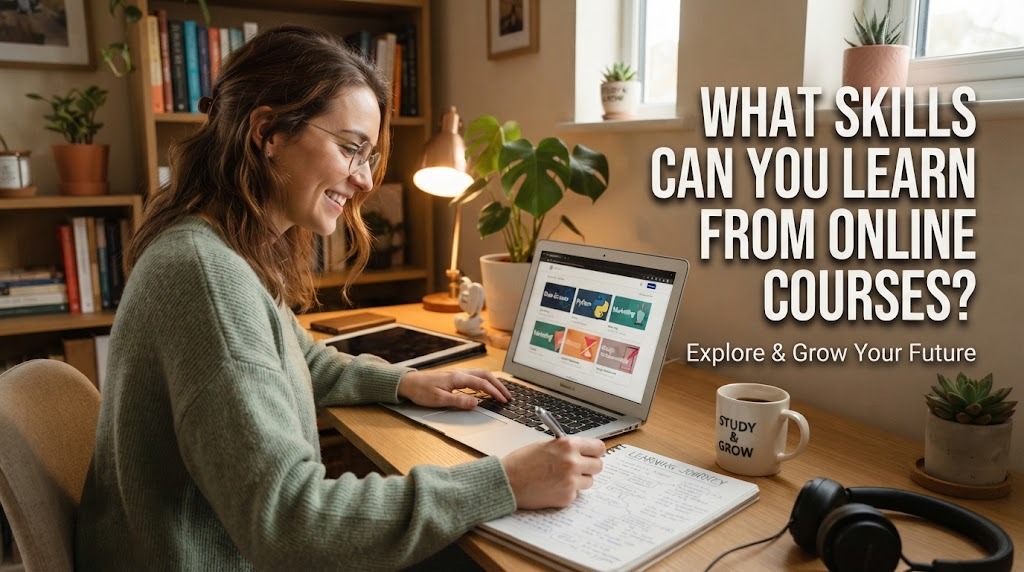
Online courses provide people with opportunities to learn new knowledge and develop useful skills through the internet. They are available for students, employees, job seekers, business owners, and anyone who wants to improve their abilities. Because online learning covers many different subjects, learners can choose courses that match their interests, education, or career goals. The skills gained from online courses can also be useful in everyday life and the workplace.
The learning experience can include videos, reading materials, practical assignments, quizzes, projects, and online discussions. Some courses focus on technical abilities, while others develop communication, business, creative, or personal skills. The results depend on the quality of the course and the learner's consistency. With regular practice, online courses can become an effective way to build valuable skills.
DIGITAL AND TECHNOLOGY SKILLS
Online courses can help learners develop a wide range of digital and technology skills. Common subjects include programming, web development, data analysis, cybersecurity, artificial intelligence, cloud computing, and digital tools. Beginners can start with basic concepts, while more advanced learners can study specialized topics that require previous knowledge. Practical exercises can help learners understand how technology is applied in real situations.
Digital skills are increasingly useful because technology is part of many modern workplaces. Employees may need to use productivity software, communication platforms, data systems, or specialized applications in their daily work. Students can also benefit from learning digital tools because these abilities can support academic projects and future careers. Developing technology skills can therefore improve a person's ability to adapt to a changing digital environment.
COMMUNICATION AND LANGUAGE SKILLS
Online courses can also improve communication and language skills. Learners can study English or other languages through lessons focused on vocabulary, grammar, listening, speaking, reading, and writing. Some programs also provide opportunities to practice conversations and receive feedback. These activities can help learners become more confident when communicating with other people.
Professional communication can be developed through courses in public speaking, presentation skills, business writing, negotiation, and interpersonal communication. These abilities are important because clear communication is needed in almost every profession. A person may have strong technical knowledge, but communicating ideas effectively can make that knowledge more useful. Better communication can also support teamwork, customer relationships, leadership, and professional networking.
BUSINESS AND ENTREPRENEURSHIP SKILLS
Business-related online courses can help learners understand how organizations operate and how businesses can be developed. Topics may include marketing, finance, sales, business strategy, management, customer service, and entrepreneurship. Learners can gain knowledge about planning, identifying customer needs, managing resources, and making business decisions. Practical case studies can help connect business theories with real situations.
Entrepreneurship courses can be especially useful for people who want to start or improve a small business. Learners may study how to develop business ideas, understand target customers, create marketing strategies, and manage basic finances. Online courses can provide a foundation before someone invests significant time or money into a business project. However, business success still requires practical experience, careful planning, and the ability to respond to market conditions.
CREATIVE AND DESIGN SKILLS
Creative online courses allow learners to develop skills in areas such as graphic design, photography, video editing, illustration, animation, and content creation. Many courses combine theoretical explanations with practical projects so that students can apply creative concepts directly. Learners can gradually improve their understanding of composition, typography, visual communication, editing techniques, and design principles. The completed projects can also become examples of their abilities.
Creative skills are valuable in many industries because businesses need visual content for websites, social media, advertisements, presentations, and digital products. Learning creative software can further increase a person's ability to produce professional work. Some learners use these skills for employment, while others use them for freelance projects or personal businesses. Creativity combined with technical knowledge can create more opportunities in the digital economy.
PROBLEM SOLVING AND CRITICAL THINKING SKILLS
Online learning can also support problem solving and critical thinking. Many courses require learners to analyze information, complete assignments, solve problems, and make decisions based on available evidence. These activities encourage students to understand a problem before choosing an appropriate solution. Over time, learners can become more comfortable evaluating information and considering different approaches.
Critical thinking is useful beyond the classroom because people make decisions every day. Students may need to evaluate information for academic assignments, while employees may need to identify problems and recommend solutions at work. Learning to question information, compare alternatives, and use logical reasoning can improve decision making. These abilities can complement technical skills and make learners more effective in different situations.
TIME MANAGEMENT AND SELF LEARNING SKILLS
Online courses can help learners develop time management because they often require students to organize their own study schedules. Learners need to decide when to watch lessons, complete assignments, review materials, and practice new skills. This can teach them how to set priorities and manage learning alongside work or other responsibilities. Developing a consistent study routine can make online learning more productive.
Online learning can also strengthen independence and self learning abilities. Without a teacher physically present in the same room, learners often need to take greater responsibility for understanding materials and finding additional information. They may need to review difficult lessons, research unfamiliar concepts, and practice independently. These habits can be valuable throughout life because continuous learning is increasingly important in education and professional development.
CONCLUSION
Online courses can help people develop many different skills, including digital abilities, communication, business knowledge, creative skills, critical thinking, problem solving, time management, and independent learning. The exact skills depend on the subject and level of the course. Learners can choose programs that match their personal interests, educational needs, or career goals.
The greatest benefit comes when learners do more than simply complete lessons. Applying new knowledge through practice, projects, and real situations can make the learning experience more meaningful. With the right course, consistent effort, and regular practice, online learning can become an effective way to develop skills for education, work, and long-term personal growth.
Recent Posts

Bagaimana Sistem SKS pada Program Kuliah... 22.11.2026/35 View

How Does Technology Make Daily Evaluation... 21.11.2026/69 View

Apa Strategi Menghadapi Kesenjangan antara Kompetensi... 21.11.2026/70 View

Mengapa Inventaris Aset Penting bagi Kelancaran... 21.11.2026/67 View

When Should Musicians Join a Record... 21.11.2026/69 View
