

What Skills Do You Need to Become a Professional Designer?
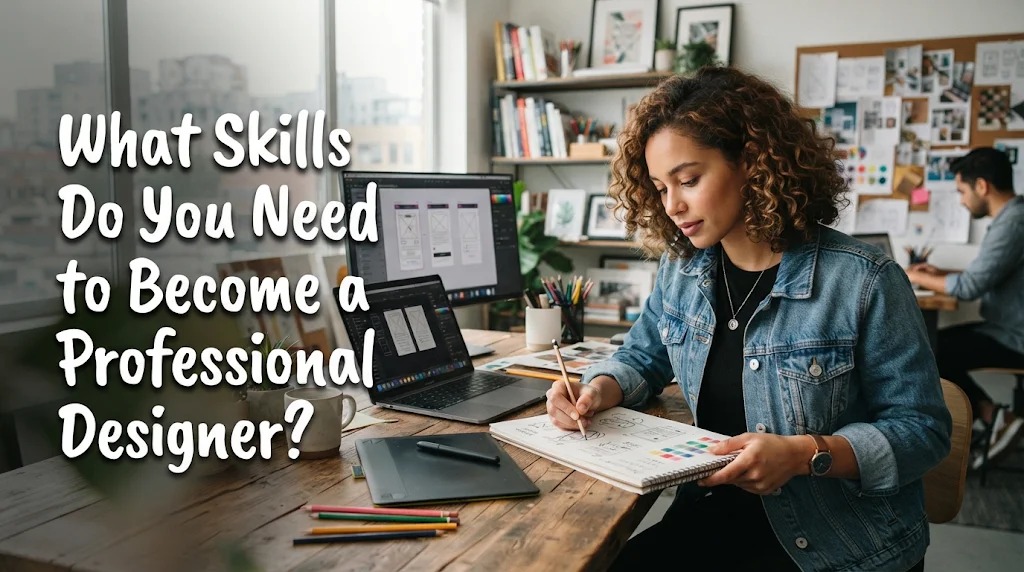
Becoming a professional designer requires more than having artistic talent or knowing how to create attractive images. Designers need a combination of creative thinking, technical knowledge, communication abilities, and problem-solving skills to produce effective designs. These abilities help them understand client expectations, develop original ideas, and create visual content that meets specific needs.
In the digital era, design skills are increasingly valuable across many industries. Companies need designers to create logos, websites, advertisements, social media content, illustrations, and other visual materials. Therefore, anyone who wants to pursue a career in design should understand the essential skills needed to succeed in this profession.
CREATIVITY AND IMAGINATION
Creativity is one of the most important skills for becoming a professional designer. It helps designers develop original ideas and create visual concepts that attract attention. Through creative thinking, they can transform simple ideas into designs that communicate specific messages effectively. Creativity also allows designers to explore different approaches when facing challenging projects.
Imagination helps designers consider various possibilities before starting their work. They can experiment with colors, shapes, layouts, and visual elements to produce distinctive results. However, creativity should always be combined with an understanding of the project's purpose and target audience. A successful design is not only visually attractive but also relevant and useful.
TECHNICAL SKILLS AND DESIGN SOFTWARE KNOWLEDGE
Professional designers need technical skills to turn their ideas into finished products. They should understand basic design principles, including composition, color theory, typography, balance, and visual hierarchy. These principles help create designs that look organized, readable, and consistent. Without a strong technical foundation, even creative ideas may be difficult to communicate effectively.
Knowledge of design software is also important in the modern design industry. Programs such as Adobe Photoshop, Adobe Illustrator, Figma, and Canva are commonly used for different design purposes. Designers should learn which tools are suitable for their projects and understand how to use their features efficiently. Practicing regularly can improve their technical abilities and help them work more confidently.
COMMUNICATION AND TEAMWORK
Communication skills help designers understand what clients, employers, and team members expect from a project. Before creating a design, they need to ask questions, listen carefully, and identify the main objectives. Clear communication can prevent misunderstandings and reduce unnecessary revisions. It also helps designers explain their creative decisions in a professional manner.
Teamwork is equally important because many design projects involve collaboration with marketers, developers, content creators, and other professionals. Each team member may have different responsibilities and perspectives. Designers must be willing to exchange ideas, accept suggestions, and coordinate their work with others. Good collaboration can produce better results and make project completion more efficient.
PROBLEM-SOLVING AND CRITICAL THINKING
Design is not simply about making something look beautiful. Professional designers must identify problems and develop visual solutions that meet specific requirements. For example, they may need to create a website layout that makes information easier to find or develop packaging that helps a product stand out. These tasks require careful analysis and the ability to consider different solutions.
Critical thinking helps designers evaluate whether their work achieves its intended purpose. They should consider the target audience, project limitations, available resources, and design objectives before making decisions. When a concept does not work as expected, they must be willing to review and improve it. This ability helps designers produce more effective and meaningful results.
TIME MANAGEMENT AND ADAPTABILITY
Professional designers often handle several projects with different deadlines and requirements. Therefore, time management is necessary to organize tasks, determine priorities, and complete work on schedule. Designers should create realistic work plans and divide large projects into smaller stages. Good time management also helps maintain productivity without sacrificing design quality.
Adaptability is important because design trends, software, and client expectations continue to change. Designers need to stay updated with new technologies and learn different techniques to remain competitive. They should also be open to feedback and willing to adjust their work when project requirements change. By developing adaptability and maintaining a willingness to learn, designers can build long-term careers in the creative industry.
CONCLUSION
Becoming a professional designer requires a combination of creativity, technical knowledge, communication, problem-solving, time management, and adaptability. These skills help designers create effective visual content, understand client needs, and work successfully with different teams. Although some abilities may develop naturally, most design skills can be improved through education, practice, and real project experience. By continuously learning and building a strong portfolio, aspiring designers can increase their opportunities and prepare themselves for a successful career in the design industry.
Recent Posts

How Does Technology Make Daily Evaluation... 21.11.2026/58 View

Apa Strategi Menghadapi Kesenjangan antara Kompetensi... 21.11.2026/60 View

Mengapa Inventaris Aset Penting bagi Kelancaran... 21.11.2026/56 View

When Should Musicians Join a Record... 21.11.2026/55 View

Daily Evaluation or Daily Planning Which... 21.11.2026/63 View
