

What Skills Does a Radio Announcer Need to Succeed in Broadcasting?
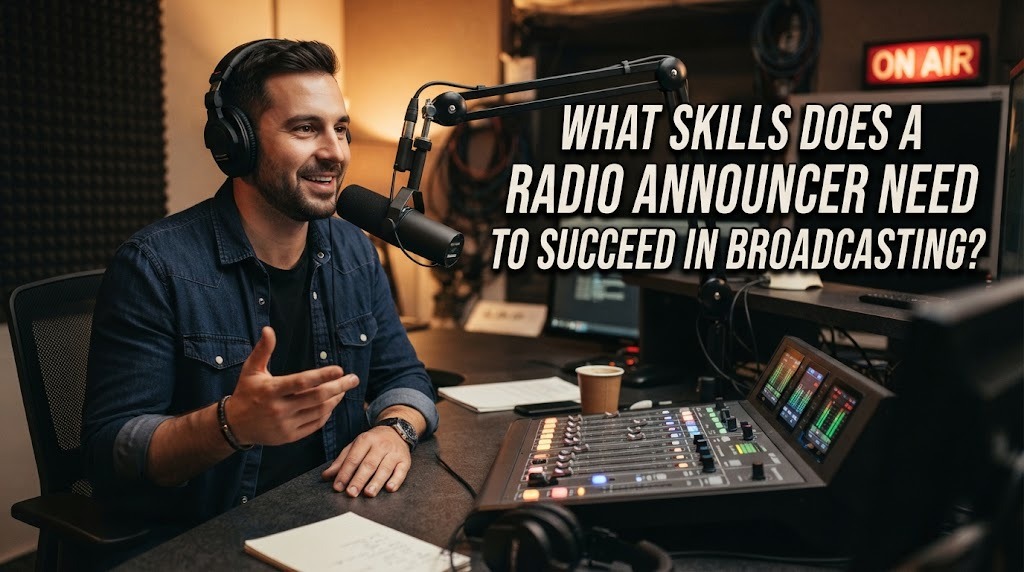
adio announcing is more than speaking into a microphone. A successful radio announcer needs a combination of communication, technical, creative, and interpersonal skills to keep listeners engaged. The announcer must be able to deliver information clearly while creating a comfortable and entertaining atmosphere.
As broadcasting continues to develop through digital radio, streaming platforms, and online audio content, radio announcers also need to adapt to changing audience habits. Strong communication skills remain essential, but additional abilities such as content creation, technology use, and audience interaction can make an announcer more competitive.
COMMUNICATION SKILLS
Communication is one of the most important skills for a radio announcer. Announcers must speak clearly, naturally, and confidently so listeners can easily understand every message. Good pronunciation, appropriate volume, and proper pacing help make spoken content more enjoyable to hear. Announcers also need to adjust their communication style depending on whether they are presenting news, entertainment, interviews, advertisements, or public information.
A good radio announcer should also know how to communicate without sounding as though they are simply reading a script. Natural expressions and conversational language can create a stronger connection with the audience. The ability to explain complicated information in simple words is particularly useful when discussing news or educational topics.
VOICE CONTROL AND PRONUNCIATION
Voice control plays an important role in creating a professional broadcasting style. Radio announcers need to understand how pitch, tone, rhythm, pauses, and volume influence the way a message is received. A pleasant and controlled voice can make listeners more comfortable and encourage them to continue listening. Proper pronunciation is also essential because radio relies heavily on audio rather than visual communication.
Announcers should practice breathing techniques and vocal exercises to maintain consistent voice quality. They also need to avoid speaking too quickly or too slowly. Effective pauses can emphasize important information and give listeners enough time to understand what has been said. These techniques become especially valuable during long broadcasting sessions.
PUBLIC SPEAKING CONFIDENCE
Confidence helps radio announcers perform smoothly, especially when speaking live. They may need to introduce songs, interview guests, respond to unexpected situations, or deliver information without extensive preparation. A confident announcer can remain calm even when something does not go according to plan. This confidence should sound natural rather than forced or exaggerated.
Public speaking skills can improve through regular practice. Announcers can record their voices, listen to their performances, and identify areas that need improvement. Practicing different topics can also help them become more comfortable speaking spontaneously. Over time, consistent practice can reduce hesitation and improve overall delivery.
ACTIVE LISTENING
Active listening is another important skill that is sometimes overlooked. Radio announcers need to listen carefully to guests, co-hosts, producers, callers, and other people involved in a broadcast. Good listening allows an announcer to respond appropriately instead of interrupting or giving unrelated answers. It is particularly important during interviews and interactive programs.
Listening skills also help announcers understand their audience. Feedback from listeners can reveal which topics, formats, and communication styles are most appealing. By paying attention to audience responses, announcers can improve their content and create programs that are more relevant to listeners.
INTERVIEWING SKILLS
Many radio programs include interviews with experts, public figures, artists, business owners, or members of the community. An announcer therefore needs to know how to prepare useful questions and guide a conversation. Good interview questions should be relevant, clear, and capable of encouraging meaningful answers. The announcer must also be able to ask follow-up questions based on what the guest says.
A successful interview should feel like a conversation rather than a rigid question-and-answer session. Announcers need to maintain the flow while making sure the discussion stays connected to the topic. They should also research their guests beforehand so they can provide accurate context and avoid unnecessary questions.
TECHNICAL BROADCASTING SKILLS
Radio announcers need basic technical knowledge to operate effectively inside a studio. They may work with microphones, headphones, audio mixers, playback systems, recording software, and broadcasting platforms. Understanding these tools can help announcers avoid technical mistakes during live programs. Basic knowledge of audio levels is also useful for maintaining clear and balanced sound.
Modern broadcasting increasingly involves digital technology. Some radio announcers may also need to understand online streaming, digital audio recording, social media platforms, and podcast production. Technical skills do not necessarily require an announcer to become an audio engineer, but basic familiarity can make daily broadcasting more efficient.
CONTENT CREATION AND CREATIVITY
Creativity helps radio announcers produce content that attracts and retains listeners. They may need to develop discussion topics, write introductions, create segments, prepare promotional messages, or develop ideas for audience interaction. Creative content can give a program its own identity and make it easier for listeners to remember.
An announcer should also understand how to adapt content to current audience interests without sacrificing accuracy. Humor, storytelling, interesting questions, music discussions, and relatable experiences can make a program more engaging. However, creativity should always be balanced with professionalism, especially when discussing sensitive or factual topics.
IMPROVISATION AND PROBLEM SOLVING
Live broadcasting can involve unexpected situations, such as technical problems, missing guests, schedule changes, or mistakes during a program. Radio announcers need improvisation skills to keep the broadcast moving while a problem is being resolved. They should be able to fill unexpected silence with relevant conversation or transition smoothly to another segment.
Problem-solving skills are equally important behind the microphone. An announcer may need to quickly adjust a script, change the order of content, or respond to unexpected information. Remaining calm is essential because panic can affect the quality of the broadcast. Good preparation combined with flexible thinking can help announcers handle these situations professionally.
SOCIAL MEDIA AND AUDIENCE ENGAGEMENT
Radio audiences increasingly interact with programs through social media and other digital platforms. Announcers can use these channels to promote programs, collect questions, share clips, and communicate with listeners. Understanding digital audience engagement can therefore strengthen the relationship between a broadcaster and its audience.
Social media skills can also help announcers build their professional identity. Short videos, audio clips, behind-the-scenes content, and informative posts can introduce an announcer to audiences beyond traditional radio. However, announcers should maintain professional communication and consider accuracy before sharing information publicly.
PROFESSIONALISM AND ADAPTABILITY
Professionalism is essential for building trust with listeners, colleagues, guests, and broadcasting organizations. Radio announcers should arrive prepared, respect schedules, follow broadcasting guidelines, and communicate responsibly. They also need to understand that their words can influence public perception, especially when discussing news, social issues, or other sensitive subjects.
Adaptability is equally important because the broadcasting industry continues to change. An announcer who is willing to learn new technology, formats, and audience engagement methods can remain relevant for a longer period. Continuous learning can also open opportunities in podcasting, digital media, voice-over work, and other forms of audio production.
CONCLUSION
A successful radio announcer needs more than a pleasant voice. Strong communication, voice control, public speaking confidence, active listening, interviewing, technical knowledge, creativity, improvisation, and digital skills all contribute to effective broadcasting. Professionalism and adaptability are also important because the industry continues to evolve.
Developing these skills requires consistent practice and a willingness to learn from experience. With good preparation and continuous improvement, beginners can build the abilities needed to become confident and professional radio announcers.
Recent Posts

Bagaimana Sistem SKS pada Program Kuliah... 22.11.2026/35 View

How Does Technology Make Daily Evaluation... 21.11.2026/69 View

Apa Strategi Menghadapi Kesenjangan antara Kompetensi... 21.11.2026/69 View

Mengapa Inventaris Aset Penting bagi Kelancaran... 21.11.2026/67 View

When Should Musicians Join a Record... 21.11.2026/68 View
