

What Skills Should Every Professional Homeroom Teacher Have?
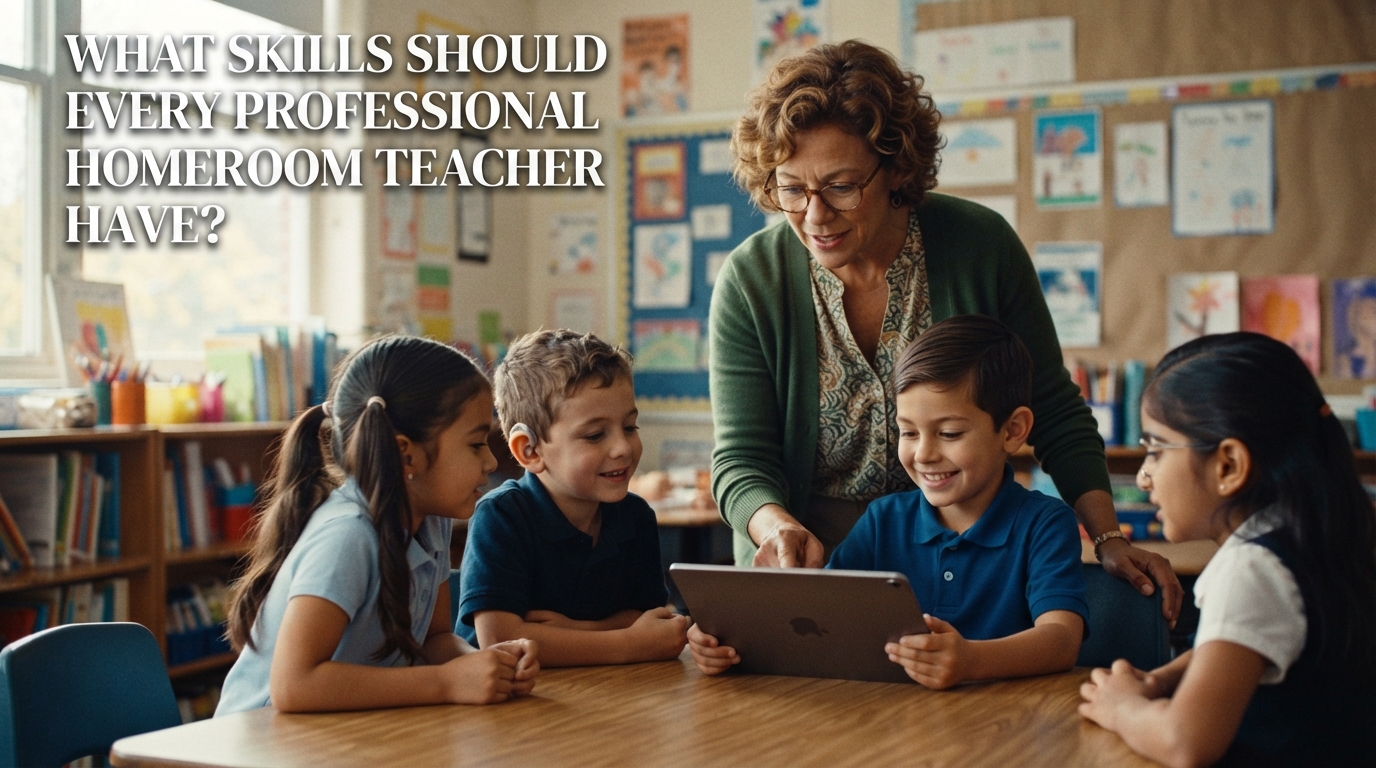
A professional homeroom teacher plays an important role in supporting students' academic achievement, personal development, and social well-being. Their responsibilities go beyond managing classroom activities and monitoring attendance. They must also understand students' individual needs, communicate with parents, solve classroom problems, and create a positive learning environment. These responsibilities require a combination of professional knowledge, practical abilities, and strong personal qualities.
To perform these duties effectively, homeroom teachers need several essential skills that help them guide students and handle different situations at school. These skills also enable teachers to build trust, make fair decisions, and support students in overcoming academic and personal challenges. Therefore, developing professional skills is an important step toward becoming a competent, responsible, and respected homeroom teacher.
1. EFFECTIVE COMMUNICATION SKILLS
Communication is one of the most important skills every professional homeroom teacher should have. Teachers need to communicate clearly with students, fellow teachers, school administrators, and parents. Good communication helps prevent misunderstandings and ensures that important information is delivered correctly. Homeroom teachers should also be able to listen carefully when students share their opinions, difficulties, or personal concerns. Effective communication creates a comfortable environment where students feel respected and confident when expressing themselves.
In addition, teachers need to adjust their communication styles according to different situations and individuals. For example, explaining classroom rules requires clear instructions, while discussing a student's personal problem requires patience and empathy. Teachers should also use polite and constructive language when providing feedback. These abilities help establish positive relationships and strengthen cooperation between everyone involved in students' education.
2. CLASSROOM MANAGEMENT SKILLS
Classroom management is essential for maintaining an organized, comfortable, and productive learning environment. Professional homeroom teachers must be able to establish classroom rules, manage student behavior, and encourage discipline. They should communicate expectations clearly so that students understand their responsibilities and the consequences of their actions. Classroom management skills also help teachers maintain a balance between authority and friendliness. A well-managed classroom allows students to concentrate, participate, and learn more effectively.
Teachers should apply classroom rules consistently and treat all students fairly. When behavioral problems occur, they need to identify the causes rather than immediately relying on punishment. Encouraging positive behavior, cooperation, and mutual respect can help create a healthier classroom atmosphere. Effective classroom management also requires flexibility because different situations may demand different approaches.
3. EMPATHY AND EMOTIONAL INTELLIGENCE
Empathy allows homeroom teachers to understand students' feelings, perspectives, and personal experiences. Every student has different emotional needs and may respond differently to academic pressure, friendship problems, or family situations. Teachers with strong empathy can recognize these differences and provide appropriate support without making students feel judged. Emotional intelligence also helps teachers manage their own emotions when dealing with stressful situations. These qualities are important for building trust and maintaining positive relationships with students.
Professional teachers should remain patient and calm when students make mistakes or experience difficulties. They need to listen carefully, respond thoughtfully, and avoid making assumptions about students' behavior. They should also recognize when a problem requires assistance from school counselors or other qualified professionals. By demonstrating empathy and emotional awareness, teachers can contribute to students' emotional well-being and personal growth.
4. PROBLEM-SOLVING AND DECISION-MAKING SKILLS
Homeroom teachers frequently encounter different problems, including declining academic performance, classroom conflicts, attendance issues, and changes in student behavior. These situations require the ability to identify problems, evaluate information, and determine appropriate solutions. Problem-solving skills help teachers respond to challenges systematically instead of making decisions based on temporary emotions. They should also consider the possible consequences of each solution before taking action.
Decision-making is equally important because teachers must often handle situations that affect students' academic progress and classroom relationships. For example, when a conflict occurs between classmates, teachers should listen to all parties and examine the available information before reaching a conclusion. Fair and thoughtful decisions help prevent misunderstandings and strengthen students' trust. Teachers should also evaluate the results of their decisions to determine whether further action is necessary.
5. STUDENT OBSERVATION AND EVALUATION SKILLS
A professional homeroom teacher needs the ability to observe students' behavior, learning progress, participation, and social interactions. These observations help teachers understand individual characteristics and identify students who may need additional guidance. Student evaluation skills are useful for recognizing changes in academic performance, attendance, motivation, and classroom behavior. Teachers should use accurate information rather than relying only on personal opinions or assumptions.
Evaluation should also consider students' individual circumstances and development over time. Teachers can review academic records, communicate with subject teachers, and discuss progress with students and parents. When difficulties are identified, they can recommend appropriate learning support or further assistance. Regular observation and evaluation help teachers provide more relevant guidance and encourage continuous student development.
6. LEADERSHIP AND RESPONSIBILITY
Leadership is an important skill because homeroom teachers are responsible for guiding students and helping maintain a positive classroom environment. They should demonstrate good examples through their behavior, discipline, honesty, and respect for others. Professional leadership does not mean controlling students through authority alone. Instead, it involves motivating students, encouraging participation, and helping them develop responsibility for their actions.
Teachers should also be able to organize classroom activities, coordinate student responsibilities, and guide class representatives. When students experience difficulties, teachers need to provide direction while allowing them to develop independence. Taking responsibility for classroom decisions and following through on commitments are also essential qualities. Strong leadership helps create a classroom culture based on cooperation, discipline, and mutual respect.
7. TIME MANAGEMENT AND ORGANIZATIONAL SKILLS
Homeroom teachers often handle several responsibilities at the same time, including classroom administration, student monitoring, parent communication, and school activities. Without proper organization, these tasks can become difficult to manage. Time management skills help teachers prioritize important responsibilities, complete tasks on schedule, and avoid unnecessary delays. They should also maintain organized student records and prepare reports accurately.
Creating a daily or weekly work schedule can help teachers manage their responsibilities more efficiently. They should allocate sufficient time for administrative work, student consultations, classroom activities, and communication with parents. Good organization also makes it easier to monitor deadlines and follow up on important student matters. By managing time effectively, teachers can maintain productivity while giving students the attention they need.
8. ADAPTABILITY AND CONTINUOUS LEARNING
Education continues to develop through changes in teaching methods, technology, curriculum, and student needs. Therefore, professional homeroom teachers must be willing to adapt to new situations and improve their knowledge. Adaptability helps teachers respond effectively when classroom conditions, educational policies, or students' learning needs change. They should also be open to constructive feedback and different approaches to solving educational problems.
Continuous learning is equally important for maintaining professional competence. Teachers can improve their abilities through training programs, educational seminars, professional discussions, and independent study. They should also learn how to use relevant digital tools for communication, student documentation, and classroom administration. By continuously developing their knowledge and skills, homeroom teachers can provide better guidance and remain effective in a changing educational environment.
CONCLUSION
Every professional homeroom teacher needs a combination of communication, classroom management, empathy, problem-solving, observation, leadership, organization, and adaptability skills. These abilities support teachers in managing classroom responsibilities, understanding students' needs, and maintaining positive relationships with parents and colleagues.
Developing these skills requires continuous practice, professional learning, and a strong commitment to education. A successful homeroom teacher is not only someone who manages classroom activities but also someone who guides, supports, and inspires students to develop their potential. By strengthening essential professional skills, homeroom teachers can become more competent, responsible, and effective in supporting students' academic and personal growth.
Recent Posts

How Does Technology Make Daily Evaluation... 21.11.2026/56 View

Apa Strategi Menghadapi Kesenjangan antara Kompetensi... 21.11.2026/58 View

Mengapa Inventaris Aset Penting bagi Kelancaran... 21.11.2026/52 View

When Should Musicians Join a Record... 21.11.2026/53 View

Daily Evaluation or Daily Planning Which... 21.11.2026/60 View
