

What Skills Should Members Have to Manage a Successful Village Tourism Group?
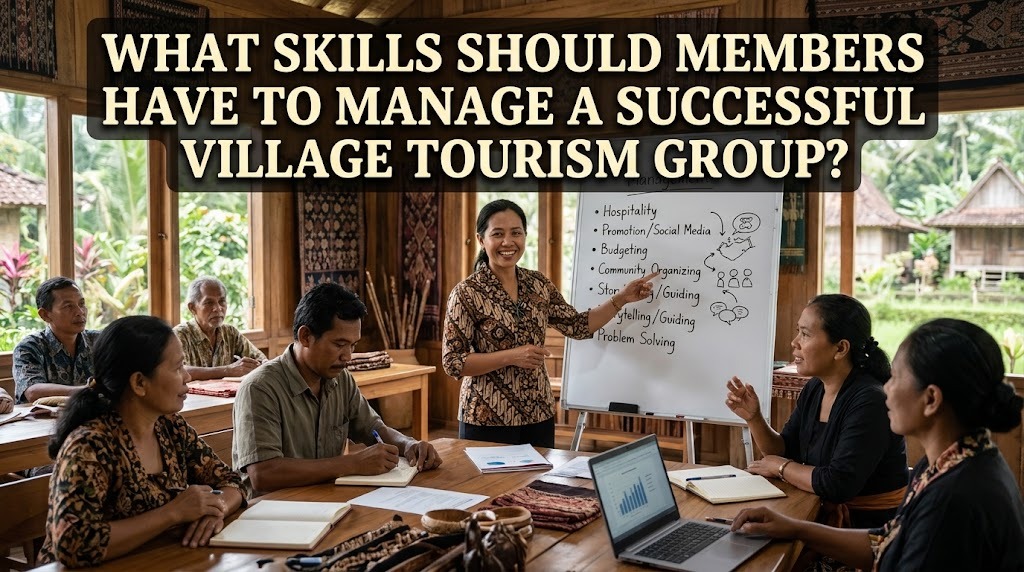
Managing a successful village tourism group requires more than an interest in promoting local attractions. Members need various skills to organize tourism activities, communicate with visitors, manage resources, and work together with the local community. A Village Tourism Awareness Group, commonly known as Pokdarwis in Indonesia, plays an important role in developing tourism potential and creating opportunities for residents. Without adequate skills, tourism programs may become difficult to manage and their development may not achieve the expected results. Therefore, improving members' abilities is essential for building an attractive, competitive, and sustainable village tourism destination.
LEADERSHIP AND ORGANIZATIONAL SKILLS
Leadership is one of the most important skills that village tourism group members should develop. Good leaders can provide direction, establish development priorities, motivate members, and encourage everyone to participate in tourism activities. They also need to make decisions fairly and handle disagreements that may arise during group activities. Effective leadership helps ensure that each member understands their responsibilities and contributes to shared objectives.
Organizational skills are equally important because tourism development involves various activities that require proper coordination. Members should be able to prepare work plans, organize schedules, distribute tasks, and monitor program implementation. They also need to manage meetings and evaluate whether activities are achieving their intended goals. With strong leadership and organizational skills, village tourism groups can operate more efficiently and maintain consistent development programs.
COMMUNICATION AND CUSTOMER SERVICE SKILLS
Communication skills are essential because tourism group members interact with visitors, residents, business owners, government representatives, and other stakeholders. They should be able to explain local attractions, provide accurate information, answer questions, and communicate politely. Clear communication also helps prevent misunderstandings when organizing tourism activities or handling visitor requests. Members who communicate effectively can build positive relationships and strengthen public confidence in the destination.
Customer service skills are also necessary to create comfortable experiences for tourists. Members should understand how to welcome visitors, respond to complaints, provide assistance, and handle unexpected situations professionally. Friendly attitudes, patience, and respect for different backgrounds can make visitors feel appreciated. These qualities may encourage tourists to recommend the destination to others or return in the future. Communication and hospitality skills therefore contribute directly to visitor satisfaction and destination reputation.
TOURISM MARKETING AND DIGITAL SKILLS
Tourism group members need marketing skills to introduce local attractions and attract potential visitors. They should understand how to identify target audiences, highlight destination advantages, prepare promotional messages, and develop attractive tourism packages. Marketing activities can include distributing brochures, participating in tourism exhibitions, building partnerships, and organizing promotional events. Effective marketing helps villages compete with other destinations and increase public awareness of their attractions.
Digital skills have also become increasingly important in modern tourism management. Members should be familiar with social media platforms, basic photography, video production, and online communication. They can use Instagram, Facebook, TikTok, and other platforms to publish information about local attractions, cultural activities, facilities, and visitor experiences. They should also ensure that online information is accurate and regularly updated. Through digital marketing skills, village tourism groups can reach wider audiences and promote their destinations more effectively.
FINANCIAL MANAGEMENT AND BUSINESS SKILLS
Financial management is another important ability because tourism activities often require budgets, operational expenses, and income management. Members should understand how to prepare simple financial plans, record transactions, monitor spending, and prepare financial reports. These practices help ensure that available resources are used appropriately and transparently. Good financial management also builds trust among residents, group members, and external partners.
Business skills are useful for developing tourism products and creating additional income opportunities. Members should understand basic entrepreneurship, pricing strategies, product development, and customer needs. For example, they can help residents develop homestays, traditional food businesses, handicrafts, local transportation services, and guided tours. These activities can support the local economy while providing visitors with more complete tourism experiences. Financial and entrepreneurial skills help groups manage resources responsibly and strengthen the economic benefits of village tourism.
CULTURAL KNOWLEDGE AND ENVIRONMENTAL AWARENESS
Village tourism group members should understand the cultural identity and traditions of their communities. Knowledge of local history, traditional ceremonies, regional languages, arts, crafts, and culinary heritage helps them introduce authentic experiences to visitors. They should also know how to present cultural activities respectfully without changing their original meaning. This responsibility is important because local culture can become one of the most valuable attractions of a village.
Environmental awareness is equally necessary, especially for destinations that depend on natural resources. Members should understand basic waste management, cleanliness programs, conservation practices, and responsible visitor behavior. They can organize community activities to maintain public spaces and protect rivers, forests, beaches, agricultural areas, and other natural attractions. By developing cultural knowledge and environmental awareness, members can protect local identity and maintain the quality of tourism destinations.
PROBLEM-SOLVING AND TEAMWORK SKILLS
Tourism management often involves unexpected situations, such as visitor complaints, damaged facilities, weather disruptions, limited funding, and disagreements among community members. Therefore, group members need problem-solving skills to identify issues, understand their causes, and determine appropriate solutions. They should be able to evaluate different options and make decisions based on available information. A practical and flexible approach helps tourism groups respond to challenges without interrupting important activities.
Teamwork is also essential because tourism development cannot depend on only one person or a small number of members. Everyone needs to cooperate, share responsibilities, exchange ideas, and support one another when carrying out programs. Good teamwork also makes it easier to collaborate with local businesses, village governments, community organizations, and other stakeholders. Through problem-solving and teamwork, village tourism groups can overcome challenges, maintain strong relationships, and achieve shared development goals.
CONCLUSION
Members of a successful village tourism group need various skills, including leadership, organization, communication, customer service, marketing, digital technology, financial management, entrepreneurship, cultural knowledge, environmental awareness, problem-solving, and teamwork. These abilities help groups manage tourism activities more effectively while improving visitor experiences and supporting local communities. Members do not need to master every skill immediately because their abilities can be developed through training, practical experience, and cooperation with relevant institutions. Ultimately, continuous learning and strong teamwork are essential for creating professional, competitive, and sustainable village tourism groups.
Recent Posts

Bagaimana Sistem SKS pada Program Kuliah... 22.11.2026/37 View

How Does Technology Make Daily Evaluation... 21.11.2026/70 View

Apa Strategi Menghadapi Kesenjangan antara Kompetensi... 21.11.2026/73 View

Mengapa Inventaris Aset Penting bagi Kelancaran... 21.11.2026/68 View

When Should Musicians Join a Record... 21.11.2026/71 View
