

What Strategies Can Governments Use to Control Urban Floods?
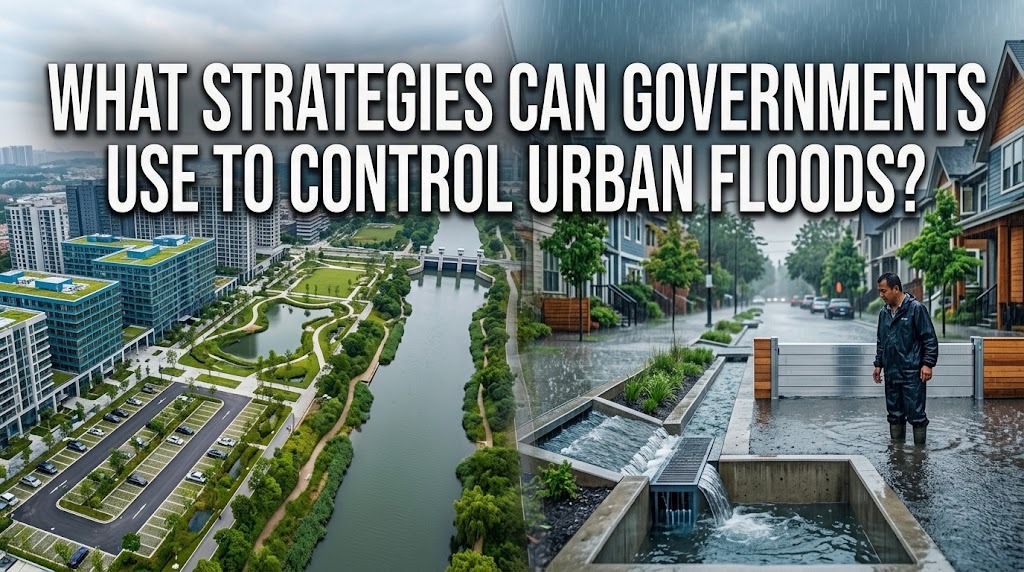
Urban flooding is a major challenge for governments as cities continue to expand and experience changing weather patterns. Heavy rainfall, inadequate drainage, excessive surface runoff, and the loss of natural water storage areas can cause streets, homes, and public facilities to become inundated. These events can disrupt transportation, damage infrastructure, and threaten public safety. To address these challenges, governments need coordinated strategies that combine infrastructure development, environmental protection, urban planning, and community preparedness.
IMPROVING URBAN DRAINAGE SYSTEMS
One of the main strategies governments can use to control urban floods is improving drainage infrastructure. Drainage systems collect rainwater from streets, buildings, and public spaces before directing it toward suitable waterways or storage facilities. When drains are too small, poorly maintained, or blocked by waste, rainwater can accumulate quickly and cause flooding.
Governments can upgrade drainage channels, repair damaged pipes, install additional inlets, and improve pumping facilities where necessary. Regular inspections and maintenance are also essential to ensure that water can flow efficiently during heavy rainfall. Drainage improvements should be designed around local rainfall conditions, land use, and projected future flood risks.
BUILDING FLOOD CONTROL INFRASTRUCTURE
Flood control infrastructure can help manage excess water during periods of intense rainfall. Depending on local conditions, governments may construct retention ponds, detention basins, flood barriers, levees, pumping stations, and reservoirs. These facilities can temporarily store water, redirect flows, or protect vulnerable areas from certain types of flooding.
However, individual structures cannot eliminate every flood risk. Poorly designed barriers may redirect water toward other neighborhoods, while storage facilities may become less effective when they are already full. Governments should therefore assess the effects of proposed projects across the entire watershed and combine structural measures with other flood management strategies.
PROTECTING GREEN SPACES AND NATURAL WATER STORAGE AREAS
Natural landscapes play an important role in managing rainwater. Forests, wetlands, parks, and floodplains can absorb or temporarily store water, slow runoff, and reduce pressure on drainage networks. Protecting these areas helps preserve natural processes that support urban flood management.
Governments can establish protected green zones, restore degraded wetlands, and prevent construction in important flood storage areas. They can also encourage green roofs, rain gardens, and permeable pavements in residential and commercial developments. These nature-based solutions are particularly useful when integrated with conventional drainage and flood control infrastructure.
IMPLEMENTING STRICTER URBAN PLANNING REGULATIONS
Uncontrolled urban development can increase flooding when natural surfaces are replaced by buildings, roads, and parking areas. These impermeable surfaces reduce water infiltration and increase the volume of runoff entering drainage systems. Development in floodplains or low-lying locations can also expose more people and property to flood hazards.
Governments can reduce these risks through land-use regulations, building standards, and flood hazard maps. New developments may be required to provide stormwater storage, preserve green space, and use suitable drainage designs. Authorities can also restrict construction in high-risk areas and ensure that major projects consider their potential effects on surrounding neighborhoods.
USING FLOOD FORECASTING AND EARLY WARNING SYSTEMS
Flood forecasting and early warning systems help governments identify potential threats before they become emergencies. Rain gauges, river-level sensors, weather forecasts, and flood models can provide information about rainfall intensity and rising water levels. Authorities can use this information to issue warnings and prepare emergency responses.
Effective warning systems must deliver clear information to residents through multiple channels, including mobile alerts, public announcements, local radio, and community networks. Messages should explain which areas are at risk, what actions residents should take, and where people can find reliable updates. Early warnings cannot prevent heavy rainfall, but they can reduce injuries, loss of life, and damage by giving communities more time to respond.
STRENGTHENING WASTE MANAGEMENT PROGRAMS
Improper waste disposal can contribute to urban flooding when rubbish blocks drains, canals, and rivers. Plastic packaging, household waste, and other debris may restrict water movement, causing drainage channels to overflow during heavy rainfall. Governments can address this problem through reliable waste collection, public education, and enforcement of regulations against illegal dumping.
Authorities should also arrange regular cleaning and inspection of drainage networks and waterways. Recycling programs and community waste collection points can make responsible disposal easier for residents. These efforts need to be supported by sufficient sanitation services so that waste does not accumulate in public spaces or enter water channels.
RESTORING RIVERS AND MANAGING WATERSHEDS
Rivers and surrounding watersheds influence how rainwater moves through urban areas. When waterways become obstructed, narrowed, or disconnected from their natural floodplains, they may have less capacity to accommodate high water levels. Soil erosion and sediment accumulation can further reduce the space available for water to flow.
Governments can restore riverbanks, remove obstructions where appropriate, control erosion, and maintain channels based on environmental and engineering assessments. Protecting upstream forests and managing land use throughout the watershed can also reduce runoff and sediment entering rivers. Because floodwater often crosses administrative boundaries, neighboring communities and government agencies need to coordinate their plans.
INVESTING IN CLIMATE-RESILIENT INFRASTRUCTURE
Climate change can alter rainfall patterns and increase the intensity of extreme precipitation in many regions. Rising sea levels can also increase coastal flood risks and make drainage more difficult in some low-lying cities. Infrastructure designed only around historical weather conditions may not provide adequate protection as these risks change.
Governments can incorporate updated climate projections into infrastructure design, flood hazard assessments, and long-term investment plans. This may involve increasing drainage capacity where justified, improving pumping systems, elevating critical facilities, or protecting coastal areas. Regular reviews are important because flood risks, urban development, and available climate information can change over time.
STRENGTHENING COMMUNITY PARTICIPATION AND EMERGENCY PREPAREDNESS
Government strategies are more effective when residents understand flood risks and participate in prevention efforts. Communities can help maintain clean surroundings, report damaged drainage infrastructure, protect green spaces, and follow official warnings. Local knowledge can also help authorities identify streets and neighborhoods that frequently experience flooding.
Governments should support public education, evacuation planning, emergency shelters, and flood response training. Particular attention should be given to people who may need additional assistance, including older adults, people with disabilities, and households with limited resources. Community participation helps ensure that flood management plans respond to local needs and that emergency information reaches vulnerable residents.
PROVIDING FUNDING AND COORDINATING FLOOD MANAGEMENT
Urban flood control requires long-term investment, clear responsibilities, and cooperation among government agencies. Drainage systems, retention facilities, river restoration projects, and early warning networks all require funding for construction, operation, and maintenance. Without consistent financial support, infrastructure may deteriorate and become less effective over time.
Governments can establish flood management plans that identify priority projects, assign responsibilities, and set measurable objectives. Coordination among city authorities, regional governments, water management agencies, and emergency services can prevent gaps in planning. Transparent budgeting and regular evaluations can also help ensure that public resources are used to address documented flood risks.
CONCLUSION
Governments can control urban floods through improved drainage systems, flood control infrastructure, sustainable land-use planning, environmental protection, and reliable early warning systems. Effective waste management, watershed restoration, climate-resilient design, and community preparedness can further reduce flood damage. No single strategy can eliminate every flood hazard, so governments need to combine different measures according to local conditions and available resources. With consistent investment and coordinated planning, cities can become safer and better prepared for future flooding.
Recent Posts

Bagaimana Sistem SKS pada Program Kuliah... 22.11.2026/54 View

How Does Technology Make Daily Evaluation... 21.11.2026/83 View

Apa Strategi Menghadapi Kesenjangan antara Kompetensi... 21.11.2026/81 View

Mengapa Inventaris Aset Penting bagi Kelancaran... 21.11.2026/78 View

When Should Musicians Join a Record... 21.11.2026/83 View
