

What Strategies Help Agricultural Areas Cope with Drought?
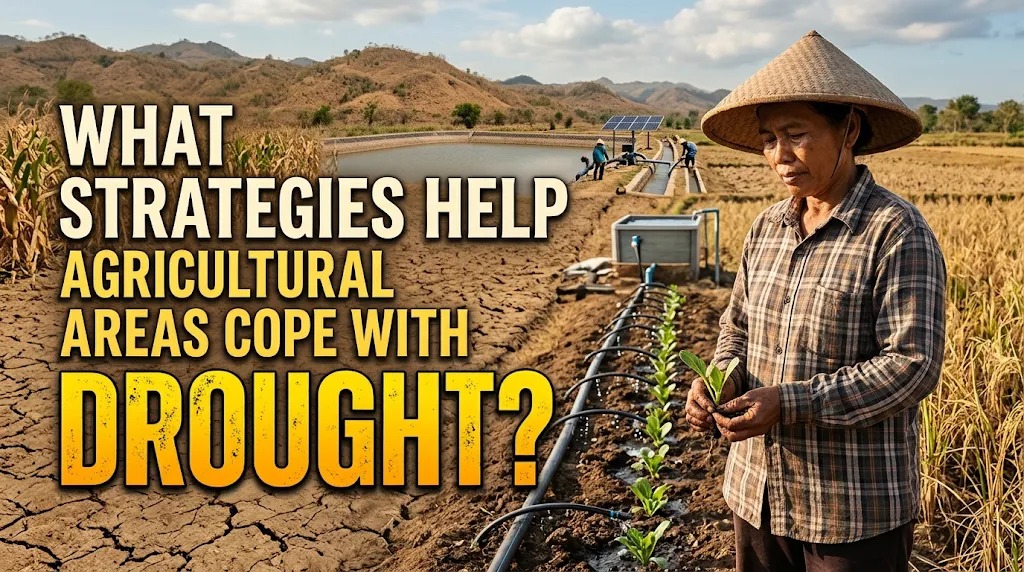
Drought is a major challenge for agricultural areas because it reduces water availability for crops, livestock, and farming activities. Long periods without sufficient rainfall can cause soil moisture to decline, slow plant growth, and reduce agricultural production. These conditions can also affect farmers' income and threaten food supplies in communities that depend on agriculture.
To cope with drought, farmers need strategies that help conserve water, protect soil, and maintain crop productivity under dry conditions. These strategies include efficient irrigation, drought-resistant crop varieties, rainwater harvesting, soil management, and better agricultural planning. Combining these approaches can help farming communities become more resilient to changing weather conditions.
USING EFFICIENT IRRIGATION SYSTEMS
Efficient irrigation helps farmers distribute limited water supplies more carefully. Traditional irrigation methods may lose significant amounts of water through evaporation, runoff, or excessive application. Systems such as drip irrigation deliver water directly to the area around plant roots, reducing unnecessary water use.
Farmers can also schedule irrigation based on soil moisture, crop requirements, and weather conditions. Watering during cooler periods can reduce evaporation losses. By applying the right amount of water at the appropriate time, agricultural areas can maintain crop growth while conserving available resources.
PLANTING DROUGHT-RESISTANT CROP VARIETIES
Choosing drought-resistant crops is another important strategy for agricultural areas facing limited rainfall. Some crop varieties can tolerate dry conditions better because they have deeper root systems, shorter growing periods, or natural mechanisms that help them conserve water.
Farmers can select suitable varieties based on local climate, soil conditions, and seasonal rainfall patterns. Crops such as sorghum and millet are commonly grown in some dry regions because they can tolerate lower water availability than many other staple crops. However, suitability still depends on local conditions, farming practices, and market demand.
HARVESTING AND STORING RAINWATER
Rainwater harvesting allows farmers to collect water during periods of rainfall and store it for use during dry seasons. Water can be collected from rooftops, farm structures, and specially designed collection areas before being stored in tanks, ponds, or reservoirs.
Small farm ponds and community water storage facilities can provide additional supplies for irrigation and livestock. Proper maintenance is essential to reduce leakage, contamination, and excessive evaporation. Rainwater harvesting works best when storage capacity is planned according to local rainfall patterns and agricultural water needs.
IMPROVING SOIL MOISTURE RETENTION
Healthy soil plays an important role in helping agricultural areas cope with drought. Soil with sufficient organic matter can retain more moisture and support better root development. Farmers can improve soil conditions by adding compost, manure, and other suitable organic materials.
Mulching is another useful technique. Covering the soil with materials such as dry leaves, straw, or crop residues helps reduce direct exposure to sunlight and slows moisture evaporation. These practices can also limit weed growth and protect the soil surface from erosion, making farmland more resilient during dry periods.
ADJUSTING PLANTING SCHEDULES
Planting schedules should consider seasonal rainfall patterns and the availability of irrigation water. Planting crops when sufficient soil moisture is available can improve germination and early plant development. If farmers plant too early or too late without considering weather conditions, crops may face water shortages during important growth stages.
Farmers can use seasonal weather forecasts and local agricultural information to determine suitable planting periods. In areas with unpredictable rainfall, adjusting planting dates or choosing shorter-duration crop varieties may help reduce the risk of crop failure.
APPLYING CROP DIVERSIFICATION
Crop diversification reduces dependence on a single crop and helps farmers manage the effects of drought. Different crops have different water requirements, growing periods, and levels of tolerance to dry conditions. Growing several suitable crops can reduce the impact of water shortages on the entire farming operation.
Farmers may combine staple crops, legumes, and drought-tolerant plants based on local environmental conditions. Crop rotation can also improve soil health and reduce certain pest and disease problems. However, diversification should consider market opportunities, available labor, and the specific needs of each crop.
USING AGROFORESTRY AND SHADE MANAGEMENT
Agroforestry combines trees with crops or livestock in the same agricultural landscape. Properly selected trees can provide shade, reduce wind exposure, protect soil, and contribute organic matter through fallen leaves. These benefits can help create more favorable growing conditions during dry periods.
Trees may also help reduce soil erosion and improve the long-term condition of agricultural land. However, farmers need to select suitable species and manage tree density carefully because trees can compete with crops for water, sunlight, and nutrients. Local environmental conditions should guide agroforestry planning.
MONITORING WEATHER AND SOIL CONDITIONS
Weather and soil monitoring help farmers make informed decisions before drought conditions become severe. Rain gauges, soil moisture sensors, and agricultural weather forecasts can provide information about rainfall levels and water availability. This information helps farmers determine when to irrigate, adjust planting schedules, or prepare alternative crops.
Agricultural extension services and local authorities can also provide drought warnings and practical recommendations. When farmers receive information early, they have more time to protect crops, manage water supplies, and reduce potential losses.
STRENGTHENING COMMUNITY WATER MANAGEMENT
Water management becomes more effective when farmers cooperate with one another. In agricultural areas that share rivers, canals, reservoirs, or irrigation networks, communities can establish schedules and rules for distributing limited water supplies.
Farmer groups can coordinate irrigation activities, maintain shared infrastructure, and identify areas experiencing severe water shortages. Local governments can support these efforts by improving irrigation facilities, providing technical guidance, and developing drought response programs. Cooperation helps reduce conflicts over water and ensures that available resources are managed more responsibly.
CONCLUSION
Agricultural areas can cope with drought through efficient irrigation, drought-resistant crops, rainwater harvesting, improved soil management, and flexible planting schedules. Crop diversification, agroforestry, weather monitoring, and community cooperation can provide additional protection against prolonged dry conditions.
No single strategy can eliminate the effects of drought. Farmers need to combine suitable methods according to local climate, soil conditions, available water, and crop requirements. With careful planning and continued support, agricultural communities can protect their production and strengthen food security during periods of limited rainfall.
Recent Posts

Bagaimana Sistem SKS pada Program Kuliah... 22.11.2026/37 View

How Does Technology Make Daily Evaluation... 21.11.2026/70 View

Apa Strategi Menghadapi Kesenjangan antara Kompetensi... 21.11.2026/73 View

Mengapa Inventaris Aset Penting bagi Kelancaran... 21.11.2026/68 View

When Should Musicians Join a Record... 21.11.2026/71 View
