

What Strategies Reduce Material Waste During Building Projects?
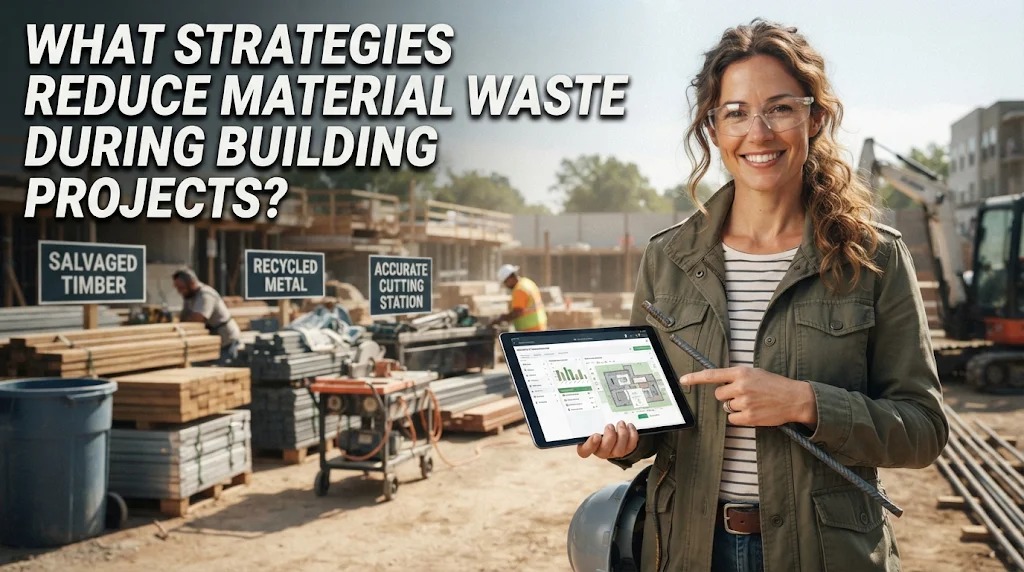
Reducing material waste during building projects is important for controlling construction costs, conserving natural resources, and improving project efficiency. Construction activities often generate waste from inaccurate measurements, excessive material purchases, poor storage, damaged supplies, and inefficient work practices. Without proper management, these problems can increase expenses and create environmental pollution. By applying effective waste reduction strategies, construction companies can use materials more efficiently and maintain sustainable building operations.
PLAN MATERIAL REQUIREMENTS ACCURATELY
Accurate material planning helps prevent excessive purchases and unnecessary waste during construction. Project managers should calculate the required quantities of cement, sand, bricks, steel, timber, and other supplies based on building designs and project specifications. Reviewing measurements before purchasing materials can reduce calculation errors and prevent shortages or excess inventory. Digital planning tools can also help estimate material requirements more precisely. Proper planning ensures that construction teams purchase only the materials needed for each project stage.
USE BUILDING MATERIALS EFFICIENTLY
Efficient material usage can significantly reduce waste during construction activities. Workers should follow accurate measurements when cutting timber, steel, pipes, tiles, and other building components. Proper cutting techniques and standardized dimensions help minimize leftover pieces. Construction teams can also identify opportunities to reuse suitable material scraps for smaller applications. These practices reduce unnecessary material consumption and improve overall project productivity.
IMPROVE MATERIAL STORAGE CONDITIONS
Proper storage protects construction materials from damage before they are used. Cement should be kept in dry areas, timber should be protected from excessive moisture, and metal components should be stored to minimize corrosion. Fragile materials such as tiles and glass should be handled carefully and placed in secure locations. Construction companies should also organize storage areas according to material types and usage schedules. Good storage practices reduce material losses and prevent unnecessary replacement purchases.
IMPLEMENT WASTE SORTING SYSTEMS
Separating construction waste according to material categories makes recycling and reuse easier. Construction sites should provide designated containers for concrete, wood, metal, plastic, bricks, and general waste. This prevents recyclable materials from becoming contaminated and simplifies collection procedures. Workers can also identify reusable materials before they are mixed with other discarded items. An organized sorting system helps reduce landfill disposal and improves construction waste management.
REUSE AND RECYCLE LEFTOVER MATERIALS
Leftover construction materials should be evaluated for possible reuse before being discarded. Suitable timber pieces can be used for temporary structures, while unused bricks and metal components may be incorporated into other construction activities. Concrete debris can also be processed into recycled aggregates for approved applications. Recycling facilities can help transform discarded materials into useful resources. Reusing and recycling materials reduces the demand for newly purchased supplies and supports sustainable construction practices.
TRAIN WORKERS IN WASTE REDUCTION
Construction workers need proper training to understand how their daily activities affect material consumption. Training programs should explain accurate measurements, careful handling, efficient cutting techniques, and waste separation procedures. Supervisors should regularly monitor work practices and provide guidance when unnecessary material losses occur. Encouraging teamwork and responsibility can also improve compliance with waste reduction procedures. Skilled workers are more likely to use materials efficiently and avoid preventable mistakes.
USE MODERN CONSTRUCTION TECHNOLOGY
Modern technology can help construction companies identify and prevent material waste. Building Information Modeling (BIM) allows project teams to create detailed digital building models and calculate material requirements before construction begins. Project management software can also monitor inventory, track material usage, and identify excessive consumption. Digital measurement tools help improve accuracy during installation and fabrication. These technologies support better decision-making and reduce errors that may lead to unnecessary waste.
MONITOR MATERIAL CONSUMPTION REGULARLY
Regular monitoring helps project managers understand how construction materials are being used throughout a project. Companies can compare actual material consumption with initial estimates to identify unexpected losses. Recording damaged supplies, leftover materials, and disposal quantities provides useful information for future planning. Performance evaluations also help determine whether existing waste reduction strategies are effective. Continuous monitoring encourages accountability and supports improvements in construction operations.
CONCLUSION
Reducing material waste during building projects requires accurate planning, efficient material usage, proper storage, waste sorting, recycling, worker training, and modern technology. Regular monitoring also helps construction companies identify problems and improve resource management. By applying these strategies, construction projects can reduce unnecessary expenses, conserve natural resources, minimize environmental impacts, and achieve better operational efficiency.
Recent Posts

How Does Technology Make Daily Evaluation... 21.11.2026/58 View

Apa Strategi Menghadapi Kesenjangan antara Kompetensi... 21.11.2026/60 View

Mengapa Inventaris Aset Penting bagi Kelancaran... 21.11.2026/56 View

When Should Musicians Join a Record... 21.11.2026/55 View

Daily Evaluation or Daily Planning Which... 21.11.2026/63 View
