

What Subjects Are Taught at the Indonesian Police Academy?
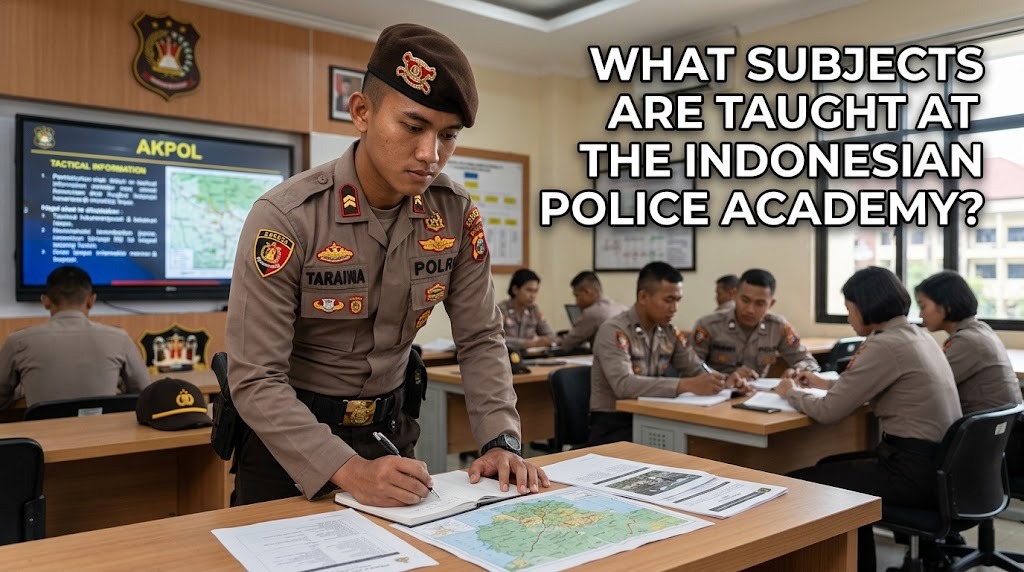
The Indonesian Police Academy, known as Akademi Kepolisian or Akpol, provides education and training for prospective officers of the Indonesian National Police (Polri). Its curriculum combines academic subjects, police science, practical skills, physical training, and character development. The goal is to prepare cadets to become professional, disciplined, responsible, and ethical police officers.
Cadets learn not only how to understand laws and investigate crimes but also how to lead teams, communicate with the public, and respond to security challenges. The education combines classroom learning with practical exercises and character-building activities. The specific curriculum may develop over time to reflect changes in policing, technology, and public needs.
POLICE SCIENCE AND LAW
Police science is a fundamental part of education at the Indonesian Police Academy. Cadets learn about the roles, responsibilities, and authority of the police in maintaining public order, preventing crime, and protecting the community. They also study how police institutions operate and how officers should carry out their duties professionally. These lessons help cadets understand the relationship between law enforcement and public trust.
Law-related subjects introduce cadets to legal principles that guide police work. Topics may include criminal law, criminal procedure, and the legal framework for police investigations. Cadets learn why evidence, proper procedures, and respect for individual rights are essential in law enforcement. Understanding these principles helps future officers make decisions that are lawful, fair, and accountable.
CRIMINOLOGY AND CRIMINAL INVESTIGATION
Criminology helps cadets understand crime, criminal behavior, and the social factors that may contribute to unlawful activities. They explore how economic conditions, social environments, personal circumstances, and other influences can affect criminal behavior. This knowledge helps future officers consider prevention strategies rather than relying exclusively on enforcement. It also supports a broader understanding of community safety.
Criminal investigation lessons introduce the principles and methods used to establish facts in a suspected crime. Cadets learn about collecting and evaluating evidence, documenting findings, interviewing witnesses, and developing investigative hypotheses. Practical exercises help them understand the importance of accuracy, objectivity, and proper evidence handling. These skills are essential for conducting investigations that can withstand legal scrutiny.
POLICE OPERATIONS AND LAW ENFORCEMENT
Police operations training prepares cadets to perform essential duties in real-world situations. They learn about patrol activities, public order management, traffic enforcement, crime prevention, and responses to security incidents. The lessons explain how officers should assess risks, coordinate with colleagues, and choose appropriate actions. Practical training helps cadets apply these principles under controlled conditions.
Cadets also develop an understanding of different police functions, including criminal investigation, intelligence and security, community policing, and traffic management. Each function requires specific knowledge and professional judgment. Officers must understand the limits of their authority and follow established procedures when carrying out assignments. This combination of theory and practice prepares cadets for varied responsibilities throughout their careers.
PSYCHOLOGY AND SOCIOLOGY
Psychology helps cadets understand human behavior, emotional responses, decision-making, and interpersonal relationships. These concepts are useful when communicating with victims, witnesses, suspects, and members of the public. Cadets learn why emotional control and careful communication matter during stressful situations. Psychological knowledge can also help officers recognize tension and reduce the risk of unnecessary conflict.
Sociology introduces cadets to social structures, cultural differences, group behavior, and community relationships. Police officers serve people from different backgrounds, so understanding social conditions can improve communication and public engagement. These lessons encourage cadets to consider the circumstances surrounding an incident before deciding how to respond. Together, psychology and sociology support more humane, informed, and effective policing.
LEADERSHIP AND POLICE MANAGEMENT
Leadership is an important subject because Akpol prepares cadets for future officer responsibilities. Cadets learn how to make decisions, communicate instructions, manage teams, and accept responsibility for their actions. They also study the importance of discipline, teamwork, accountability, and professional conduct. These abilities help future officers coordinate operations and guide personnel effectively.
Police management introduces principles related to planning, organizing resources, supervising personnel, and evaluating performance. Cadets learn that effective leadership requires more than giving orders; it also involves listening, solving problems, and setting a positive example. Training activities may place cadets in situations that require teamwork and decision-making under pressure. These experiences help develop the judgment needed for future supervisory and command roles.
PHYSICAL FITNESS AND SELF DEFENSE
Physical education helps cadets build the strength, stamina, agility, and endurance needed for police duties. Training can include running, strength exercises, cardiovascular conditioning, and other physical activities. Regular exercise also encourages discipline, persistence, and healthy habits. Cadets must learn to maintain their fitness because police work can involve demanding and unpredictable situations.
Self-defense and martial arts training develop coordination, defensive techniques, and controlled physical responses. Cadets may practice martial arts such as judo or taekwondo, depending on the training program. They learn to assess situations and use physical techniques responsibly within applicable laws and procedures. The objective is not simply to develop strength but to prepare officers to protect themselves and others while minimizing unnecessary harm.
TECHNOLOGY AND MODERN POLICING
Technology is increasingly important in modern law enforcement, so police education must prepare cadets to understand digital tools and emerging security challenges. Relevant learning areas may include digital information management, data analysis, cybercrime awareness, and technology-assisted investigations. These subjects help future officers recognize how technology can support crime prevention and evidence gathering. They also highlight the need to protect sensitive information and handle digital evidence properly.
Modern policing also requires critical thinking and the ability to adapt to changing circumstances. Cadets may study case-based scenarios that involve digital evidence, complex investigations, and coordination between different units. As policing develops, education can incorporate emerging areas such as artificial intelligence, big data, and human rights considerations. The exact subjects and depth of instruction depend on the curriculum implemented by the academy.
ETHICS AND CHARACTER DEVELOPMENT
Ethics and character development are essential parts of the Indonesian Police Academy's educational approach. Cadets are expected to develop honesty, integrity, discipline, responsibility, and respect for human dignity. They learn why police authority must be exercised fairly and why corruption, abuse of power, and discrimination undermine public trust. These values should guide professional decisions throughout an officer's career.
Character development also takes place through daily routines, supervised activities, teamwork, and life in the academy environment. Cadets are encouraged to demonstrate respect, resilience, self-control, and commitment to public service. Physical and mental discipline support their ability to handle demanding responsibilities without neglecting ethical standards. By combining academic education with practical training and character development, Akpol aims to prepare officers who are capable, accountable, and responsive to the community.
CONCLUSION
The Indonesian Police Academy teaches a broad range of subjects designed to prepare cadets for professional police service. Major learning areas include police science, law, criminology, criminal investigation, police operations, psychology, sociology, leadership, physical fitness, technology, and ethics. Together, these subjects develop the knowledge, practical abilities, and personal qualities required for law enforcement.
Akpol's educational approach combines classroom instruction, practical training, and character development. This combination helps cadets understand legal responsibilities, respond to public safety challenges, and lead with integrity. Although the curriculum may evolve as policing needs change, its central purpose remains preparing capable officers who can protect the public and uphold the law.
Recent Posts

Bagaimana Sistem SKS pada Program Kuliah... 22.11.2026/57 View

How Does Technology Make Daily Evaluation... 21.11.2026/86 View

Apa Strategi Menghadapi Kesenjangan antara Kompetensi... 21.11.2026/84 View

Mengapa Inventaris Aset Penting bagi Kelancaran... 21.11.2026/82 View

When Should Musicians Join a Record... 21.11.2026/86 View
