

What Types of Designers Offer Promising Career Opportunities?
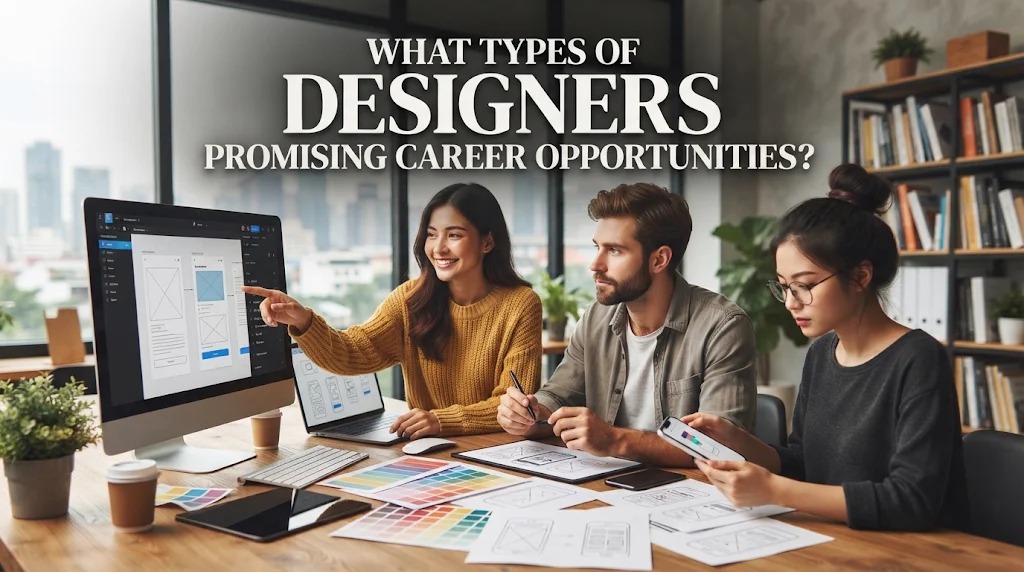
The design industry offers many promising career opportunities as businesses, organizations, and individuals increasingly need creative solutions. Designers play an important role in creating visual identities, improving digital experiences, developing products, and communicating information effectively. The growth of technology and digital platforms has also created new opportunities for people with design skills.
Choosing the right design specialization can help individuals build a career that matches their interests, abilities, and professional goals. Each type of designer has different responsibilities, required skills, and career prospects. Understanding these options can help beginners determine which design field offers the most suitable opportunities.
GRAPHIC DESIGNER
Graphic designers are among the most widely recognized professionals in the creative industry. They create visual materials such as logos, posters, brochures, advertisements, packaging, and social media content. Their main responsibility is to communicate messages through attractive and effective visual designs. They combine typography, colors, illustrations, images, and layouts to produce designs that match a client's needs and brand identity.
Career opportunities for graphic designers are available in advertising agencies, media companies, marketing departments, publishing businesses, and creative studios. They can also work independently as freelancers and serve clients from different industries. As digital marketing continues to grow, businesses increasingly need graphic designers to create engaging promotional materials. This makes graphic design a flexible career choice for people who enjoy visual communication and creative problem-solving.
UI UX DESIGNER
UI UX designers have promising career opportunities because digital products have become an important part of everyday life. UI designers focus on the visual appearance of digital interfaces, including buttons, menus, colors, typography, and page layouts. Meanwhile, UX designers concentrate on improving the overall user experience by making websites and applications easier and more comfortable to use. Both roles work together to create digital products that are visually appealing, functional, and accessible.
UI UX designers can work in technology companies, startups, software development businesses, financial institutions, and digital agencies. Their responsibilities may include conducting user research, creating wireframes, developing prototypes, and evaluating interface usability. Knowledge of design tools, user behavior, and basic digital technology is valuable in this profession. As more businesses develop websites, mobile applications, and digital services, the demand for skilled UI UX designers continues to create attractive career possibilities.
WEB DESIGNER
Web designers are responsible for creating the appearance, structure, and usability of websites. They arrange visual elements, choose suitable colors and typography, organize content, and ensure that website pages are easy to navigate. Their work helps businesses establish a professional online presence and provide visitors with a positive browsing experience. Depending on their specialization, web designers may also understand responsive design, basic HTML, CSS, and website management systems.
This profession offers opportunities in web development agencies, digital marketing companies, technology businesses, and various organizations that need professional websites. Web designers can also build their own freelance businesses by offering website creation and maintenance services. The increasing importance of online business, e-commerce, and digital communication creates a continuing need for well-designed websites. Professionals who understand mobile-friendly layouts, accessibility, and website performance can strengthen their competitiveness in this field.
PRODUCT AND INTERIOR DESIGNER
Product designers develop products that combine functionality, usability, appearance, and practical value. They may work on furniture, household equipment, electronic devices, packaging, and other physical products. Their responsibilities include understanding customer needs, researching product concepts, creating sketches or prototypes, and collaborating with engineering or manufacturing teams. This profession requires creativity as well as knowledge of materials, production processes, and product development.
Interior designers, on the other hand, focus on planning and improving indoor spaces such as homes, offices, hotels, restaurants, and commercial buildings. They consider room layouts, lighting, furniture, materials, colors, and user comfort when developing their designs. Both professions offer opportunities in design studios, manufacturing companies, construction businesses, property development, and independent consulting. Their career prospects can grow as consumers and businesses continue to seek functional, attractive, and comfortable products and spaces.
MOTION GRAPHIC AND FASHION DESIGNER
Motion graphic designers create animated visual content for advertisements, films, presentations, social media, and digital campaigns. They combine graphic design, animation, typography, and visual storytelling to communicate information in an engaging way. Their skills are increasingly useful because video content has become an important part of digital marketing and online entertainment. Career opportunities are available in production studios, advertising agencies, media companies, and freelance creative projects.
Fashion designers create clothing, accessories, and other fashion products by combining creativity, practical knowledge, and an understanding of consumer preferences. Their work involves developing concepts, selecting fabrics, preparing designs, and following fashion trends. They can work for clothing brands, fashion houses, garment manufacturers, or establish their own businesses. Both motion graphic and fashion designers can develop successful careers by building strong portfolios, understanding their target audiences, and adapting to changes in the creative industry.
CONCLUSION
Several types of designers offer promising career opportunities, including graphic designers, UI UX designers, web designers, product designers, interior designers, motion graphic designers, and fashion designers. Each profession has different responsibilities, working environments, and required skills. The best choice depends on personal interests, creative strengths, technical abilities, and long-term career goals.
To build a successful design career, beginners should develop relevant skills, learn professional design software, understand industry trends, and create a strong portfolio. Practical experience through personal projects, internships, and freelance work can also improve professional readiness. With continuous learning and adaptability, designers can explore various career paths and take advantage of opportunities in the growing creative industry.
Recent Posts

How Does Technology Make Daily Evaluation... 21.11.2026/58 View

Apa Strategi Menghadapi Kesenjangan antara Kompetensi... 21.11.2026/60 View

Mengapa Inventaris Aset Penting bagi Kelancaran... 21.11.2026/56 View

When Should Musicians Join a Record... 21.11.2026/55 View

Daily Evaluation or Daily Planning Which... 21.11.2026/63 View
