

What Types of Digital Signatures Are Commonly Used Today?
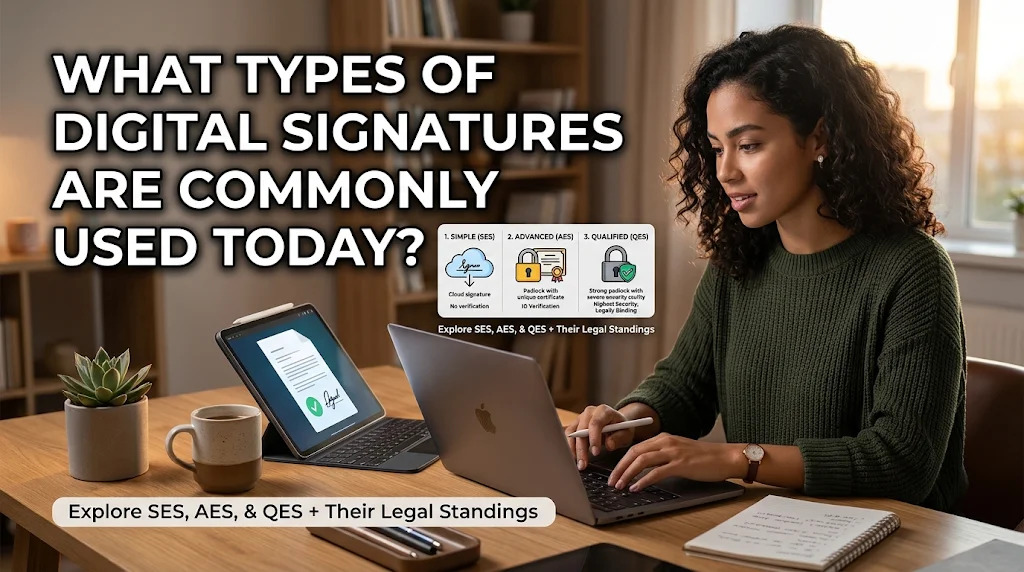
Digital signatures have become an important part of modern communication and document management. Businesses, government institutions, and individuals use them to approve agreements, verify electronic documents, and complete administrative transactions. As digital activities continue to expand, different types of digital signatures are available to meet various security requirements and user needs.
Understanding the types of digital signatures is important because each method may offer different levels of identity verification, security, and legal recognition. Some are designed for simple electronic approval, while others use cryptographic technology and trusted digital certificates to provide stronger authentication. Choosing the appropriate method depends on the purpose of the document, applicable regulations, and the level of protection required.
SIMPLE ELECTRONIC SIGNATURES
A simple electronic signature is a broad category of electronic methods used to indicate a person's agreement or approval. Examples include typing a name at the end of an email, selecting an approval button, or inserting an image of a handwritten signature into a digital document. These methods are commonly used for everyday activities that do not require complex identity verification.
The main advantage of a simple electronic signature is its convenience. Users can indicate their agreement without installing specialized software or completing complicated verification procedures. Businesses may use this method for routine confirmations, internal approvals, or documents with relatively low security requirements.
However, a signature image or typed name does not automatically provide the same security features as a cryptographic digital signature. It may be difficult to establish who actually performed the action or whether the document was modified afterward. Therefore, users should consider the document's importance and applicable legal requirements before relying on a simple electronic signing method.
ADVANCED ELECTRONIC SIGNATURES
An advanced electronic signature is designed to provide stronger identification and security than a basic electronic signing method. Under certain legal frameworks, it must meet specific requirements, such as being uniquely linked to the signer, allowing the signer to be identified, and being created using data under the signer's control. It should also make subsequent changes to the signed data detectable.
These features help improve signer authentication and document integrity. For example, an advanced signing system may use identity verification and cryptographic techniques to connect a signature with a particular individual. If the signed document is modified afterward, the verification process can help identify the change.
Advanced electronic signatures are useful for transactions that require stronger evidence of identity and document authenticity. They may be used in business agreements, professional documentation, and other electronic transactions, depending on the relevant legal framework. However, the exact requirements and recognition of this signature category vary between jurisdictions.
QUALIFIED ELECTRONIC SIGNATURES
A qualified electronic signature is a specific category recognized under the European Union's eIDAS framework. It is an advanced electronic signature created using a qualified signature creation device and based on a qualified certificate issued by a qualified trust service provider.
This category has specific legal requirements designed to provide a high level of identity assurance and trust. Under the eIDAS framework, a qualified electronic signature has the equivalent legal effect of a handwritten signature within the European Union. This recognition makes it particularly relevant for certain regulated transactions and official electronic documentation.
However, qualified electronic signatures are not a universal category used identically in every country. Other jurisdictions may have different legal classifications and certification requirements. Businesses operating internationally should understand the applicable regulations before choosing a signing method for official agreements.
DIGITAL SIGNATURES BASED ON PUBLIC KEY INFRASTRUCTURE
Public Key Infrastructure (PKI) is a technology framework commonly used to create and verify cryptographic digital signatures. It uses a pair of mathematically related keys: a private key and a public key. The private key is used to create a digital signature, while the corresponding public key helps recipients verify it.
PKI systems commonly use digital certificates issued by trusted certification authorities to connect public keys with verified identities. When a document is digitally signed, the verification process can help establish whether the signature corresponds to the signed content and whether the document has been modified afterward.
This approach is widely used for documents that require reliable authentication and integrity protection. Businesses may apply PKI-based digital signatures to contracts, financial documents, official correspondence, and other important records. PKI-based digital signatures provide a structured method for verifying electronic documents, although their security still depends on proper certificate management and private key protection.
CLOUD-BASED AND REMOTE DIGITAL SIGNATURES
Cloud-based digital signature services allow users to sign documents through online platforms without necessarily managing all signing infrastructure on their own devices. These services may provide document preparation, identity verification, signing requests, certificate management, and electronic storage through centralized systems.
Remote signing can be particularly useful for businesses with employees, customers, or partners in different locations. Users can review documents through compatible devices and complete signing procedures without visiting an office. Depending on the provider, cryptographic signing keys may be managed through protected remote infrastructure.
However, users should understand how the provider protects signing credentials and personal information. Important considerations include identity verification, access control, private key management, data privacy, and legal compliance. Cloud-based digital signature services offer flexibility, but choosing a trustworthy provider remains essential.
CONCLUSION
Several types of electronic and digital signing methods are commonly used today, including simple electronic signatures, advanced electronic signatures, qualified electronic signatures, PKI-based digital signatures, and cloud-based signing services. Each method serves different purposes and offers different security features, identity verification procedures, and legal recognition.
The appropriate choice depends on the importance of the document, the required level of authentication, the technology available, and the regulations that apply. Users should understand the difference between a basic electronic signature and a cryptographic digital signature before selecting a service. By choosing a suitable method, individuals and businesses can improve document security and manage electronic transactions more effectively.
Recent Posts

How Does Technology Make Daily Evaluation... 21.11.2026/62 View

Apa Strategi Menghadapi Kesenjangan antara Kompetensi... 21.11.2026/63 View

Mengapa Inventaris Aset Penting bagi Kelancaran... 21.11.2026/59 View

When Should Musicians Join a Record... 21.11.2026/58 View

Daily Evaluation or Daily Planning Which... 21.11.2026/66 View
