

What Types of Government Subsidies Are Available in Indonesia?
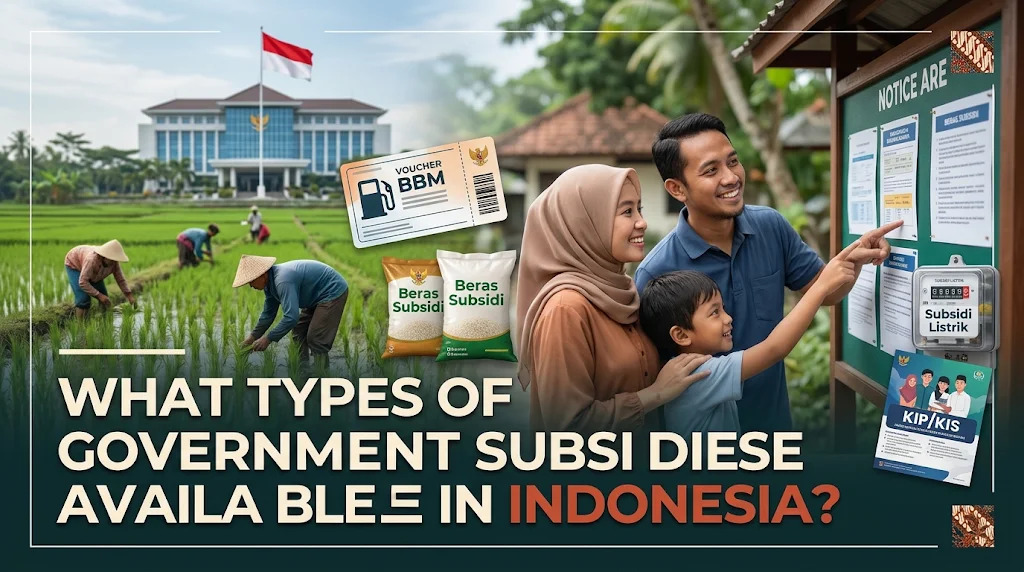
Government subsidies are an important part of Indonesia's economic and social policies. The government provides financial support to make essential goods and services more affordable, strengthen businesses, and protect people's purchasing power. These subsidies cover several sectors, including energy, agriculture, small businesses, and housing. Each program has a different purpose and eligibility requirement, depending on the needs of its intended beneficiaries. Understanding the types of government subsidies available in Indonesia can help people recognize the support provided by the government and how these programs contribute to national development.
ENERGY SUBSIDIES FOR FUEL, ELECTRICITY, AND LPG
Energy subsidies are among the most widely recognized government subsidy programs in Indonesia. They are designed to make essential energy sources more affordable for households and other eligible consumers. Some of the main forms include subsidies for certain types of fuel, 3-kilogram LPG cylinders, and electricity. These programs help reduce energy expenses and support daily activities, transportation, and business operations.
Fuel subsidies help maintain affordable prices for designated fuel products, particularly subsidized diesel. The government also provides support for 3-kilogram LPG, which is intended for eligible households and microbusinesses. Meanwhile, electricity subsidies help eligible customers pay lower electricity bills. Energy subsidies are important because energy costs can influence transportation expenses, household budgets, and the prices of various goods and services.
AGRICULTURAL SUBSIDIES FOR FARMERS
Agricultural subsidies are provided to support farmers and strengthen Indonesia's agricultural sector. One of the main examples is the fertilizer subsidy, which helps eligible farmers obtain certain fertilizers at more affordable prices. Fertilizers are important for maintaining soil productivity and supporting plant growth. By reducing production expenses, the program can help farmers manage their farming activities more effectively.
This type of government support also contributes to national food security. When farmers have better access to essential agricultural resources, they may be able to maintain or improve their production. However, fertilizer subsidies are generally distributed according to specific requirements and allocation systems. The government needs accurate farmer data and effective distribution mechanisms to ensure that assistance reaches the intended recipients.
BUSINESS AND MICROFINANCE SUBSIDIES
The Indonesian government also provides financial support to encourage business development, particularly among micro, small, and medium-sized enterprises (MSMEs). One important example is Kredit Usaha Rakyat (KUR), a government-supported financing program that helps eligible business owners access loans with subsidized interest rates. This program is intended to improve access to financing for productive businesses that may face difficulties obtaining affordable loans through ordinary financing channels.
Through KUR, business owners can obtain financing to support activities such as purchasing equipment, managing production, and expanding their operations. Lower financing costs can help entrepreneurs manage their business expenses and develop their enterprises. This support is particularly relevant for small businesses that contribute to employment and local economic activity. By encouraging access to capital, government-supported financing can strengthen the competitiveness of Indonesia's business sector.
HOUSING SUBSIDIES FOR ELIGIBLE COMMUNITIES
Housing subsidies are another form of government support available in Indonesia. These programs are designed to help eligible households, particularly those with limited or moderate incomes, obtain more affordable housing. One example is the Housing Financing Liquidity Facility (FLPP), which supports access to home financing through participating financial institutions. This program helps reduce some of the financial barriers that make homeownership difficult for certain families.
Through subsidized housing financing, eligible applicants may access more affordable mortgage arrangements according to applicable program requirements. The support is intended to improve access to adequate housing and encourage the development of the residential sector. However, applicants must meet specific conditions, including income limits and other administrative requirements. Housing subsidy programs can therefore provide meaningful assistance to families seeking a suitable place to live.
TAX INCENTIVES AND OTHER FORMS OF GOVERNMENT SUPPORT
The government also uses tax incentives to support certain economic activities and encourage business development. One example is government-borne tax (Pajak Ditanggung Pemerintah or DTP), in which the government covers eligible tax obligations under specific regulations. This policy can reduce financial pressure on qualifying businesses or taxpayers and encourage activity in selected economic sectors. The availability and scope of these incentives depend on government policies and the applicable fiscal year.
In addition to formal subsidies, Indonesia provides other forms of public support in education and healthcare. Programs such as the Indonesia Smart Program (PIP), KIP Kuliah, and the Health Insurance Contribution Assistance Program (PBI JKN) help eligible people access important services. However, these programs are not all classified as direct subsidies in the government budget; some are categorized as social assistance or public service financing. Understanding this distinction helps people recognize the different ways the government supports public welfare.
CONCLUSION
Indonesia provides several types of government subsidies to support public welfare and economic development. The main categories include energy subsidies, agricultural subsidies, business financing support, housing subsidies, and certain tax incentives. The government also operates education and healthcare assistance programs, although these may fall under different budget classifications. Each program has specific objectives and eligibility requirements. Through effective distribution and responsible budget management, government support can help reduce financial burdens, strengthen important economic sectors, and improve people's quality of life.
Recent Posts

Bagaimana Sistem SKS pada Program Kuliah... 22.11.2026/27 View

How Does Technology Make Daily Evaluation... 21.11.2026/65 View

Apa Strategi Menghadapi Kesenjangan antara Kompetensi... 21.11.2026/65 View

Mengapa Inventaris Aset Penting bagi Kelancaran... 21.11.2026/62 View

When Should Musicians Join a Record... 21.11.2026/63 View
