

What Types of Language Competitions Are Commonly Held in Schools?
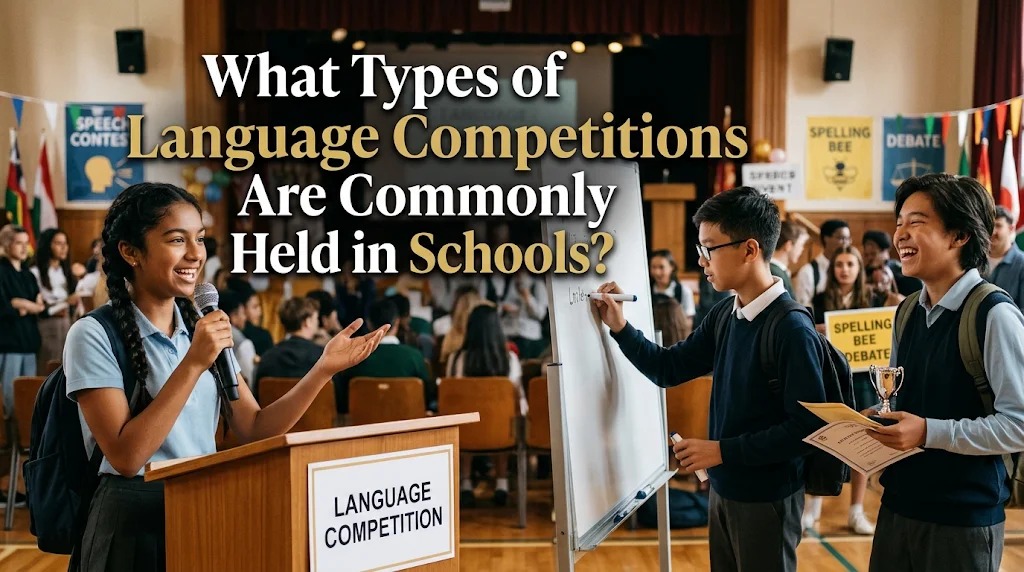
Language competitions are popular educational activities that help students develop communication skills, improve language knowledge, and build confidence. Schools organize these activities to encourage students to use language creatively and communicate effectively. They also provide opportunities for students to demonstrate their abilities, explore their interests, and learn from other participants.
Language competitions can involve speaking, writing, reading, listening, and understanding vocabulary. Each competition has different rules and assessment criteria, allowing students with various talents to participate. Understanding the different types of language competitions can help students choose activities that match their interests and abilities.
SPEECH COMPETITIONS
Speech competitions are among the most common language competitions held in schools. In this activity, students prepare and deliver speeches about specific topics in front of judges and audiences. Topics may include education, environmental protection, technology, culture, leadership, or social issues. Participants are generally assessed based on pronunciation, fluency, vocabulary, grammar, confidence, and the organization of their ideas.
This competition helps students become more confident when speaking in public. It also teaches them how to organize arguments, express opinions, and communicate information effectively. Students need to practice regularly to improve their delivery and reduce nervousness. Through this activity, they can develop communication and critical thinking skills that are useful in academic and professional environments.
DEBATE COMPETITIONS
Debate competitions challenge students to discuss an issue from different perspectives. Participants are generally divided into teams that support or oppose a particular statement. Each team must present logical arguments, provide relevant evidence, and respond to the opposing team's opinions. Common topics include education policies, social media, environmental problems, technology, and social issues.
This activity teaches students to think critically and express disagreements respectfully. They also learn how to research information, identify reliable evidence, and develop convincing arguments. Debate competitions require participants to listen carefully because they must understand opposing arguments before responding. These abilities are valuable for classroom discussions, academic presentations, and future professional communication.
SPELLING AND VOCABULARY COMPETITIONS
Spelling and vocabulary competitions focus on students' knowledge of words, spelling rules, meanings, and correct usage. In spelling competitions, participants are usually asked to spell words correctly after hearing them from a moderator. Vocabulary competitions may include matching words with definitions, identifying synonyms and antonyms, and completing sentences. The difficulty of the questions is generally adjusted to the participants' educational levels.
These competitions encourage students to expand their vocabulary and understand language more deeply. Having a wider vocabulary helps students read different texts, write more effectively, and communicate their ideas accurately. Participants also learn to recognize spelling patterns and understand how words are used in different contexts. Regular preparation through reading, writing, and vocabulary exercises can improve their performance.
POETRY READING AND STORYTELLING COMPETITIONS
Poetry reading and storytelling competitions allow students to demonstrate their language abilities through creative expression. In poetry reading competitions, participants perform poems by paying attention to pronunciation, rhythm, intonation, and emotional expression. Meanwhile, storytelling competitions require students to present a story in an interesting and understandable way. They may use traditional stories, personal experiences, or original creative works.
These activities help students develop imagination and appreciate the artistic side of language. Poetry reading encourages them to understand emotions and meanings behind written works. Storytelling improves their ability to organize events, describe characters, and communicate ideas in a natural sequence. Both competitions provide valuable opportunities to strengthen speaking skills while developing creativity and confidence.
ESSAY WRITING AND LANGUAGE QUIZ COMPETITIONS
Essay writing competitions test students' abilities to express ideas through organized and meaningful written content. Participants are usually given a particular topic and asked to develop an essay within a specific time limit. Their work may be evaluated based on grammar, vocabulary, structure, originality, clarity, and relevance. Students need to present a clear introduction, develop their arguments, and provide a suitable conclusion.
Language quiz competitions, on the other hand, test students' understanding of grammar, vocabulary, reading comprehension, and general language knowledge. Questions may be presented individually or through team-based activities. Participants need to answer accurately, understand instructions, and manage their time effectively. Both activities make language learning more interesting while helping students strengthen their academic abilities.
CONCLUSION
Schools commonly organize different types of language competitions, including speech, debate, spelling, vocabulary, poetry reading, storytelling, essay writing, and language quizzes. Each activity develops different abilities, from public speaking and critical thinking to creativity and written communication.
Participating in these competitions can improve students' confidence, teamwork, discipline, and willingness to learn. They also encourage students to practice language skills beyond regular classroom lessons. By choosing competitions that match their interests and abilities, students can gain valuable experiences while developing stronger language skills.
Recent Posts

How Does Technology Make Daily Evaluation... 21.11.2026/62 View

Apa Strategi Menghadapi Kesenjangan antara Kompetensi... 21.11.2026/63 View

Mengapa Inventaris Aset Penting bagi Kelancaran... 21.11.2026/59 View

When Should Musicians Join a Record... 21.11.2026/58 View

Daily Evaluation or Daily Planning Which... 21.11.2026/66 View
