

When Can Recovered Building Materials Be Reused?
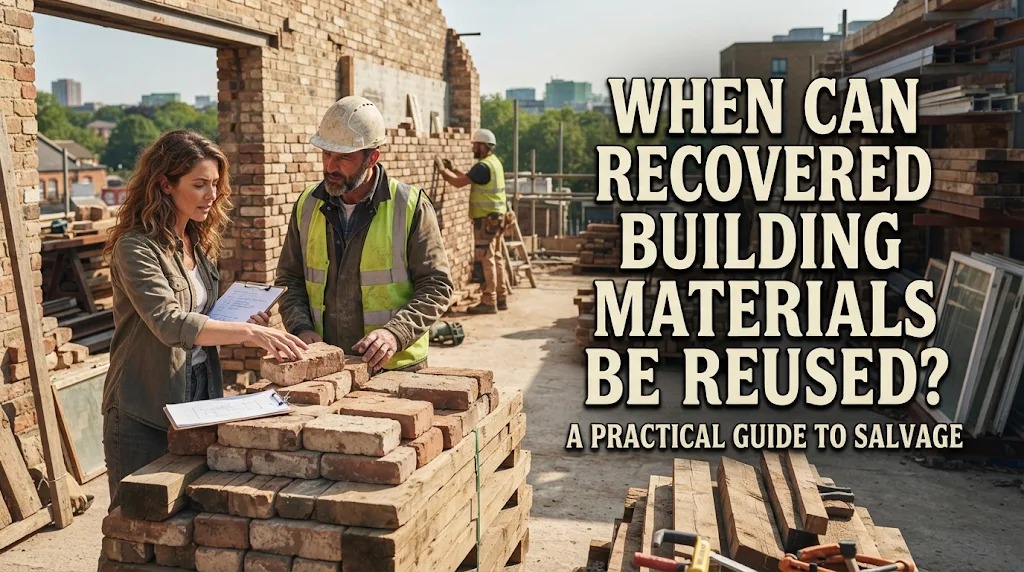
Recovered building materials can be reused when they remain in suitable condition, meet safety requirements, and are appropriate for their intended construction purposes. Materials obtained from demolished buildings, renovation projects, and construction activities can provide valuable resources for future projects. Examples include concrete, bricks, timber, steel, glass, and roofing materials. Reusing these resources helps reduce construction waste, lower material purchasing costs, and conserve natural resources. However, each material must be inspected and evaluated before being used again.
WHEN MATERIALS ARE STILL IN GOOD CONDITION
Recovered building materials can be reused when they do not have significant damage that affects their performance. Bricks, timber, metal components, and roofing materials should be checked for cracks, corrosion, decay, or other defects. Materials that remain strong and functional may be suitable for their original purpose or another application. Proper inspection helps ensure that reused materials do not create structural problems or safety risks during construction.
AFTER PROPER CLEANING AND PROCESSING
Some recovered materials require cleaning or processing before they can be reused. Old bricks may need mortar removal, while timber may require sanding, treatment, and cutting to suitable dimensions. Concrete debris can be crushed and processed into recycled aggregates for approved applications. These procedures help remove unwanted substances and improve material usability. Proper processing also makes recovered materials easier to store, transport, and incorporate into new construction projects.
WHEN MATERIALS MEET SAFETY STANDARDS
Safety is an important consideration when deciding whether recovered building materials can be reused. Materials intended for structural applications must meet relevant technical specifications and undergo appropriate testing. Steel components, concrete products, and other load-bearing materials should be evaluated for strength and durability. Materials suspected of containing asbestos, lead-based paint, or other hazardous substances require specialized assessment and handling. Reuse should only proceed when materials are confirmed to be safe for their intended applications.
WHEN THEY ARE SUITABLE FOR NEW CONSTRUCTION PURPOSES
Recovered materials do not always need to be reused for their original functions. Some materials can serve different purposes depending on their condition and technical properties. For example, reclaimed timber can be used for furniture, decorative elements, or temporary construction structures. Recycled concrete aggregates may be suitable for road subbases and certain nonstructural applications. Choosing an appropriate alternative use helps maximize material value while reducing the demand for newly manufactured products.
WHEN THERE IS SUFFICIENT STORAGE AND MATERIAL PROTECTION
Recovered building materials can be reused more effectively when they are stored under suitable conditions. Materials should be organized according to their types, sizes, and intended applications. Timber needs protection from excessive moisture, while steel should be stored in ways that minimize corrosion. Bricks, tiles, and other fragile materials should be arranged carefully to prevent breakage. Proper storage preserves material quality and ensures that recovered resources remain usable until they are needed.
WHEN PROJECT PLANNING SUPPORTS MATERIAL REUSE
Material reuse becomes easier when construction teams consider recovered resources during the planning stage. Architects, engineers, and contractors can identify materials that may be incorporated into new designs. Accurate material inventories help determine available quantities, dimensions, and technical characteristics. Project teams can also coordinate demolition activities with future construction requirements to recover valuable components. Early planning reduces unnecessary disposal and makes material reuse more practical and economical.
CONCLUSION
Recovered building materials can be reused when they are in good condition, properly processed, safe, and suitable for their intended applications. Appropriate storage and careful project planning also play important roles in maintaining material quality. By inspecting and recovering useful construction resources, companies can reduce waste generation, lower project expenses, and conserve natural materials. Responsible material reuse supports more sustainable construction practices and promotes efficient resource management.
Recent Posts

How Does Technology Make Daily Evaluation... 21.11.2026/58 View

Apa Strategi Menghadapi Kesenjangan antara Kompetensi... 21.11.2026/60 View

Mengapa Inventaris Aset Penting bagi Kelancaran... 21.11.2026/56 View

When Should Musicians Join a Record... 21.11.2026/55 View

Daily Evaluation or Daily Planning Which... 21.11.2026/63 View
