

When Does a Vice Principal of Curriculum Evaluate School Learning Programs?
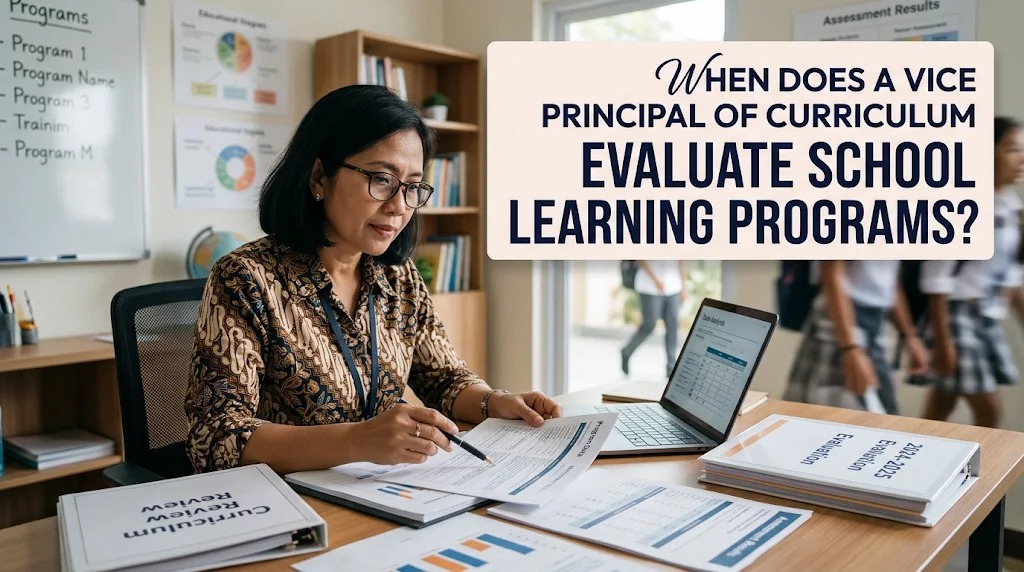
Evaluating school learning programs is an important part of maintaining educational quality. Schools need to determine whether their academic activities are running according to established plans and achieving the expected learning objectives. This process helps identify strengths, weaknesses, and areas that require improvement. One of the key people involved in coordinating this evaluation is the Vice Principal of Curriculum.
A Vice Principal of Curriculum generally evaluates learning programs at several stages throughout the academic year, rather than waiting until the school year ends. Evaluations may take place before learning activities begin, during the teaching process, after academic assessments, and at the end of each semester or school year. Regular evaluation allows schools to respond to problems more quickly and make informed decisions about improving teaching and learning activities.
AT THE BEGINNING OF THE ACADEMIC YEAR
The first evaluation stage can take place before the new academic year begins. At this point, the Vice Principal of Curriculum reviews the previous year's academic programs to determine which activities worked effectively and which need adjustment. This review provides a foundation for preparing better learning plans for the upcoming academic period.
Several aspects may be examined, including the implementation of the curriculum, teaching schedules, teacher assignments, learning resources, and student academic results. The Vice Principal of Curriculum can also collect feedback from teachers to understand challenges experienced during the previous year. This information helps the school identify problems that should not be repeated.
The findings are then used to improve academic planning and establish priorities for the new school year. For example, if the previous schedule frequently caused conflicts, the school can review teacher availability and classroom requirements before preparing a new timetable. Beginning-of-year evaluation helps ensure that learning programs are prepared according to the school's actual conditions and educational objectives.
DURING THE IMPLEMENTATION OF TEACHING AND LEARNING ACTIVITIES
Evaluation should also be conducted while teaching and learning activities are taking place. The Vice Principal of Curriculum needs to monitor whether teachers are implementing their learning plans and whether classroom activities are running according to the established schedule. This process helps the school identify problems before they significantly affect student learning.
Monitoring can involve classroom observations, discussions with teachers, reviews of teaching documents, and checks of academic activity records. The Vice Principal of Curriculum can use these methods to understand whether learning materials, instructional approaches, and available resources are being used appropriately. Information from teachers is also important for identifying difficulties that may not be visible through administrative records alone.
If problems are discovered, the school can discuss suitable solutions with the teachers involved. For instance, changes in teaching schedules or adjustments to learning activities may be necessary when unexpected circumstances occur. Ongoing learning program evaluation allows the school to maintain consistent academic activities and respond to challenges more effectively.
AFTER STUDENT ASSESSMENTS AND EXAMINATIONS
Another important time for evaluation is after student assessments and examinations. These activities provide information about students' understanding of learning materials and their progress toward expected competencies. The Vice Principal of Curriculum can coordinate discussions with teachers to review assessment results and identify areas that require further attention.
The evaluation may examine student performance across different subjects, classes, or grade levels. If many students experience difficulties with a particular topic, teachers may need to review their instructional approaches or provide additional learning support. Assessment results can also help identify teaching practices that appear effective and may be useful in other classes.
However, evaluation should not focus only on examination scores. Teachers should also consider classroom participation, project performance, assignments, and other evidence of student development. Post-assessment evaluation helps schools understand learning outcomes more comprehensively and determine appropriate follow-up activities.
AT THE END OF EACH SEMESTER
The end of each semester is an important opportunity to evaluate the overall implementation of academic programs. At this stage, the Vice Principal of Curriculum can review whether teaching activities have followed the academic calendar and whether planned learning targets have been achieved. This evaluation provides a broader picture of the school's academic performance during the semester.
The review may include curriculum implementation, teacher attendance, completion of learning materials, assessment administration, and student progress. Discussions with teachers can help explain why certain programs were successful or why particular activities did not proceed as planned. The school can then determine which areas need improvement during the following semester.
The results may also be used to prepare reports for the principal and other relevant school personnel. These reports provide information about academic achievements, implementation challenges, and recommended improvements. Semester-end evaluation helps maintain accountability and supports better planning for the next academic period.
AT THE END OF THE SCHOOL YEAR
A comprehensive evaluation is generally conducted at the end of the school year to review the overall effectiveness of academic programs. This process allows the Vice Principal of Curriculum and other school leaders to examine whether the year's educational objectives have been achieved. It also provides an opportunity to assess the suitability of existing programs for the school's future needs.
The evaluation may cover student learning outcomes, curriculum implementation, teacher performance support programs, academic schedules, and the effectiveness of learning resources. Feedback from teachers and relevant school staff can provide additional insight into the strengths and weaknesses of the programs. The school can use these findings to identify priorities for the next academic year.
The final evaluation should lead to practical recommendations rather than simply documenting completed activities. For example, the school may need to improve teacher development programs, update learning resources, or revise certain academic procedures. End-of-year evaluation helps schools maintain continuous improvement and develop more effective educational programs.
CONCLUSION
A Vice Principal of Curriculum evaluates school learning programs at several important stages, including before the academic year begins, during teaching activities, after student assessments, at the end of each semester, and at the end of the school year. Each stage provides different information that helps the school monitor academic activities, identify challenges, and assess whether learning objectives are being achieved.
Regular evaluation allows schools to respond to problems more quickly and prepare appropriate improvements. The process also requires cooperation among the principal, teachers, and other school personnel to ensure that decisions are based on accurate information. Through systematic and continuous learning program evaluation, the Vice Principal of Curriculum can help improve teaching quality and support the achievement of school educational goals.
Recent Posts

Bagaimana Sistem SKS pada Program Kuliah... 22.11.2026/7 View

How Does Technology Make Daily Evaluation... 21.11.2026/63 View

Apa Strategi Menghadapi Kesenjangan antara Kompetensi... 21.11.2026/64 View

Mengapa Inventaris Aset Penting bagi Kelancaran... 21.11.2026/61 View

When Should Musicians Join a Record... 21.11.2026/59 View
