

When Does the Government Distribute Subsidies to the Public?
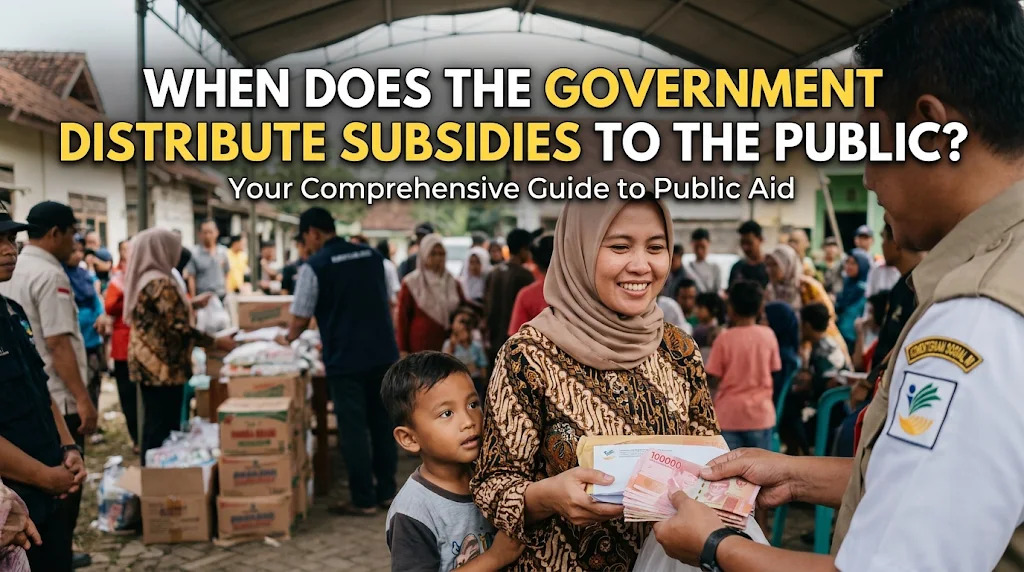
Government subsidies are an important part of public policy because they help reduce the cost of essential goods and services for eligible communities. These programs are designed to maintain purchasing power, support economic activities, and improve public welfare. However, many people wonder when the government actually distributes subsidies and whether all programs follow the same schedule. The answer depends on the type of subsidy, the responsible government agency, and the regulations established for each program.
In Indonesia, subsidy distribution does not follow one universal schedule. Some subsidies are provided continuously through adjusted prices, while others are distributed periodically according to specific administrative procedures. Understanding the distribution timeline can help people recognize when benefits become available and how to access relevant information.
SUBSIDY DISTRIBUTION SCHEDULES VARY BY PROGRAM
The government does not distribute all subsidies at the same time because each program has different objectives and implementation systems. Certain subsidies are provided throughout the year, while others follow monthly, quarterly, or seasonal schedules. For example, energy subsidies may be reflected directly in the prices paid by eligible consumers rather than being transferred to their personal accounts. Meanwhile, some agricultural subsidies are distributed according to planting seasons and the availability of allocated resources.
The distribution schedule is usually determined by the responsible ministry, government agency, or authorized institution. Administrative preparation, budget availability, beneficiary verification, and distribution capacity can also influence when subsidies become accessible. Therefore, people should not assume that every subsidy follows the same calendar. Checking the official schedule for a particular program is the most reliable way to understand its distribution period.
WHEN ENERGY SUBSIDIES BECOME AVAILABLE
Energy subsidies are among the government support programs that directly affect household expenses and economic activities. In Indonesia, certain fuel and electricity subsidies are implemented through regulated prices or specific assistance mechanisms for eligible consumers. Unlike direct cash assistance, these benefits are generally received when people purchase eligible energy products or use qualifying electricity services. This means that beneficiaries do not necessarily need to wait for a separate monthly payment.
The availability of energy subsidies depends on applicable government regulations, eligibility conditions, and distribution policies. Some programs may also require consumers to register or verify their information through authorized systems. Changes in government policy can affect subsidy requirements, distribution mechanisms, or the prices of particular products. For this reason, consumers should follow announcements from relevant institutions, such as the Ministry of Energy and Mineral Resources and authorized service providers.
WHEN AGRICULTURAL SUBSIDIES ARE DISTRIBUTED
Agricultural subsidies often follow schedules connected to farming activities and seasonal production needs. One example in Indonesia is subsidized fertilizer, which is intended to help eligible farmers obtain important agricultural inputs at more affordable prices. Its distribution is generally managed through an allocation system that considers government policies, farmer eligibility, and the availability of fertilizer. As a result, the timing of access may depend on the applicable distribution arrangements in each region.
The government and authorized distribution institutions coordinate to ensure that subsidized fertilizer reaches eligible farmers when it is needed. Farmers may be required to meet registration conditions and appear in the relevant agricultural data systems. Distribution can also be influenced by planting schedules, regional requirements, and the availability of allocated supplies. Understanding these procedures helps farmers prepare for the appropriate distribution period and avoid relying on unofficial information.
FACTORS THAT AFFECT SUBSIDY DISTRIBUTION
Several factors can influence when government subsidies become available to the public. One important factor is government budget allocation, because subsidy programs must operate within approved financial resources. The availability of funding can affect the scale and implementation of a program. In addition, government agencies need sufficient time to prepare distribution systems, coordinate with institutions, and establish administrative procedures.
Another important factor is beneficiary verification. The government must identify eligible recipients and ensure that support is distributed according to program requirements. Inaccurate personal information, incomplete registration records, or changes in eligibility status may create administrative delays. Regional conditions and distribution infrastructure can also influence the process, particularly in areas with limited access to transportation or public services. These factors explain why the timing of subsidy distribution may differ between programs and locations.
HOW TO FIND ACCURATE SUBSIDY DISTRIBUTION INFORMATION
People can find information about subsidy schedules through official government websites, authorized institutions, and local government offices. Each program generally has a responsible agency that provides information about eligibility, registration, distribution mechanisms, and important announcements. For example, information about energy policies can be obtained through relevant energy authorities, while agricultural subsidy information can be accessed through authorized agricultural institutions. Using official channels helps people avoid misleading announcements and outdated schedules.
Beneficiaries should also pay attention to announcements from local authorities and institutions responsible for program implementation. If information is unclear, they can contact the relevant office to confirm the distribution period and required procedures. People should be careful with messages promising immediate approval in exchange for unofficial payments or personal information. Reliable information is essential for ensuring that eligible communities can access government subsidies safely and according to established regulations.
CONCLUSION
The government distributes subsidies according to the objectives, regulations, and administrative systems of each program. Some benefits, such as certain energy subsidies, are available continuously through regulated prices, while agricultural subsidies may follow seasonal or allocation-based schedules. Budget availability, beneficiary verification, and regional distribution conditions can also influence the timing. Therefore, people should consult official government channels to obtain accurate information about subsidy distribution.
Recent Posts

Bagaimana Sistem SKS pada Program Kuliah... 22.11.2026/27 View

How Does Technology Make Daily Evaluation... 21.11.2026/65 View

Apa Strategi Menghadapi Kesenjangan antara Kompetensi... 21.11.2026/65 View

Mengapa Inventaris Aset Penting bagi Kelancaran... 21.11.2026/62 View

When Should Musicians Join a Record... 21.11.2026/63 View
