

When Is the Deadline for Annual Tax Reporting in Indonesia?
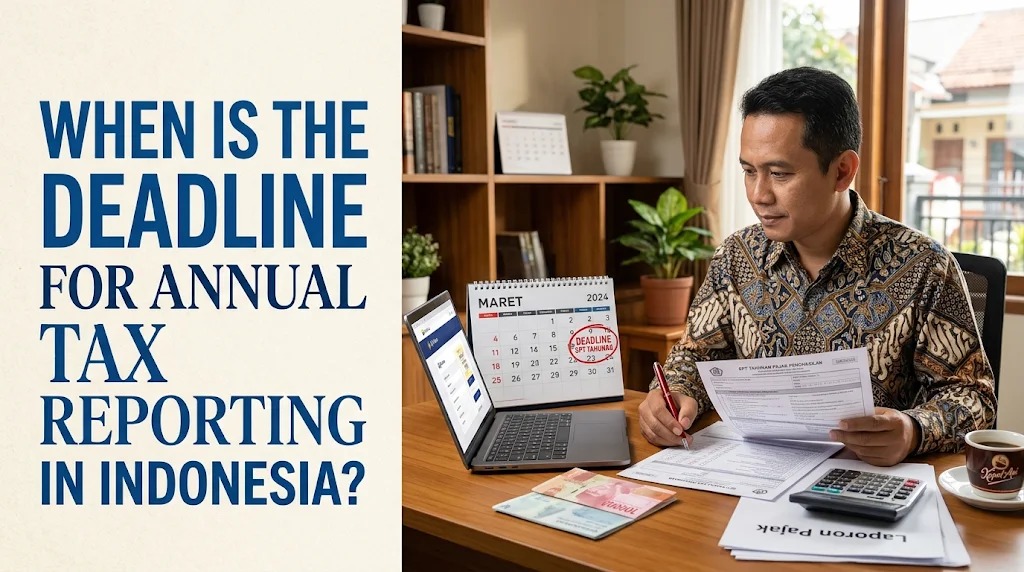
Annual tax reporting is an important responsibility for taxpayers in Indonesia. Every year, individuals and businesses that meet the applicable requirements must submit information about their income, tax payments, assets, and other financial details to the Directorate General of Taxes. Completing this obligation on time helps taxpayers maintain proper tax records and avoid administrative consequences.
Understanding the annual tax reporting deadline in Indonesia is essential because the submission period differs between individual and corporate taxpayers. Individual taxpayers generally have three months after the end of the tax year to submit their annual tax returns, while corporate taxpayers have four months. Knowing the applicable deadline allows taxpayers to prepare their documents and complete the reporting process without unnecessary delays.
THE GENERAL DEADLINE FOR ANNUAL TAX REPORTING IN INDONESIA
In Indonesia, the general deadline for submitting an individual annual income tax return is March 31 of the following year. This deadline applies because individual taxpayers are generally required to submit their Annual Tax Return no later than three months after the end of the tax year. For taxpayers who use the calendar year as their tax year, the reporting period generally runs from January 1 until March 31 of the following year.
For example, an individual reporting income and financial information for the 2026 tax year generally needs to submit the Annual Tax Return by March 31, 2027. Taxpayers should prepare their information before the deadline rather than waiting until the final days of the reporting period. Early preparation provides more time to review documents and resolve potential problems.
The general reporting deadline is established under Indonesian tax regulations and published by the Directorate General of Taxes. Taxpayers can review the official information through the Directorate General of Taxes website. It is important to distinguish the general statutory deadline from special extensions that may be announced for a particular tax year.
DIFFERENCES BETWEEN INDIVIDUAL AND CORPORATE TAX REPORTING DEADLINES
Although individual and corporate taxpayers both have annual reporting responsibilities, their submission deadlines are different. Individual taxpayers generally have three months after the end of the tax year, while corporate taxpayers have four months. Consequently, the usual deadline for individual taxpayers is March 31, whereas the deadline for corporate taxpayers is April 30 when both use the calendar year.
The difference reflects the reporting requirements associated with each taxpayer category. Individuals may need to report employment income, business income, investments, assets, and other relevant financial information. Companies generally need to prepare more extensive financial records, including revenue, operating expenses, tax calculations, and supporting financial statements.
The applicable deadline may also differ for taxpayers who have an approved accounting year that does not follow the calendar year. In such circumstances, the reporting period is calculated based on the end of the relevant tax year. Understanding the taxpayer category and accounting period helps ensure that the correct deadline is followed.
FACTORS THAT CAN AFFECT THE ANNUAL TAX REPORTING DEADLINE
Although March 31 is the general deadline for individual taxpayers, certain circumstances may affect the reporting period. One important factor is an official extension granted under applicable tax regulations. Indonesian tax law allows eligible taxpayers to request an extension of the annual income tax return filing period, subject to the required notification and supporting conditions.
Government announcements may also provide special deadline adjustments for a particular reporting year. For example, in March 2026, the government announced an extension of the individual annual tax return deadline for the 2025 tax year from March 31 to April 30, 2026. The adjustment was reported in connection with difficulties experienced by some taxpayers when accessing the Coretax system. This was a specific extension for that reporting period, not an automatic change to the usual annual deadline.
Taxpayers should therefore avoid assuming that an extension granted in one year will automatically apply in the following year. They need to monitor official announcements and check whether any adjustment applies to their reporting period. Checking the latest tax regulations and official announcements is essential for identifying the correct submission date.
HOW TO PREPARE BEFORE THE TAX REPORTING DEADLINE
Preparing early is one of the most effective ways to complete annual tax reporting without unnecessary difficulties. Individuals should begin by collecting documents related to their income, tax payments, assets, and liabilities. Employees may need an annual income tax withholding statement from their employer, while freelancers and business owners may need additional financial records based on their activities.
After collecting the required information, taxpayers should review the details carefully. Check identification information, income amounts, tax payments, and other relevant entries to ensure that they match the supporting documents. If there are several sources of income, each should be reviewed according to the applicable reporting requirements.
Taxpayers can also prepare their reports through the official digital services provided by the Directorate General of Taxes. They should use the appropriate reporting platform, follow the latest instructions, and protect their account credentials. Completing the process before the final days of March can help reduce the risk of delays caused by technical problems or incomplete information.
After submitting the Annual Tax Return, taxpayers should save the electronic receipt or other official proof of submission. This document provides a record that the reporting process has been completed. Early preparation, accurate information, and proof of submission are important practices for managing annual tax responsibilities.
CONSEQUENCES OF MISSING THE ANNUAL TAX REPORTING DEADLINE
Failing to submit an annual tax return within the applicable deadline may result in administrative consequences. For individual taxpayers, late filing can generally lead to an administrative fine of IDR 100,000, subject to applicable regulations and exceptions. The fine for late reporting is different from sanctions related to late payment or unpaid tax obligations.
Missing the deadline may also create additional administrative work. Taxpayers may need to respond to official notices, review their reporting status, or complete outstanding obligations. If there are errors or missing details in the report, these issues may require further attention.
If taxpayers realize that they cannot meet the deadline, they should review the available procedures for requesting an extension or obtaining assistance from the tax authorities. They should not rely on unofficial information or assume that late submission will automatically be accepted without consequences. Understanding the applicable sanctions and available procedures helps taxpayers respond appropriately when reporting difficulties arise.
CONCLUSION
The general deadline for individual annual tax reporting in Indonesia is March 31 of the year following the tax year. Corporate taxpayers generally have until April 30, while taxpayers with a different approved accounting year may follow a reporting period based on the end of their respective tax year. Special extensions may also apply when officially announced or requested under the applicable regulations.
To avoid late submission, individuals should prepare financial documents early, verify their information, use official tax services, and save proof of submission. They should also monitor announcements from the Directorate General of Taxes because reporting arrangements may change for specific periods. Understanding the annual tax reporting deadline helps individuals fulfill their obligations on time and maintain better financial administration.
Recent Posts

How Does Technology Make Daily Evaluation... 21.11.2026/58 View

Apa Strategi Menghadapi Kesenjangan antara Kompetensi... 21.11.2026/60 View

Mengapa Inventaris Aset Penting bagi Kelancaran... 21.11.2026/56 View

When Should Musicians Join a Record... 21.11.2026/55 View

Daily Evaluation or Daily Planning Which... 21.11.2026/63 View
