

When Is the MAPSI Competition Usually Held and What Are Its Stages?
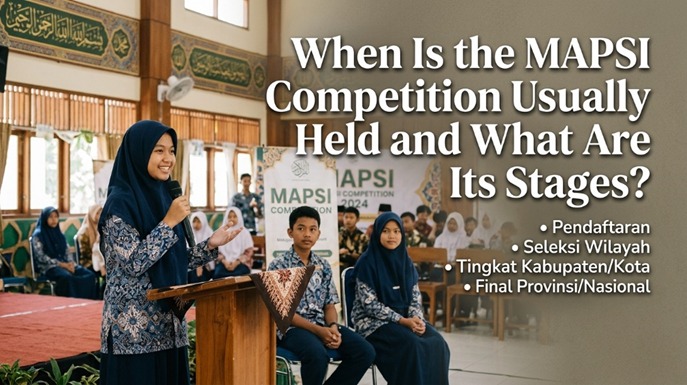
The MAPSI Competition (Islamic Education and Arts Competition) is an educational event that provides students with opportunities to develop their religious knowledge, artistic abilities, creativity, and Islamic character. The competition is generally organized for students at different educational levels, particularly elementary and secondary schools, depending on the regional organizing committee.
One of the most common questions among students, parents, and teachers is when the MAPSI Competition is usually held and how the competition process works. Understanding its schedule and stages is important because participants need enough time to prepare their skills, study the competition materials, and follow the official requirements.
In general, MAPSI does not have one fixed national schedule that applies to every region and year. The implementation period, registration deadlines, competition categories, and selection procedures may differ depending on the organizer. However, the competition commonly follows several stages, beginning with preparation and registration and continuing through selection, final competition, and announcement of results.
1. WHEN IS THE MAPSI COMPETITION USUALLY HELD?
The MAPSI Competition is generally organized according to the annual education and activity calendar established by the relevant organizing committee. In some regions, the event takes place during the middle or second half of the school year, but the exact month can change depending on local arrangements.
The schedule may also differ between school-level, district or city-level, provincial-level, and other competition events. Some organizers may conduct preliminary activities before holding the main competition. Therefore, students should not assume that MAPSI always takes place in the same month every year.
To obtain accurate information, participants should follow announcements from their schools, local education offices, and official MAPSI organizing committees. These sources usually provide details about registration, technical meetings, competition dates, and participant requirements.
2. SCHOOL-LEVEL PREPARATION AND SELECTION
Before entering a larger MAPSI event, schools may organize internal selection activities to identify students with suitable talents and abilities. This stage helps teachers recognize students who have the potential to represent their schools in particular competition categories.
Students may be asked to demonstrate their abilities through practice sessions, auditions, written tests, or other selection methods, depending on the category. Teachers can evaluate their technical skills, religious knowledge, confidence, and readiness to participate. School-level selection helps ensure that representatives are prepared before moving to the next stage.
3. REGISTRATION AND PARTICIPANT VERIFICATION
After selecting their representatives, schools generally proceed with the registration process. Participants must complete the required administrative procedures and submit information requested by the organizing committee.
The registration requirements may include student identity details, school information, selected competition categories, and supporting documents. Organizers may also establish participant limits and eligibility requirements based on educational level or competition regulations. Accurate registration is important because incomplete information or failure to meet the requirements may affect a student's participation.
4. TECHNICAL MEETING AND COMPETITION BRIEFING
Before the competition begins, organizers may hold a technical meeting to explain the event procedures and important requirements. This meeting is usually attended by school representatives, teachers, committee members, and other relevant parties.
During the briefing, participants can receive information about competition schedules, venue arrangements, judging criteria, equipment requirements, and technical regulations. Organizers may also explain how participants should report to their respective competition locations. Attending the technical meeting helps schools and participants understand the procedures and avoid confusion on competition day.
5. SUBDISTRICT-LEVEL COMPETITION
In regions that use a tiered selection system, the subdistrict competition is often the next stage after school-level selection. Students from different schools compete in their chosen categories to demonstrate their abilities and qualify for the next level.
Judges evaluate participants according to the technical guidelines established by the organizing committee. The highest-performing participants may receive opportunities to represent their schools or subdistricts at the district or city level. This stage helps identify talented students who are ready to compete against participants from a wider area.
6. DISTRICT OR CITY-LEVEL COMPETITION
The district or city-level MAPSI Competition brings together selected participants from different subdistricts. This stage generally involves stronger competition because participants have already passed earlier selection processes.
Students demonstrate their abilities in front of judges appointed by the organizing committee. The assessment may include technical accuracy, religious knowledge, creativity, presentation, and compliance with competition rules. Winners at this stage may qualify to represent their districts or cities at the provincial level, depending on the official selection system.
For example, the 2026 MAPSI SD competition in Rembang involved 322 participants from 14 subdistricts on October 17, 2026. The event selected outstanding participants to represent Rembang at the Central Java provincial competition.
Dinas Pendidikan, Pemuda, dan Olahraga
7. PROVINCIAL-LEVEL COMPETITION
The provincial-level competition is an important stage where selected participants from different districts and cities meet. Students have the opportunity to demonstrate their abilities on a larger scale and compete with representatives from across the province.
At this stage, preparation becomes especially important because participants face different competitors with various strengths and experiences. The organizing committee establishes the competition schedule, assessment procedures, and venue arrangements through official technical guidelines. Provincial MAPSI competitions provide broader opportunities for students to demonstrate their talents and gain valuable experiences.
For Central Java MAPSI SD XXVII in 2026, the provincial technical guidelines initially scheduled the event for November 11–13, 2026, at Asrama Haji Donohudan, Boyolali. However, participants should always check the latest announcements because schedules and venues can change.
PDF+1
8. PRELIMINARY ROUNDS AND FINAL COMPETITION
Some MAPSI categories use preliminary rounds to select participants who qualify for the final. These rounds allow organizers to assess a large number of competitors before determining the finalists.
The selection process depends on the competition category. For example, certain categories may use written tests, video submissions, direct performances, or other assessment methods. Finalists then compete again to determine the winners. Understanding the competition format helps students prepare for every round and manage their time effectively.
9. WINNER ANNOUNCEMENT AND AWARD CEREMONY
After all competition activities have been completed, the judges and organizing committee finalize the assessment results. Winners are determined based on the official scoring criteria and applicable competition regulations.
The announcement may take place during a closing ceremony or through an official communication channel. Depending on the organizer's policies, winners may receive trophies, certificates, medals, or other forms of recognition. The award ceremony celebrates students' efforts and achievements while encouraging them to continue developing their abilities.
HOW CAN STUDENTS PREPARE FOR EACH MAPSI STAGE?
Preparing for MAPSI requires consistent effort from the beginning of the selection process until the final competition. Students should understand that each stage may present different challenges and expectations.
Here are several practical preparation tips:
- Follow Official Announcements: Check information from schools and organizing committees to avoid missing important dates.
- Prepare Required Documents: Complete registration forms and other administrative requirements before the deadline.
- Practice Regularly: Improve technical skills and master the materials required for the selected category.
- Understand Competition Rules: Study the official guidelines, including judging criteria and competition procedures.
- Ask Teachers for Guidance: Receive feedback and training from teachers or experienced mentors.
- Maintain Physical Health: Get enough rest and maintain a healthy routine before competition day.
- Build Self-Confidence: Practice performing in front of others to reduce nervousness.
- Maintain Sportsmanship: Respect other participants and accept competition results positively.
By following these steps, students can become better prepared for every MAPSI stage and gain more meaningful experiences throughout the competition.
CONCLUSION
The MAPSI Competition is generally held according to an annual schedule established by the relevant organizing committee. Its implementation may vary depending on the region, educational level, and competition year.
In general, the competition can involve several stages, including school-level selection, registration, technical meetings, subdistrict competitions, district or city competitions, provincial competitions, final rounds, and winner announcements. However, not every region uses exactly the same selection process.
Students, teachers, and parents should always refer to the latest official MAPSI guidelines to obtain accurate information about schedules, requirements, and competition procedures. Understanding the competition stages and preparing early can help students participate confidently, develop their talents, and achieve the best possible results.
Recent Posts

How Does Technology Make Daily Evaluation... 21.11.2026/63 View

Apa Strategi Menghadapi Kesenjangan antara Kompetensi... 21.11.2026/64 View

Mengapa Inventaris Aset Penting bagi Kelancaran... 21.11.2026/60 View

When Should Musicians Join a Record... 21.11.2026/59 View

Daily Evaluation or Daily Planning Which... 21.11.2026/67 View
