

When Should Businesses Replace Their Old Assets?
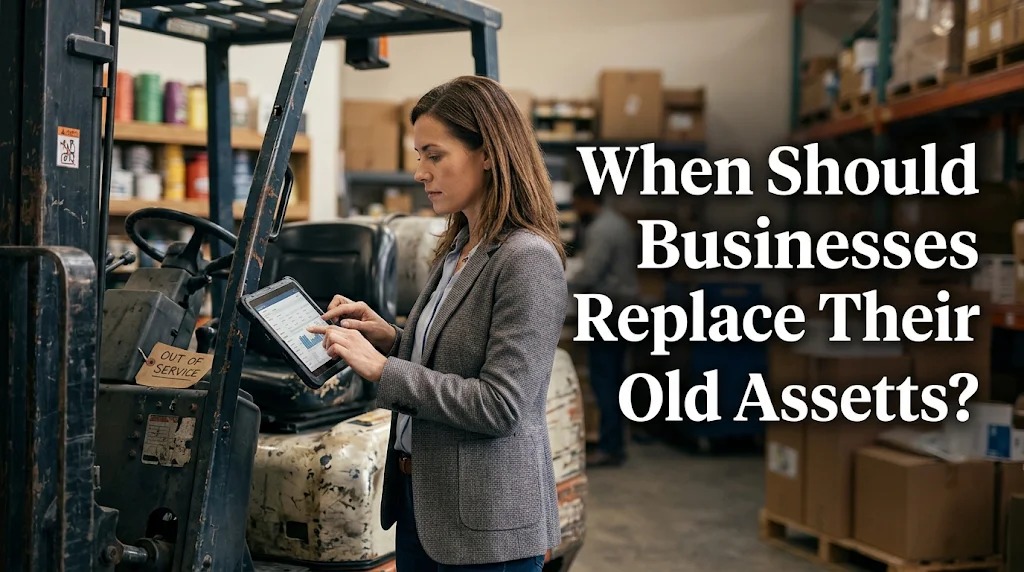
Replacing old assets is an important decision that can affect a company's productivity, operational costs, and financial performance. Business assets such as machines, vehicles, computers, and office equipment may become less effective as they age. However, replacing them too early can create unnecessary expenses, while keeping them for too long may increase maintenance costs and disrupt daily operations. Therefore, businesses need to evaluate the condition, performance, and financial value of their assets before deciding when replacement is necessary.
WHEN MAINTENANCE COSTS BECOME TOO HIGH
One of the main reasons businesses should replace old assets is the increasing cost of maintenance. Equipment that has been used for many years may require frequent repairs and replacement parts. These expenses can gradually become more expensive than purchasing new equipment.
Businesses should compare the total maintenance costs with the estimated cost of replacement. If repairing an old asset no longer provides good financial value, investing in a new one may be a better option. This decision can help companies control expenses and avoid repeated repair problems.
WHEN ASSET PERFORMANCE DECREASES
Old assets may experience lower performance because of wear, outdated components, or reduced operating efficiency. For example, an old production machine may produce fewer products in the same amount of time compared with newer equipment. This can affect production targets and delay customer orders.
Businesses should regularly evaluate asset performance to identify signs of declining productivity. If an asset can no longer meet operational requirements, replacement may be necessary. Using more efficient equipment can help companies maintain product quality and improve daily operations.
WHEN ASSETS BECOME UNSAFE TO USE
Safety is another important factor when deciding whether to replace old business assets. Damaged machinery, worn electrical equipment, and outdated vehicles may create risks for employees and other people. Continuing to use unsafe assets can lead to workplace accidents, financial losses, and legal problems.
Companies should conduct regular inspections to identify potential safety hazards. If an asset cannot be repaired to meet required safety standards, it should be removed from service and replaced. Protecting employees should always be a priority when managing company resources.
WHEN TECHNOLOGY BECOMES OUTDATED
Technology develops quickly, making some business assets less useful over time. Old computers, software systems, communication devices, and production equipment may no longer support modern business requirements. They may also have compatibility problems with newer applications and systems.
Businesses should consider replacing outdated technology when it limits productivity, creates security risks, or prevents employees from completing tasks efficiently. New technology can provide better performance, stronger security features, and improved integration with other business systems. However, companies should evaluate the investment carefully before making a purchase.
WHEN ASSETS NO LONGER MEET BUSINESS NEEDS
A company's operational needs may change as its business grows or develops new strategies. For example, a small business may need larger production machines after receiving more customer orders. Similarly, a company may require additional delivery vehicles when expanding its distribution area.
Old assets should be replaced when their capacity, features, or functions no longer support business activities. Management needs to evaluate current requirements and future plans before purchasing new equipment. Choosing assets that match business needs can help companies improve efficiency and prepare for expansion.
WHEN REPLACEMENT PROVIDES BETTER FINANCIAL VALUE
Businesses should also consider the financial benefits of replacing old assets. Although purchasing new equipment requires an initial investment, it may reduce electricity consumption, maintenance expenses, and operating costs. Over time, these savings can make replacement more economical than continuing to use inefficient assets.
Companies can compare the purchase price, expected useful life, operating expenses, and potential productivity improvements of new equipment. They should also consider the estimated resale or disposal value of the old asset. This financial evaluation helps management determine whether replacement is a worthwhile investment.
CONCLUSION
Businesses should replace old assets when maintenance costs become excessive, performance declines, safety risks increase, or technology no longer meets operational needs. Replacement decisions should be based on asset conditions, business requirements, and financial evaluations rather than age alone. By reviewing their assets regularly, companies can reduce unnecessary expenses, maintain productivity, and support long-term business growth.
Recent Posts

How Does Technology Make Daily Evaluation... 21.11.2026/55 View

Apa Strategi Menghadapi Kesenjangan antara Kompetensi... 21.11.2026/57 View

Mengapa Inventaris Aset Penting bagi Kelancaran... 21.11.2026/52 View

When Should Musicians Join a Record... 21.11.2026/52 View

Daily Evaluation or Daily Planning Which... 21.11.2026/59 View
