

When Should Schools Update Their Data in the Dapodik System?
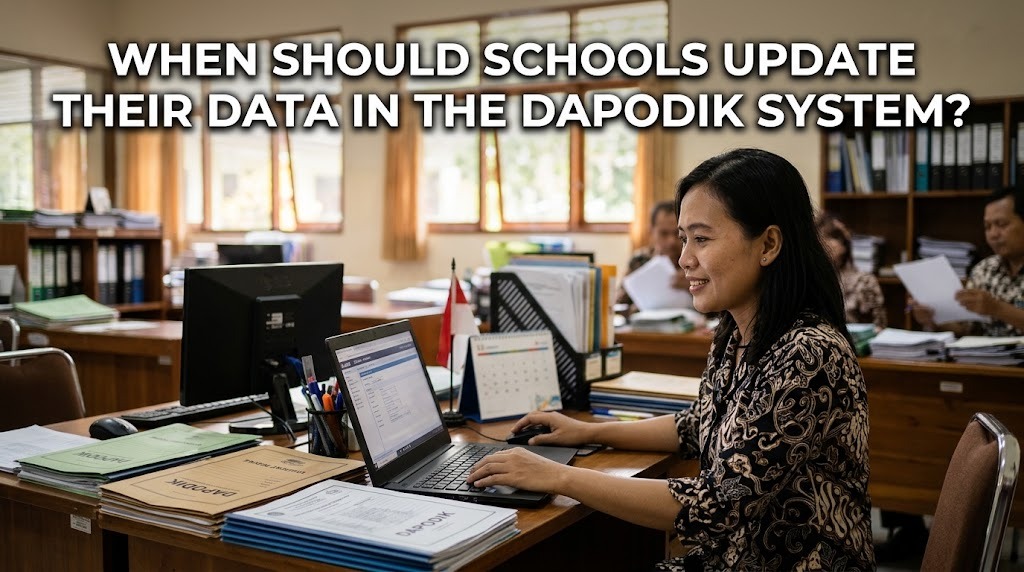
The Dapodik system, which stands for Data Pokok Pendidikan, is Indonesia's national education data system used to collect and manage important information about schools, students, teachers, educational staff, and school facilities. Maintaining accurate data is essential for effective education planning, administrative processes, and government policies. Schools should not wait until the end of the academic year to correct outdated or inaccurate information. Instead, they need to update their records regularly and follow the official deadlines established by the Ministry of Primary and Secondary Education. Timely Dapodik updates help ensure that school information reflects actual conditions and can be used reliably for educational planning and related administrative decisions.
UPDATING DAPODIK DATA AT THE BEGINNING OF EACH SEMESTER
Schools should review and update their Dapodik records at the beginning of each semester. This period is important because student enrollment, class assignments, teacher responsibilities, and learning arrangements may change between semesters. School operators need to ensure that the information entered into the system reflects the school's actual situation. The updated records should be checked carefully before they are synchronized with the central database.
The beginning of a semester is also an opportunity to review information that may have been incomplete or inaccurate during the previous period. Schools should verify student identities, class membership, teacher assignments, curriculum information, and other relevant records. Semester-based data updates help schools maintain consistent information and prepare for administrative requirements. However, the exact procedures and deadlines may vary according to the official instructions for each academic semester. Schools should therefore follow the latest guidance issued by the Ministry of Primary and Secondary Education and their relevant education offices.
UPDATING DATA WHEN CHANGES OCCUR AT SCHOOL
Schools should update Dapodik whenever important changes occur, rather than waiting for the next semester. Examples include new student enrollments, student transfers, changes in teacher employment information, updated teaching assignments, and changes in school facilities. Keeping these records current helps prevent differences between the information stored in Dapodik and the school's actual conditions. School operators should confirm every change using appropriate supporting documents before entering it into the system.
Accurate and timely reporting is particularly important when changes affect administrative services or education programs. For example, an incorrect teacher assignment may require correction before related data can be validated for a particular administrative process. Schools should also ensure that student information matches the relevant verification records. Some changes may need to be processed through a separate verification or management platform instead of being entered directly into Dapodik. Operators should follow the procedures applicable to each type of data and coordinate with the school principal or education office when necessary.
FOLLOWING OFFICIAL DAPODIK DEADLINES AND ANNOUNCEMENTS
Schools must pay attention to official announcements because Dapodik update schedules and deadlines can change between academic semesters. The Ministry of Primary and Secondary Education issues instructions explaining the required data updates, application versions, validation procedures, and submission deadlines. For example, the official announcement for the 2026/2027 first semester introduced Dapodik version 2027 and established August 31, 2026, at 11:59 p.m. Western Indonesian Time as the deadline for synchronizing data used in determining School Operational Assistance funding. This deadline was specific to the stated administrative requirement and should not be assumed to apply to every Dapodik update.
Schools should regularly check official announcements from the ministry and their local education offices to identify the deadlines relevant to their circumstances. Operators should also confirm that they are using the required application version and following the correct procedures. Missing a deadline may affect whether particular data is included in a specific administrative process. Official deadlines should always take priority over informal information shared through social media or unofficial groups.
CHECKING STUDENT TEACHER AND SCHOOL FACILITY INFORMATION
Before synchronizing Dapodik, school operators should review the accuracy and completeness of the main data categories. Student records should match the school's enrollment documents and actual student status. Teacher and educational staff information should reflect current employment details, assignments, and other required information. Class groups, learning activities, and curriculum records should also correspond to the school's actual educational arrangements.
Schools must also review school facilities and infrastructure data, including information about land, buildings, classrooms, electricity, internet access, and other facilities required by the application. Inaccurate facility information can affect the reliability of school profiles and education planning. If a particular field requires verification through another platform, operators should follow the applicable procedure rather than attempting to change it through an unrelated menu. A systematic review of each data category helps identify errors before they create further administrative problems. The school principal should also ensure that the operator has the necessary documents and support to complete the process correctly.
VALIDATING AND SYNCHRONIZING DAPODIK DATA REGULARLY
Entering information into Dapodik is not the final step in the update process. Schools must also perform the required validation, correct identified errors, and synchronize the application so that the updated records can be submitted to the central database. Validation helps identify incomplete fields, inconsistent information, and other problems that may prevent successful data submission. Operators should review validation results carefully instead of ignoring warnings or assuming that all information is correct.
Synchronization is essential because information that has only been entered locally may not yet be reflected in the central database. After synchronization, operators should check the system status and confirm that the update has been submitted successfully. If errors occur, they should follow the official troubleshooting guidance or seek assistance from the relevant education office. Schools should maintain records of important corrections and completed synchronization activities when appropriate. Regular monitoring helps ensure that data remains current throughout the semester rather than being updated only when a deadline approaches.
RESPONSIBILITIES OF SCHOOL OPERATORS AND SCHOOL PRINCIPALS
Maintaining accurate Dapodik information requires cooperation between school operators, principals, teachers, and other relevant staff members. School operators are generally responsible for entering, checking, validating, and synchronizing data according to their assigned duties. However, they depend on accurate information and supporting documents provided by the people responsible for each record. Teachers should report changes in their information, while administrative staff should help ensure that student and school records are complete.
School principals play an important role in supervising the data management process and ensuring that information reflects actual school conditions. They should monitor progress, provide the necessary documents, and help resolve problems that require administrative decisions. Education offices can provide guidance, verification, and technical assistance when schools encounter difficulties that cannot be resolved independently. Clear communication between these parties helps prevent errors, delays, and duplicated work. By sharing responsibilities appropriately, schools can maintain reliable data and meet official reporting requirements more effectively.
CONCLUSION
Schools should update their Dapodik data at the beginning of every semester, whenever important changes occur, and before official administrative deadlines. They must ensure that student records, teacher information, class groups, curriculum details, and school facilities accurately reflect actual conditions. Regular validation and synchronization are essential to ensure that updated information is successfully submitted to the central database. School operators, principals, and education offices should work together to maintain complete and reliable records. By following official announcements and reviewing data consistently, schools can support better education planning and reduce avoidable administrative problems.
Recent Posts

Bagaimana Sistem SKS pada Program Kuliah... 22.11.2026/50 View

How Does Technology Make Daily Evaluation... 21.11.2026/79 View

Apa Strategi Menghadapi Kesenjangan antara Kompetensi... 21.11.2026/79 View

Mengapa Inventaris Aset Penting bagi Kelancaran... 21.11.2026/75 View

When Should Musicians Join a Record... 21.11.2026/80 View
