

When Should You Change Your ATM PIN?
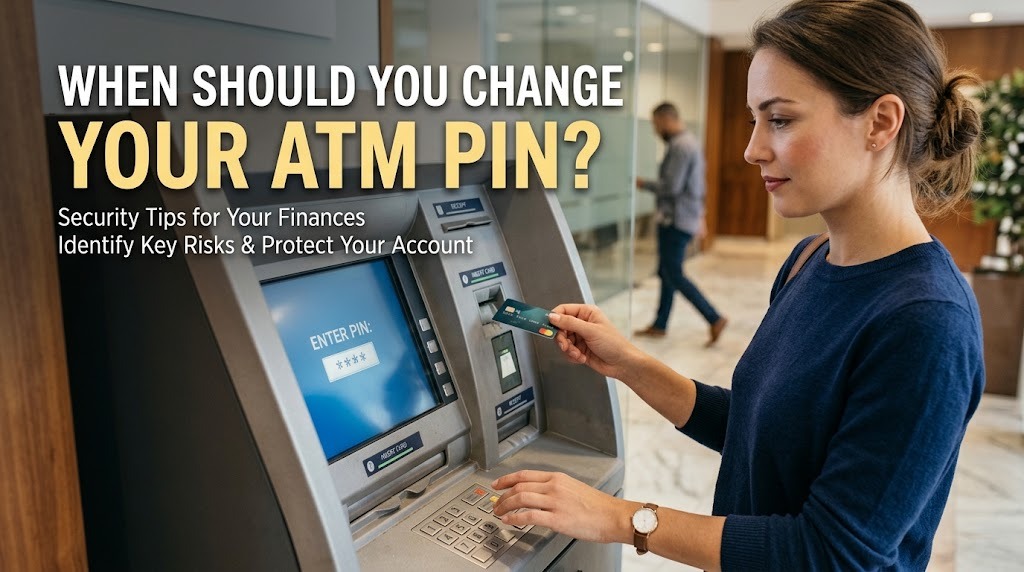
An ATM PIN is an important part of banking security, so keeping it confidential and protected should always be a priority. In some situations, changing the PIN can be a sensible security measure, especially when there is a possibility that the number has been exposed.
There is no universal schedule that requires every customer to change an ATM PIN at the same time. The appropriate timing can depend on the bank's recommendations, account security situation, and whether the PIN may have been compromised.
WHEN YOU SUSPECT YOUR PIN HAS BEEN EXPOSED
One important reason to change your ATM PIN is when you suspect that someone else may have seen or learned it. For example, another person may have observed the keypad while you were entering the number.
You should also take the situation seriously if you accidentally shared your PIN through a message, conversation, or another communication channel. A PIN is confidential information and should not be disclosed to other people.
If you believe your PIN has been exposed, contact your bank through an official banking channel and follow its security recommendations.
AFTER USING AN ATM THAT SEEMS SUSPICIOUS
Consider taking additional security precautions if you have used an ATM that appears damaged, unusual, or has signs of possible tampering. Suspicious equipment can create risks for banking information.
If you notice something unusual, avoid continuing the transaction and contact the bank through a verified channel. Depending on the situation, the bank may recommend changing the ATM PIN or taking additional security measures.
Customers should never attempt to inspect or remove suspicious equipment themselves. Prioritize personal safety and use another verified ATM when possible.
WHEN YOUR BANK RECOMMENDS A PIN CHANGE
Banks may provide specific recommendations regarding PIN security. If your bank instructs customers to change a PIN under certain circumstances, follow the institution's official guidance.
The procedure and recommendations can differ between financial institutions. Therefore, avoid relying on general advice that may not apply to your particular bank or card.
Check your bank's official website, application, customer service, or other verified communication channel for the most accurate information.
WHEN YOU HAVE SHARED YOUR PIN WITH SOMEONE
You should consider changing your ATM PIN if you have previously shared it with another person. Even if you trusted the person at the time, keeping the PIN under your own control provides stronger security.
Do not assume that a PIN is safe simply because the person you shared it with is someone you know. Confidential banking credentials should remain private.
After changing the PIN, avoid sharing the new number and review your account security habits to reduce the chance of another exposure.
WHEN YOU WANT TO IMPROVE YOUR ACCOUNT SECURITY
Changing a PIN may also be considered when you believe your current number is too predictable or closely associated with information that other people can easily know.
When creating a new PIN, choose a number that follows your bank's requirements and is not based on obvious personal information. Make sure you can remember it without storing it in an insecure place.
However, changing a PIN too frequently without a specific reason is not necessarily required for everyone. Follow your bank's recommendations and focus on maintaining good ATM security practices.
CONCLUSION
You should consider changing your ATM PIN when you suspect it has been exposed, after certain security concerns, when your bank recommends a change, or when you believe your current PIN is not sufficiently secure.
The exact circumstances can vary by bank, so use official banking guidance when deciding what to do. Keeping your PIN confidential, protecting your card, and monitoring account activity are also important parts of maintaining account security.
Recent Posts

Bagaimana Sistem SKS pada Program Kuliah... 22.11.2026/35 View

How Does Technology Make Daily Evaluation... 21.11.2026/69 View

Apa Strategi Menghadapi Kesenjangan antara Kompetensi... 21.11.2026/69 View

Mengapa Inventaris Aset Penting bagi Kelancaran... 21.11.2026/67 View

When Should Musicians Join a Record... 21.11.2026/68 View
