

When Should You Ignore or Respond to Haters?
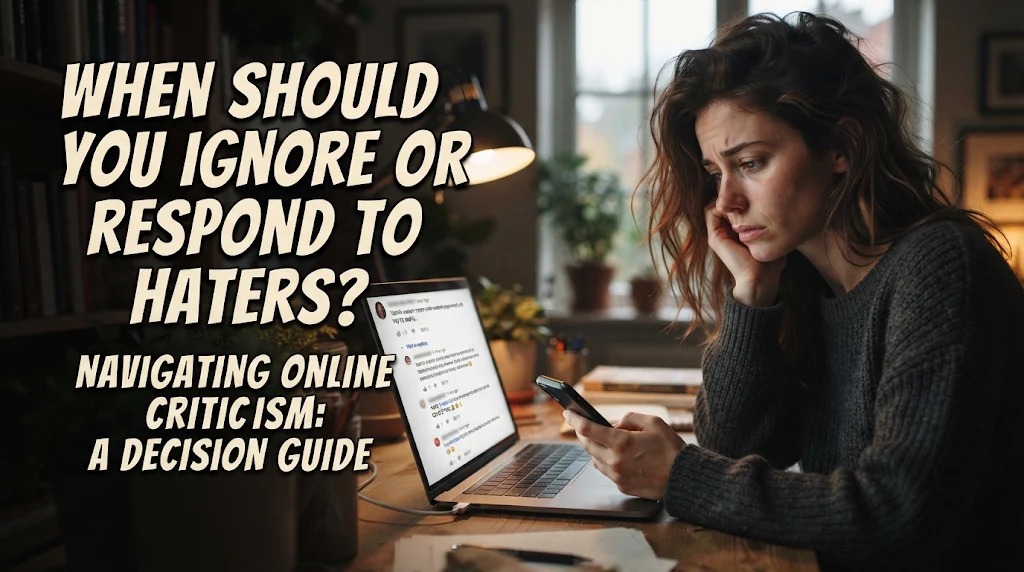
Dealing with negative comments is a common challenge in everyday life, especially when interacting with people through social media, workplaces, schools, and online communities. Some individuals express disagreement respectfully, while others use insults, sarcasm, or personal attacks to provoke emotional reactions. Knowing how to handle these situations can help protect confidence and prevent unnecessary conflicts.
However, ignoring every negative comment is not always the right decision. Some situations require a calm response, clarification, or appropriate action to prevent further harm. Understanding when to ignore and when to respond to haters allows people to manage criticism more wisely while maintaining personal boundaries.
WHEN NEGATIVE COMMENTS ARE ONLY INTENDED TO PROVOKE
Ignoring negative comments may be appropriate when someone clearly wants to start an argument rather than have a meaningful discussion. These individuals may repeatedly post insulting messages, make sarcastic remarks, or deliberately misunderstand what someone says. Their main objective may be to create an emotional reaction.
Responding to every provocation can consume time and energy without producing a useful outcome. In these situations, refusing to participate can prevent the conflict from becoming more complicated. Muting or blocking the account may also help reduce unnecessary exposure to negativity.
WHEN THE CRITICISM HAS NO CONSTRUCTIVE VALUE
Not every opinion deserves serious attention. Some comments focus entirely on someone's appearance, personal life, or characteristics without offering meaningful information. When criticism contains only insults or humiliation, there may be little reason to engage with the person responsible.
Instead of treating every negative statement as an accurate judgment, consider whether it contains anything useful. If the comment provides no reasonable explanation or opportunity for improvement, it may be healthier to move on. This helps prevent unnecessary self-doubt and protects emotional well-being.
WHEN RESPONDING COULD MAKE THE CONFLICT WORSE
Sometimes replying to a hater can create a larger argument. A simple response may lead to additional insults, repeated accusations, or unwanted attention from other users. This is particularly common in public comment sections where many people can join the discussion.
Before responding, consider whether the conversation is likely to become productive. If the other person repeatedly ignores explanations and continues attacking, ending the interaction may be the more practical choice. Protecting your peace is more important than winning an argument with someone who is unwilling to communicate respectfully.
WHEN YOU NEED TO CORRECT FALSE INFORMATION
Responding may be necessary when someone spreads inaccurate information that could damage your reputation or mislead others. False accusations, misleading statements, and information taken out of context can influence how other people understand a situation.
In these circumstances, a short and factual clarification may help. Focus on verifiable information rather than responding with personal attacks. If the situation involves serious allegations or sensitive information, consider seeking appropriate assistance before making a public statement.
WHEN THE COMMENT CONTAINS USEFUL CRITICISM
Sometimes negative feedback can reveal mistakes or areas that need improvement. A person may disagree with your work, question a decision, or point out a weakness. Although the feedback may feel uncomfortable, it can still provide an opportunity to learn.
Before dismissing the comment, examine whether the criticism is specific, reasonable, and relevant. If it contains useful information, acknowledge the point and consider making improvements. Responding politely can also demonstrate maturity and a willingness to develop without accepting disrespectful treatment.
WHEN SOMEONE CROSSES YOUR PERSONAL BOUNDARIES
A response may be appropriate when someone repeatedly makes inappropriate remarks, interferes with your privacy, or treats you disrespectfully. Remaining silent does not mean you must accept every form of negative behavior.
You can communicate your boundaries clearly without becoming aggressive. For example, explain that personal insults are unacceptable and that future conversations should remain respectful. If the behavior continues, limiting contact or reporting the person may be necessary.
WHEN ONLINE HARASSMENT BECOMES SERIOUS
Some situations require more than ignoring or replying to negative comments. Repeated harassment, stalking, threats, impersonation, or the sharing of private information can create serious safety and privacy concerns. These behaviors should not be treated as ordinary disagreements.
Instead of confronting the person alone, preserve relevant evidence such as screenshots, usernames, dates, and message links. Use platform reporting tools and seek assistance from trusted people or appropriate authorities when necessary. Taking action can help protect yourself and establish a record of the behavior.
HOW TO DECIDE WHETHER TO IGNORE OR RESPOND
Choosing the right response requires understanding the situation, the intention behind the comment, and the possible consequences of engaging. There is no single approach that works for every interaction. A thoughtful decision can prevent unnecessary arguments while ensuring that serious problems receive appropriate attention.
Consider these practical guidelines:
- Ignore deliberate provocation: Avoid arguments with people who repeatedly seek emotional reactions.
- Respond to meaningful questions: Provide clear explanations when someone genuinely wants to understand your perspective.
- Accept useful feedback: Use reasonable criticism to identify opportunities for improvement.
- Correct harmful misinformation: Clarify important facts when false claims could create serious misunderstandings.
- Set boundaries against disrespect: Communicate clearly when someone crosses personal or professional limits.
- Report serious harassment: Preserve evidence and seek assistance when interactions involve threats or repeated abuse.
The most important consideration is whether responding will improve the situation or create additional problems.
HOW TO RESPOND WITHOUT LOSING CONFIDENCE
If you decide to respond to a hater, your communication should remain calm, brief, and focused on the issue. Avoid using insults or making personal attacks because these reactions can turn a disagreement into a larger conflict. A respectful response can establish boundaries without giving unnecessary attention to hostility.
You can also remind yourself that other people's opinions do not automatically define your identity or abilities. Confidence develops through understanding personal values, recognizing achievements, and accepting that disagreement is a normal part of communication. You do not need to prove your worth in every online discussion or personal interaction.
CONCLUSION
Knowing when to ignore or respond to haters is an important part of managing negative interactions. Ignoring comments is often appropriate when someone only wants to provoke, insult, or create unnecessary conflict. Responding may be more useful when clarification, constructive discussion, or clear personal boundaries are needed.
However, serious harassment, threats, and privacy violations require appropriate action rather than simply ignoring the behavior. By evaluating each situation carefully, communicating respectfully, and protecting personal boundaries, people can handle negativity without allowing it to control their emotions or decisions.
Recent Posts

Bagaimana Sistem SKS pada Program Kuliah... 22.11.2026/25 View

How Does Technology Make Daily Evaluation... 21.11.2026/64 View

Apa Strategi Menghadapi Kesenjangan antara Kompetensi... 21.11.2026/65 View

Mengapa Inventaris Aset Penting bagi Kelancaran... 21.11.2026/62 View

When Should Musicians Join a Record... 21.11.2026/61 View
