

Which High Value Skills Are Most Wanted by Companies Today?
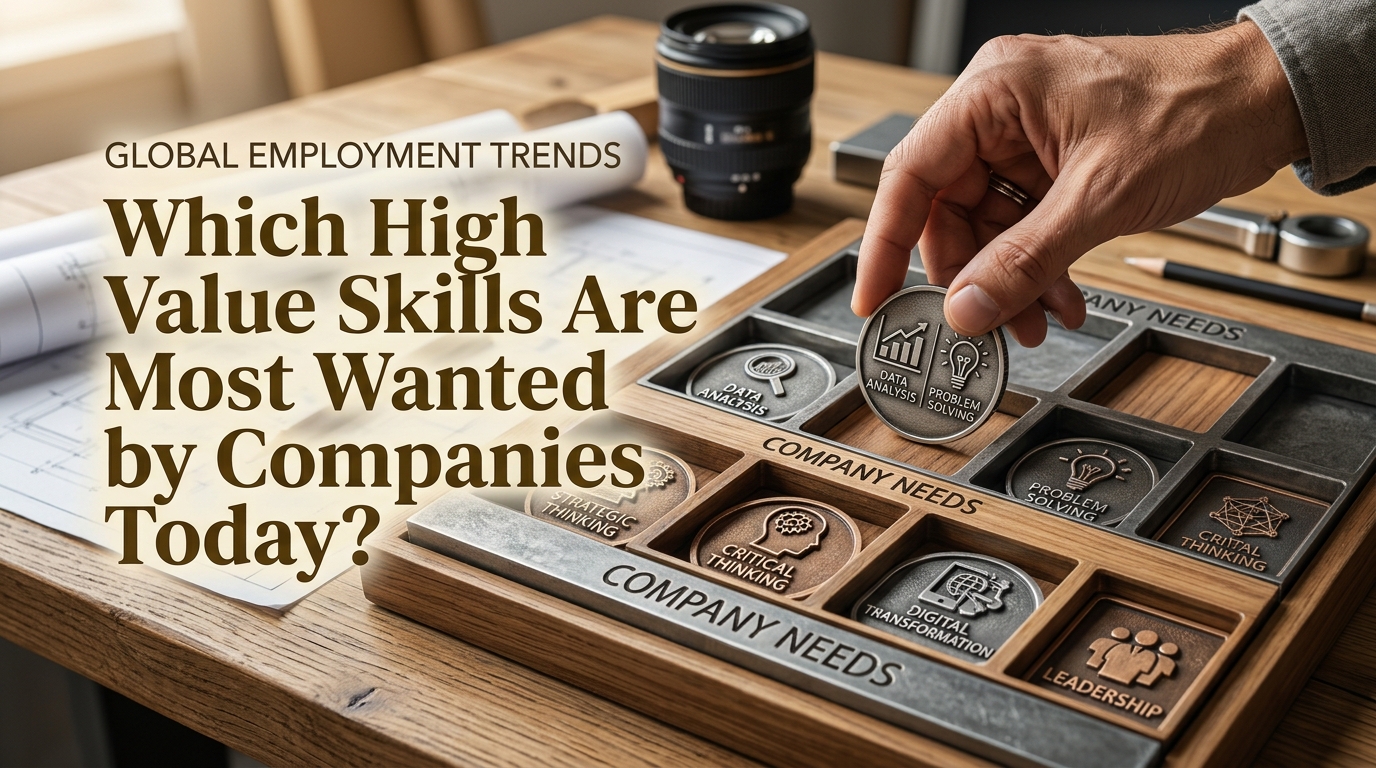
The modern job market is becoming increasingly competitive as companies face rapid technological developments, changing customer expectations, and new business challenges. To remain competitive, organizations need employees who possess the right abilities to improve performance, solve problems, and support business growth. As a result, employers are no longer focused only on academic qualifications or years of experience. They also consider high value skills that can help candidates contribute effectively to the workplace.
Understanding which skills are most wanted by companies today can help job seekers prepare for employment opportunities and existing employees improve their professional development. From digital literacy and data analysis to communication and leadership, these abilities can make individuals more competitive in different industries. By developing relevant skills, professionals can increase their employability and prepare themselves for the changing demands of the modern workplace.
WHAT ARE HIGH VALUE SKILLS IN TODAY'S JOB MARKET?
High value skills are professional abilities, knowledge, and competencies that provide significant benefits to companies and help employees perform their responsibilities effectively. These skills are valuable because they support productivity, improve decision-making, and help organizations overcome business challenges. Companies generally prioritize abilities that match their operational needs and long-term objectives.
In today's job market, high value skills include both technical skills and soft skills. Technical skills involve specialized knowledge, such as programming, data analysis, and digital marketing. Meanwhile, soft skills include communication, teamwork, adaptability, and critical thinking. Employees who can combine both types of abilities are often better prepared to handle different responsibilities and contribute to organizational success.
1. DIGITAL LITERACY AND TECHNOLOGICAL SKILLS
Digital literacy is one of the most important skills companies look for today because technology has become part of almost every industry. Employees are expected to understand how to use digital tools, online platforms, and workplace software to complete tasks efficiently. These abilities can help improve communication, organize information, and support daily business operations.
Companies also value employees who can adapt to new technologies and understand how digital systems work. Knowledge of artificial intelligence tools, cloud platforms, cybersecurity awareness, and digital collaboration software can provide additional professional advantages. Although specific requirements depend on the position, having strong digital skills helps employees remain relevant in an increasingly technology-driven workplace.
2. COMMUNICATION AND INTERPERSONAL SKILLS
Communication skills remain essential because employees need to exchange information clearly with colleagues, managers, clients, and business partners. Good communication helps prevent misunderstandings, improve teamwork, and ensure that workplace responsibilities are completed properly. Companies value individuals who can express ideas professionally through speaking, writing, and active listening.
Interpersonal skills are equally important for building positive professional relationships. Employees should be able to understand different perspectives, respect others, and collaborate with people from various backgrounds. Strong communication abilities can also support negotiation, conflict resolution, and customer service. These skills are useful in almost every industry, making them valuable for both entry-level employees and experienced professionals.
3. CRITICAL THINKING AND PROBLEM-SOLVING
Companies need employees who can analyze situations, identify potential problems, and make reasonable decisions. Critical thinking allows individuals to evaluate information objectively rather than accepting assumptions without considering the available evidence. This ability is particularly important when employees face complicated tasks or must make decisions under pressure.
Meanwhile, problem-solving skills help workers find practical solutions to workplace challenges. For example, an employee may need to identify the cause of declining sales, improve an inefficient process, or resolve a customer complaint. Individuals who can approach problems logically and develop effective solutions can help organizations reduce risks and improve performance. These abilities are valuable because they encourage independent thinking and better decision-making.
4. DATA ANALYSIS AND ANALYTICAL SKILLS
Data has become an important resource for companies when making business decisions and evaluating performance. Therefore, data analysis skills are increasingly valuable across industries, including finance, marketing, technology, healthcare, and retail. Employees who can interpret data, recognize patterns, and identify useful insights can help organizations understand business conditions more accurately.
Companies may look for candidates who understand tools such as Microsoft Excel, Google Sheets, SQL, or data visualization platforms, depending on the job requirements. However, analytical skills are not limited to operating software. Employees must also understand how to interpret results and communicate meaningful findings. The ability to turn information into practical recommendations can provide significant value to an organization.
5. LEADERSHIP AND TEAMWORK
Leadership skills are not only necessary for managers or people in senior positions. Companies also appreciate employees who can take responsibility, show initiative, and help colleagues achieve shared objectives. Good leadership involves setting clear priorities, making informed decisions, motivating others, and managing challenges professionally.
At the same time, teamwork is essential because most business activities require cooperation between individuals and departments. Employees should be willing to share knowledge, support colleagues, and contribute to collective goals. Someone with strong teamwork abilities can help create a productive working environment and maintain positive professional relationships. Combining leadership and collaboration skills can also prepare employees for future career advancement.
6. ADAPTABILITY AND FLEXIBILITY
The modern workplace changes quickly due to technological innovation, market developments, and evolving business strategies. As a result, companies need employees who can adjust to new situations without losing productivity. Adaptability refers to the ability to respond positively to changes, learn new methods, and handle unfamiliar responsibilities.
Flexible employees are generally more prepared to work with different teams, manage changing priorities, and use new technologies. They are also more willing to accept constructive feedback and improve their performance. This ability is especially important in industries that experience frequent changes in customer demands or technological systems. Employees who demonstrate adaptability can help organizations respond more effectively to unexpected challenges.
7. ARTIFICIAL INTELLIGENCE AND DIGITAL AUTOMATION SKILLS
Artificial intelligence has become increasingly relevant in modern business operations. Companies are exploring AI tools to support data processing, content development, customer service, research, and administrative activities. Therefore, employees who understand how to use AI responsibly can gain an advantage in workplaces that integrate these technologies.
However, AI skills involve more than simply knowing how to operate an application. Employees should understand how to create effective instructions, evaluate AI-generated information, recognize possible errors, and protect confidential data. Basic knowledge of automation tools can also help workers reduce repetitive tasks and improve efficiency. Combining AI knowledge with human judgment, creativity, and problem-solving abilities is particularly valuable in today's workplace.
8. PROJECT MANAGEMENT AND TIME MANAGEMENT
Companies value employees who can organize tasks, manage deadlines, and complete responsibilities according to established priorities. Project management skills help individuals plan activities, allocate resources, monitor progress, and coordinate different responsibilities. These abilities are important for ensuring that projects are completed efficiently and meet organizational expectations.
Time management is another valuable ability because employees often need to handle several tasks within limited working hours. Knowing how to prioritize responsibilities, avoid unnecessary delays, and maintain focus can improve individual productivity. Familiarity with project management tools can also support collaboration and progress tracking. Employees who manage their time and responsibilities effectively can become more reliable members of an organization.
9. CREATIVITY AND INNOVATION
Creativity is an important workplace skill because companies need fresh ideas to improve products, services, and business processes. Creative thinking helps employees approach challenges from different perspectives and identify opportunities that may not be immediately obvious. It can also support the development of new strategies and solutions.
Innovation involves turning creative ideas into practical improvements that provide value to an organization. Employees who are willing to experiment, evaluate new approaches, and learn from mistakes can contribute to business development. These abilities are particularly relevant in industries such as technology, marketing, product development, and design. However, creativity is useful in other professional fields as well because every organization needs ways to improve its performance.
10. EMOTIONAL INTELLIGENCE AND CONFLICT MANAGEMENT
Emotional intelligence refers to the ability to recognize, understand, and manage emotions while responding appropriately to the feelings of others. This skill helps employees maintain professional relationships, communicate respectfully, and handle stressful situations. Companies value emotional intelligence because workplace success depends not only on technical knowledge but also on how people interact with one another.
Conflict management is closely related to emotional intelligence. Employees need to address disagreements professionally, listen to different perspectives, and find solutions that support shared objectives. Strong conflict management skills can prevent small misunderstandings from becoming larger workplace problems. By developing emotional awareness and empathy, professionals can contribute to a healthier and more collaborative working environment.
HOW TO DEVELOP HIGH VALUE SKILLS THAT COMPANIES NEED
Developing high value skills requires continuous learning and practical experience. Job seekers should first identify the abilities most relevant to their desired positions by reviewing job descriptions and understanding industry requirements. This approach helps them focus on skills that employers actually need instead of learning unrelated abilities.
There are several practical ways to improve professional competencies:
- Take Professional Courses: Join online courses, workshops, or training programs to develop relevant technical and interpersonal skills.
- Gain Practical Experience: Apply new knowledge through internships, freelance projects, volunteering, or workplace assignments.
- Build a Professional Portfolio: Collect examples of completed projects, achievements, and work samples to demonstrate practical abilities.
- Improve Digital Knowledge: Learn to use relevant software, digital platforms, and emerging technologies.
- Ask for Feedback: Seek constructive suggestions from managers, colleagues, mentors, or professional communities.
- Practice Consistently: Apply newly learned skills regularly to improve confidence and professional performance.
It is also important to evaluate personal progress and update learning goals as industry requirements change. Not every professional needs to master all the skills mentioned above. Instead, individuals should prioritize abilities that match their career interests, current responsibilities, and future opportunities. A focused learning strategy can make professional development more effective and manageable.
HOW HIGH VALUE SKILLS INFLUENCE EMPLOYABILITY AND CAREER GROWTH
High value skills can significantly influence employability because companies prefer candidates who can demonstrate the abilities required for specific positions. During recruitment, employers may evaluate technical knowledge, communication abilities, problem-solving capabilities, and relevant work experience. Candidates who can provide practical examples of their skills may have a stronger opportunity to stand out during the selection process.
These abilities also support long-term career development after someone joins an organization. Employees who consistently improve their performance, take initiative, and demonstrate professional competence may become suitable candidates for promotions or more complex responsibilities. In addition, learning new skills can help professionals explore different career paths and respond to changes in the job market. Therefore, continuous skill development is an important investment in long-term career success.
CONCLUSION
The high value skills most wanted by companies today include digital literacy, communication, critical thinking, data analysis, leadership, adaptability, artificial intelligence knowledge, project management, creativity, and emotional intelligence. These abilities help employees perform their responsibilities effectively while supporting productivity, innovation, and organizational growth.
However, the most valuable skills can vary depending on the industry, company, and job position. Professionals should understand the requirements of their chosen career paths and focus on developing relevant competencies. By combining technical expertise, strong soft skills, and continuous learning, individuals can improve their employability, become more competitive, and prepare for the changing demands of the modern workplace.
Recent Posts

Bagaimana Sistem SKS pada Program Kuliah... 22.11.2026/40 View

How Does Technology Make Daily Evaluation... 21.11.2026/72 View

Apa Strategi Menghadapi Kesenjangan antara Kompetensi... 21.11.2026/73 View

Mengapa Inventaris Aset Penting bagi Kelancaran... 21.11.2026/69 View

When Should Musicians Join a Record... 21.11.2026/73 View
