

Which High Value Skills Can You Learn Without Spending Much Money?
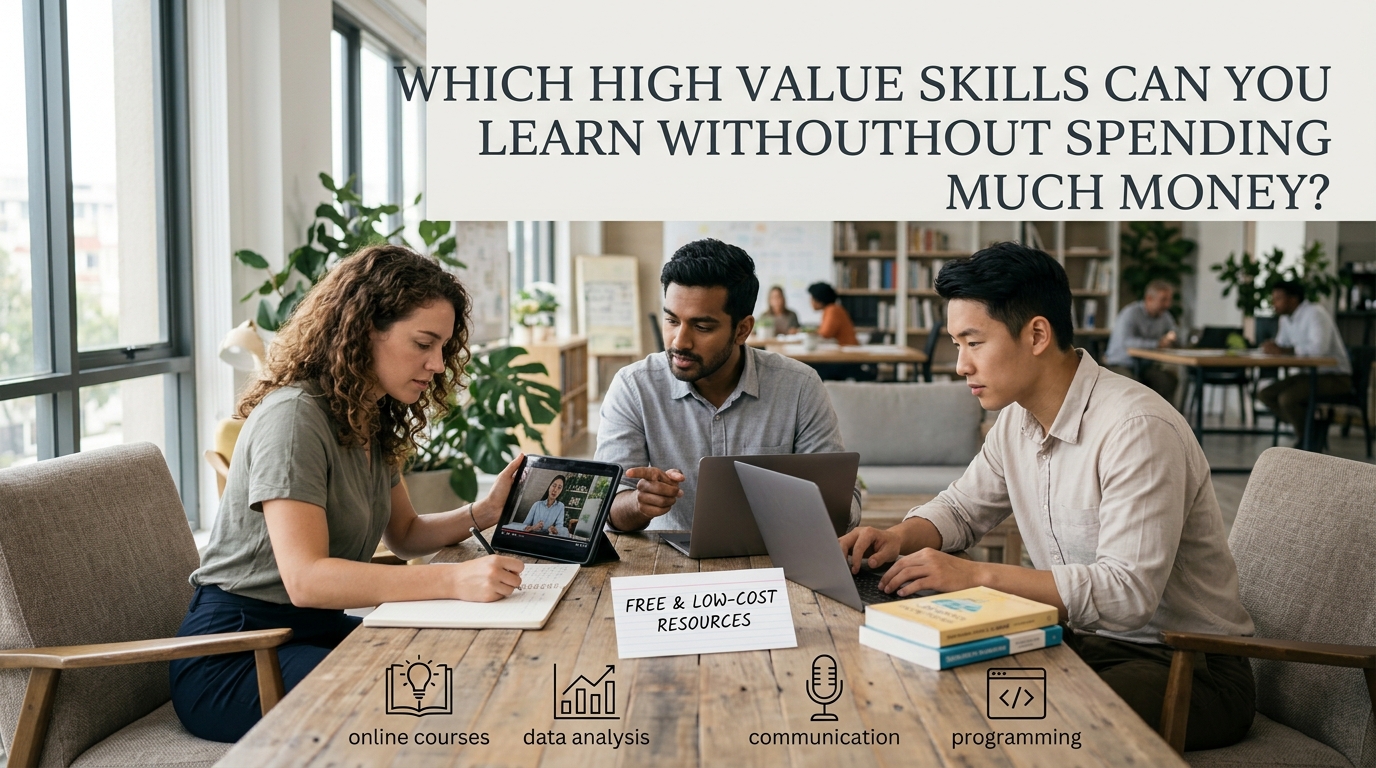
Developing valuable professional skills does not always require expensive courses, university programs, or specialized training. Many people believe that gaining high-level abilities requires a large financial investment, but this is not necessarily true. Today, free learning platforms, online communities, digital resources, and practical projects make skill development more accessible than ever.
High value skills are abilities that help individuals solve problems, improve productivity, and contribute to business or professional goals. Some of these skills can be learned independently through consistent practice and affordable resources. By choosing the right learning methods, students, job seekers, and employees can improve their career opportunities without spending much money.
WHAT ARE HIGH VALUE SKILLS?
High value skills are abilities that provide meaningful benefits in the workplace and help individuals perform tasks that require specific knowledge or expertise. These skills may involve technology, communication, creativity, leadership, or analytical thinking. Examples include digital marketing, data analysis, graphic design, programming, project management, and problem-solving. Their value comes from how effectively they help people and organizations achieve useful results.
The demand for certain skills can change depending on industry developments and business needs. However, abilities that improve efficiency, support decision-making, and help solve real problems often remain valuable across different professions. Learning these skills can make individuals more competitive when applying for jobs or pursuing career advancement. A high value skill does not always need to be expensive to learn, but it requires time, practice, and continuous improvement.
WHY CAN YOU LEARN VALUABLE SKILLS WITHOUT SPENDING MUCH MONEY?
The internet has changed how people access education and professional training. Many websites provide free courses, tutorials, educational videos, and learning materials covering a wide range of subjects. People can study programming, communication, marketing, and other professional abilities without paying for traditional classroom instruction. Some platforms also offer free learning paths and practical exercises that help learners understand new concepts.
Another advantage is the availability of digital communities where beginners can ask questions, exchange ideas, and receive feedback. Online forums, professional groups, and open-source communities can provide useful learning experiences without expensive membership fees. However, free resources still require discipline because learners must organize their schedules and evaluate the quality of the information. The most important investment is often consistent effort rather than money.
DIGITAL MARKETING
Digital marketing is one of the valuable skills that can be learned through free or affordable online resources. It involves promoting products, services, or brands through digital channels such as search engines, social media, websites, and email. Beginners can start by learning content marketing, search engine optimization (SEO), social media management, and basic advertising concepts. These abilities are useful for businesses that want to reach customers and increase their online visibility.
To practice digital marketing, learners can create a simple blog, manage a personal social media account, or help a small business improve its online presence. They can also study free educational materials from platforms such as Google Skillshop and HubSpot Academy. Practical projects help learners understand audience behavior, content performance, and marketing strategies. Building a small portfolio of real projects can demonstrate your abilities to potential employers or clients.
DATA ANALYSIS
Data analysis is the ability to collect, organize, examine, and interpret information to support better decisions. Businesses use data analysis to understand customer behavior, measure performance, identify trends, and evaluate business strategies. Beginners do not need expensive software to start learning this skill because spreadsheet applications such as Google Sheets and free versions of other tools can provide useful practice opportunities.
Learners can begin with basic concepts such as sorting data, using formulas, creating charts, and identifying patterns. After developing these foundations, they can explore more advanced topics such as SQL, statistics, and data visualization. Free tutorials and sample datasets are available online for independent practice. Learning how to turn raw information into useful insights can create opportunities in many industries.
GRAPHIC DESIGN
Graphic design is a valuable skill for people interested in creativity, communication, and digital content production. It involves creating visual materials that communicate messages clearly, including social media graphics, presentations, posters, advertisements, and website elements. Businesses often need attractive visual content to promote their products and maintain a consistent brand identity.
Beginners can learn design principles such as color combinations, typography, layout, spacing, and visual hierarchy through free tutorials. Tools such as Canva offer free features that allow users to practice creating different types of designs. Learners can also explore free graphic design software and build a portfolio using personal projects. Understanding design principles is more important than owning expensive equipment or software when starting out.
PROGRAMMING AND BASIC CODING
Programming is a high value technical skill that allows individuals to create websites, applications, software, and automated processes. It is useful in industries such as technology, finance, education, healthcare, and business. Although becoming an experienced programmer requires significant practice, beginners can start learning basic coding without paying for expensive training programs.
Several online resources provide free lessons in programming languages such as Python, JavaScript, and HTML. Beginners can start with simple projects, including personal websites, calculators, or basic automation tools. Platforms such as freeCodeCamp and The Odin Project provide structured learning materials and practical exercises. The best way to learn programming is to understand basic concepts and apply them by building small projects consistently.
COMMUNICATION AND PUBLIC SPEAKING
Communication is an essential professional skill because almost every workplace requires people to exchange information and work with others. Good communication involves explaining ideas clearly, listening carefully, asking relevant questions, and adjusting messages to different audiences. Public speaking is another useful ability that helps individuals present information, share opinions, and build confidence during professional discussions.
These skills can be developed without expensive courses through regular practice. Learners can join discussion groups, participate in online communities, record short presentations, or practice explaining complex topics in simple language. They can also ask friends or colleagues for feedback on their speaking and writing. Consistent practice and constructive feedback can gradually improve communication confidence and effectiveness.
PROJECT MANAGEMENT
Project management involves planning, organizing, and coordinating tasks to achieve specific goals within available time and resources. This skill is useful for employees, freelancers, business owners, and team leaders. It includes setting priorities, creating schedules, monitoring progress, managing risks, and communicating responsibilities to team members.
Beginners can learn the fundamentals through free online courses, articles, and educational videos. They can also practice using free versions of task management tools or simple spreadsheets to organize personal projects. For example, planning a small event or managing a content schedule can provide practical experience in setting deadlines and tracking progress. Understanding how to manage tasks and resources can improve productivity in almost any profession.
CRITICAL THINKING AND PROBLEM-SOLVING
Critical thinking and problem-solving are valuable abilities because they help individuals understand challenges and make reasonable decisions. Critical thinking involves examining information, checking evidence, and considering different perspectives before reaching a conclusion. Problem-solving focuses on identifying the causes of an issue and selecting practical solutions.
These skills can be developed through everyday activities without requiring paid training. Learners can analyze real-life situations, compare different solutions, solve logic problems, and evaluate information from reliable sources. Reading case studies and discussing complex topics with other people can also improve reasoning abilities. The ability to think independently and solve problems logically can make employees more effective and adaptable.
HOW TO LEARN HIGH VALUE SKILLS ON A LIMITED BUDGET
Learning valuable skills with limited money requires a clear plan and effective use of available resources. Instead of trying to master several subjects at once, individuals should choose one skill that matches their career goals and current interests. They can then identify free learning materials, create a realistic study schedule, and practice regularly. This approach makes the learning process more focused and easier to maintain.
Here are practical steps to develop high value skills without spending much money:
- Choose One Priority Skill: Focus on an ability that matches your career goals and has relevant demand in your target industry.
- Use Free Learning Platforms: Explore educational websites, tutorials, online courses, and open learning materials.
- Create a Study Schedule: Set aside regular time each week to learn new concepts and complete exercises.
- Practice Through Small Projects: Apply what you learn by creating websites, analyzing sample data, designing graphics, or managing personal projects.
- Join Learning Communities: Connect with other learners to exchange knowledge, ask questions, and receive feedback.
- Build a Portfolio: Save your completed projects and document the skills you have developed.
- Review Your Progress: Identify areas that need improvement and adjust your learning plan when necessary.
It is also important to remember that free resources do not always provide professional certification or personalized guidance. Some employers may require recognized qualifications for particular positions, so learners should check the requirements of their chosen career path. A strong portfolio and practical ability can support your qualifications, although they do not replace mandatory credentials when a job requires them.
COMMON MISTAKES TO AVOID WHEN LEARNING NEW SKILLS
One common mistake is collecting too many courses without completing them. Watching tutorials may provide useful information, but it does not automatically mean someone can apply the knowledge in real situations. Learners should balance theory with practical exercises and focus on producing measurable results. Completing one useful project can be more beneficial than starting several courses without finishing them.
Another mistake is choosing a skill only because it is popular. A skill may be valuable in one industry but less relevant to another career path. Learners should research job requirements, understand their personal interests, and identify abilities that match their professional goals. The best skill to learn is one that combines market relevance, personal interest, and opportunities for practical application.
CONCLUSION
Learning high value skills does not have to involve expensive courses or large financial investments. Digital marketing, data analysis, graphic design, programming, communication, project management, and critical thinking can all be developed through free or affordable resources. The internet provides many opportunities for people to access educational materials, practice new abilities, and connect with learning communities.
However, successful skill development requires more than simply watching tutorials or reading information. Individuals need to practice consistently, complete real projects, seek feedback, and demonstrate what they can do. By focusing on relevant skills and using available resources wisely, anyone can improve their professional abilities without spending much money.
Recent Posts

Bagaimana Sistem SKS pada Program Kuliah... 22.11.2026/40 View

How Does Technology Make Daily Evaluation... 21.11.2026/71 View

Apa Strategi Menghadapi Kesenjangan antara Kompetensi... 21.11.2026/73 View

Mengapa Inventaris Aset Penting bagi Kelancaran... 21.11.2026/69 View

When Should Musicians Join a Record... 21.11.2026/73 View
