

Which Indonesian Cultural Heritage Traditions Are Recognized by UNESCO?
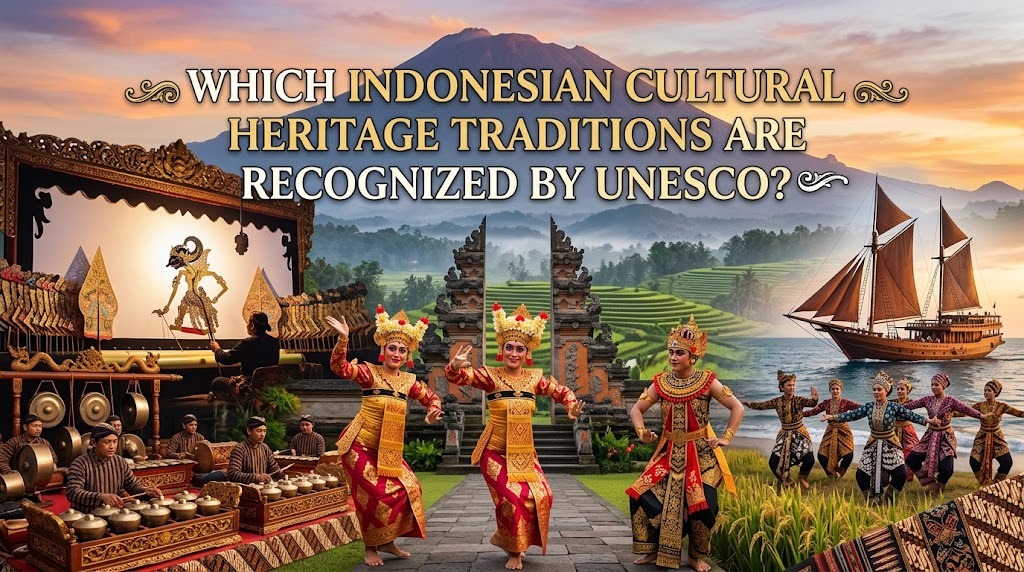
Indonesia has a rich cultural heritage shaped by its diverse ethnic groups, languages, and historical traditions. From traditional music and dance to textile-making and herbal wellness practices, these traditions reflect the creativity, knowledge, and values passed down through generations. UNESCO, the United Nations Educational, Scientific and Cultural Organization, recognizes cultural traditions that have significant value and deserve protection.
Many Indonesian cultural heritage traditions have been inscribed on UNESCO's Intangible Cultural Heritage lists. These include batik, wayang puppet theatre, angklung, gamelan, pencak silat, and jamu wellness culture. Some traditions are also listed as needing urgent safeguarding because they face challenges that could threaten their continuation. UNESCO recognition helps increase awareness, but preserving these traditions also depends on communities continuing to practice and teach them.
INDONESIAN BATIK
Indonesian batik is a traditional textile art that uses wax and dye to create detailed patterns on fabric. Artisans apply wax to selected areas before dyeing the cloth, allowing different colors and designs to develop. Batik patterns often have symbolic meanings connected to nature, local beliefs, social values, and important life events. Different regions have developed distinctive styles that reflect their cultural identities. UNESCO recognized Indonesian batik in 2009, highlighting its artistic value and the importance of passing its knowledge and skills to future generations.
WAYANG PUPPET THEATRE
Wayang is a traditional Indonesian theatre form that uses puppets to tell stories, often accompanied by gamelan music. One well-known form is wayang kulit, which uses leather puppets to create shadows on a screen. Performances often feature stories from the Ramayana and Mahabharata, as well as local legends and moral teachings. Wayang combines storytelling, music, visual art, and philosophical ideas in a single performance. UNESCO recognized Indonesian wayang puppet theatre in 2008, emphasizing its importance as a living cultural tradition.
ANGKLUNG
Angklung is a traditional musical instrument made from bamboo and strongly associated with West Java. Its sound is produced by shaking bamboo tubes designed to create particular musical notes. In group performances, each musician may play different notes, requiring cooperation to produce a complete melody. Learning angklung can encourage teamwork, discipline, and appreciation of traditional music. UNESCO inscribed Indonesian angklung on its Representative List of the Intangible Cultural Heritage of Humanity in 2010.
GAMELAN
Gamelan is a traditional Indonesian musical ensemble that includes instruments such as gongs, metallophones, drums, and other percussion instruments. Its music features interconnected rhythms and melodies that require coordination among performers. Gamelan accompanies ceremonies, traditional theatre, festivals, and other community activities. Learning the music often involves long-term practice and knowledge passed from experienced musicians to younger generations. UNESCO recognized gamelan in 2021, acknowledging its cultural importance and its role in maintaining community traditions.
PENCAK SILAT
Pencak silat is a traditional Indonesian martial art that combines self-defense techniques, physical movements, artistic expression, and philosophical values. Different regions have developed their own styles, movements, costumes, and performance traditions. Beyond physical training, pencak silat teaches discipline, respect, self-control, and responsibility. It is also performed during cultural celebrations and community events. UNESCO recognized pencak silat in 2019, highlighting its importance in Indonesian cultural identity and the transmission of traditional knowledge.
TRADITIONAL BALINESE DANCE
Traditional Balinese dance combines expressive movements, hand gestures, facial expressions, music, and elaborate costumes. These dances are closely connected to religious ceremonies, community activities, and artistic traditions in Bali. UNESCO recognized three genres of traditional Balinese dance in 2015, covering sacred, semi-sacred, and entertainment forms. Dancers often begin training at a young age under the guidance of experienced teachers. Preserving these dances requires continued practice, cultural education, and respect for their spiritual and historical meanings.
PINISI BOATBUILDING TRADITION
Pinisi is a traditional sailing vessel associated with maritime communities in South Sulawesi, particularly the Konjo, Bugis, and Makassar peoples. Building these wooden boats requires specialized knowledge of vessel design, woodworking, and traditional maritime techniques. The skills are passed down through generations of experienced boatbuilders. Pinisi vessels reflect Indonesia's long history of sailing, fishing, trade, and transportation across the archipelago. UNESCO recognized the art of Pinisi boatbuilding in 2017, emphasizing the importance of protecting its craftsmanship and cultural knowledge.
JAMU WELLNESS CULTURE
Jamu is a traditional Indonesian wellness practice involving herbal preparations made from ingredients such as turmeric, ginger, and other plants. Knowledge about selecting ingredients and preparing herbal drinks has been passed down through families and communities. Jamu remains part of everyday cultural practices and reflects Indonesia's long-standing relationship with local plants. Its preparation also represents traditional knowledge and skills that deserve documentation and preservation. UNESCO recognized jamu wellness culture in 2023, helping raise awareness of this living tradition while distinguishing traditional practices from scientifically established medical treatments.
KEBAYA TRADITIONS
Kebaya is a traditional garment worn by women in Indonesia and several other Southeast Asian countries. It is valued for its designs, tailoring techniques, embroidery, and connections to cultural identity. Different communities have developed distinctive styles influenced by local history, fashion, and social customs. Kebaya is commonly worn during weddings, cultural celebrations, formal events, and other important occasions. In 2024, UNESCO recognized kebaya-related knowledge, skills, traditions, and practices through a multinational nomination involving Indonesia, Brunei Darussalam, Malaysia, Singapore, and Thailand.
KRIS TRADITION
The Indonesian kris is a traditional dagger known for its distinctive blade, detailed craftsmanship, and cultural symbolism. Its creation requires specialized metalworking skills and knowledge of traditional design techniques. In different communities, the kris may be associated with ceremonies, family heritage, artistic expression, and spiritual beliefs. The skills involved in making and caring for a kris have been transmitted across generations. UNESCO recognized the Indonesian kris in 2008, highlighting its artistic, historical, and cultural significance.
SAMAN DANCE
Saman dance originates from the Gayo community in Aceh and is known for its synchronized movements, rhythmic clapping, and group singing. Performers sit in closely arranged rows and coordinate their hands, upper bodies, and heads to create complex patterns. The dance communicates messages about cooperation, discipline, religious values, and community relationships. It is traditionally performed during celebrations and important community gatherings. In 2011, UNESCO placed Saman dance on the List of Intangible Cultural Heritage in Need of Urgent Safeguarding because additional efforts were needed to support its continued transmission.
NOKEN FROM PAPUA
Noken is a traditional multifunctional bag made by Indigenous communities in Papua using techniques such as knotting and weaving plant fibers. It can carry agricultural products, personal belongings, and other everyday items. Beyond its practical use, noken represents local craftsmanship, traditional knowledge, and community identity. The skills required to make it are traditionally passed from experienced makers to younger generations. In 2012, UNESCO placed noken on its Urgent Safeguarding List to encourage efforts to protect its production techniques and cultural significance.
REOG PONOROGO
Reog Ponorogo is a traditional performing art from Ponorogo, East Java, combining dance, music, theatrical storytelling, and elaborate costumes. One of its most recognizable features is a large mask decorated with peacock feathers. Performers demonstrate physical strength, artistic skill, and coordination during cultural celebrations and community events. The tradition reflects local history, creativity, and community identity. In 2024, UNESCO placed Reog Ponorogo on the List of Intangible Cultural Heritage in Need of Urgent Safeguarding to support the continuation of this traditional performing art.
WHY UNESCO RECOGNITION MATTERS FOR INDONESIAN CULTURE?
UNESCO recognition helps introduce Indonesian cultural traditions to international audiences and highlights their importance to humanity. It can encourage governments, educational institutions, and cultural organizations to support preservation programs. Recognition may also create opportunities for traditional artists, craftspeople, and performers to share their knowledge with younger generations. However, being listed by UNESCO does not automatically guarantee that a tradition will survive. Long-term preservation depends on active participation, continued practice, and support for the communities that maintain these traditions.
It is also important to understand that UNESCO has different lists for intangible cultural heritage. The Representative List raises awareness of cultural traditions and their significance, while the List of Intangible Cultural Heritage in Need of Urgent Safeguarding highlights traditions that require additional protection. Some traditions are recognized jointly by several countries because they share cultural practices across national borders. These international efforts demonstrate that cultural heritage can connect communities while preserving their unique identities. Protecting these traditions requires respect for cultural knowledge, community involvement, and opportunities for future generations to learn.
CONCLUSION
Indonesia has many cultural heritage traditions recognized by UNESCO, including batik, wayang, angklung, gamelan, pencak silat, traditional Balinese dance, Pinisi boatbuilding, jamu wellness culture, kebaya, and the kris. Other traditions, such as Saman dance, noken, and Reog Ponorogo, have received special attention because they need additional safeguarding efforts. Each tradition represents Indonesia's creativity, historical experiences, local knowledge, and cultural diversity.
Preserving this heritage requires cooperation between communities, cultural practitioners, governments, and educational institutions. Individuals can contribute by learning traditional arts, supporting local craftspeople, participating in cultural activities, and sharing accurate information. By keeping these traditions alive, Indonesia can protect its cultural identity and share its heritage with future generations.
Recent Posts

Bagaimana Sistem SKS pada Program Kuliah... 22.11.2026/48 View

How Does Technology Make Daily Evaluation... 21.11.2026/76 View

Apa Strategi Menghadapi Kesenjangan antara Kompetensi... 21.11.2026/78 View

Mengapa Inventaris Aset Penting bagi Kelancaran... 21.11.2026/73 View

When Should Musicians Join a Record... 21.11.2026/78 View
