

Which Regional Languages Are the Most Widely Spoken in Indonesia?
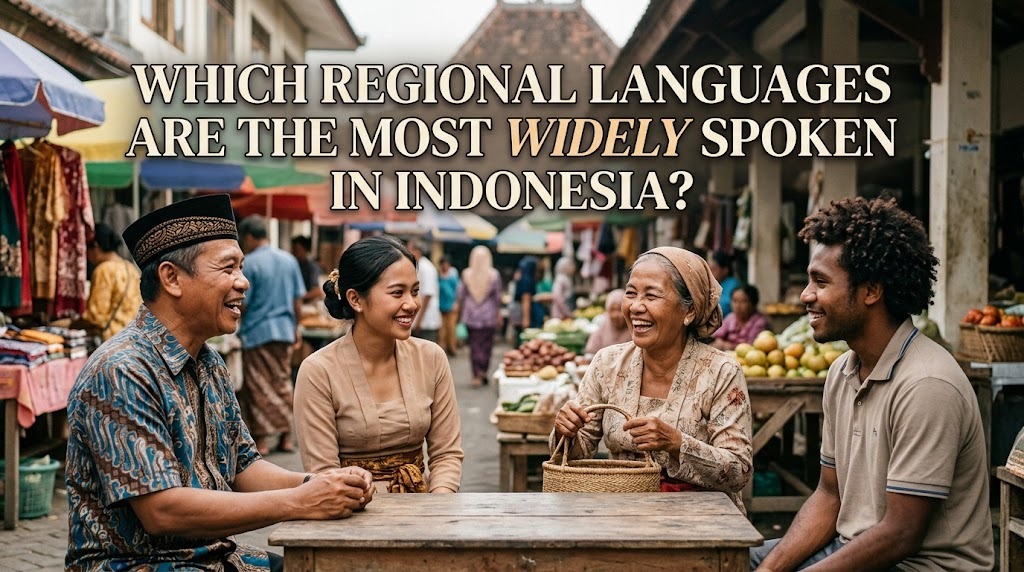
Indonesia is known for its remarkable linguistic diversity, with hundreds of regional languages spoken across its islands. These languages are used in everyday conversations, family interactions, traditional ceremonies, and cultural activities. Some regional languages have millions of speakers and are used across several regions, while others are spoken mainly within particular communities. Understanding which regional languages are the most widely spoken in Indonesia helps people appreciate the country's cultural richness and linguistic heritage. It also highlights the importance of protecting these languages so that future generations can continue to use and understand them.
WHAT MAKES A REGIONAL LANGUAGE WIDELY SPOKEN IN INDONESIA?
A regional language is considered widely spoken when it has a large number of speakers or is used across an extensive geographical area. The number of speakers can include people who use the language as their first language as well as those who learn it as an additional language. Population size, migration, family traditions, and historical settlement patterns can influence how widely a language is used. Some languages remain concentrated in their original regions, while others spread to different parts of Indonesia through education, employment, and migration. Therefore, the number of speakers and the geographical distribution of a language are important factors when comparing regional languages.
However, determining the exact ranking of Indonesia's most widely spoken regional languages can be difficult. Different surveys may count native speakers, people who understand a language, or everyone who uses it in daily communication. The results may also differ depending on the year and the method used to collect the data. For this reason, it is more accurate to identify major languages by their broad prominence rather than assume that one ranking applies to every source. Indonesian, meanwhile, serves as the national language and should be distinguished from regional languages when comparing speaker populations.
WHY IS JAVANESE ONE OF THE MOST WIDELY SPOKEN REGIONAL LANGUAGES?
Javanese is one of Indonesia's most widely spoken regional languages, particularly in Central Java, East Java, and the Special Region of Yogyakarta. It is used by many families and communities in everyday communication, cultural activities, and traditional ceremonies. Javanese has distinctive speech levels and forms of address that can express politeness, familiarity, and social relationships. These features make the language an important part of Javanese cultural identity. Its continued use in homes and communities has helped it remain prominent across generations.
Javanese is also spoken by communities outside Java because of migration and settlement in other parts of Indonesia. Many Javanese families continue using the language while also communicating in Indonesian at school, work, and in public settings. Traditional arts, literature, music, and performances help maintain interest in the language. Nevertheless, the level of fluency can vary among younger speakers, especially in families where Indonesian is used more frequently. Family communication and cultural activities remain important for maintaining Javanese as a living language.
HOW WIDELY ARE SUNDANESE AND MADURESE SPOKEN?
Sundanese is another major regional language in Indonesia and is spoken mainly in West Java and parts of Banten. It is widely used in family conversations, local markets, community activities, and cultural performances. Sundanese has its own vocabulary, expressions, and speech conventions that reflect the cultural traditions of Sundanese communities. It is also represented in songs, literature, and regional educational materials. These forms of cultural expression help introduce the language to younger generations and maintain its role in local life.
Madurese is spoken primarily by communities on Madura Island and in parts of East Java. It is also used by Madurese communities living elsewhere in Indonesia. The language has several local varieties, and pronunciation and vocabulary may differ between communities. Madurese plays an important role in family relationships, social interaction, and the preservation of local identity. Both Sundanese and Madurese demonstrate how regional languages can remain widely used while reflecting the distinct histories and traditions of their speakers.
WHAT OTHER REGIONAL LANGUAGES HAVE LARGE SPEAKER COMMUNITIES?
Besides Javanese, Sundanese, and Madurese, Indonesia has several other regional languages with substantial speaker communities. Minangkabau is widely spoken in West Sumatra and among Minangkabau communities living elsewhere. Bugis is an important language in South Sulawesi and is also used by communities that have migrated to other Indonesian islands. Batak languages, including Toba Batak and several related varieties, are spoken by communities in North Sumatra. These languages support daily communication and help preserve local traditions, oral histories, and cultural identities.
Other prominent regional languages include Balinese, spoken mainly in Bali, and Acehnese, used by many communities in Aceh. Different languages may have distinct grammatical structures, writing traditions, and regional varieties. Some languages are also closely associated with traditional literature, ceremonies, music, and customary practices. Migration has helped many of these languages reach communities beyond their original areas. However, the number of speakers and the frequency of everyday use can vary, so the size of a language community does not automatically indicate how strong its transmission to children remains.
HOW DO REGIONAL LANGUAGES REMAIN IMPORTANT IN DAILY LIFE?
Regional languages continue to play an important role in communication, cultural identity, and relationships within local communities. People often use them when talking with relatives, participating in community gatherings, shopping at local markets, or attending traditional ceremonies. Regional languages can also communicate local humor, expressions of respect, and cultural meanings that are difficult to reproduce fully in another language. Their use helps people maintain connections with older generations and understand the traditions of their communities. Regional languages remain valuable because they connect communication with cultural knowledge and a sense of belonging.
At the same time, the use of Indonesian is essential for communication between people from different linguistic backgrounds. Many Indonesians switch between Indonesian and their regional languages depending on the situation. This multilingual ability allows people to participate in national life while maintaining their local cultural connections. Families, schools, community organizations, and digital content creators can support this balance by encouraging regional language use alongside Indonesian. Regular use in everyday situations is one of the most effective ways to keep regional languages active across generations.
CONCLUSION
Indonesia has many widely spoken regional languages, including Javanese, Sundanese, Madurese, Minangkabau, Bugis, Batak languages, Balinese, and Acehnese. Each language reflects the history, cultural identity, and experiences of the communities that speak it. Although speaker populations vary and exact rankings depend on how data are collected, these languages remain important parts of Indonesia's linguistic diversity. Their continued use depends on family communication, education, cultural activities, and opportunities to use them in modern settings. Preserving regional languages helps ensure that Indonesia's cultural heritage and linguistic richness can be passed on to future generations.
Recent Posts

Bagaimana Sistem SKS pada Program Kuliah... 22.11.2026/48 View

How Does Technology Make Daily Evaluation... 21.11.2026/76 View

Apa Strategi Menghadapi Kesenjangan antara Kompetensi... 21.11.2026/78 View

Mengapa Inventaris Aset Penting bagi Kelancaran... 21.11.2026/73 View

When Should Musicians Join a Record... 21.11.2026/78 View
