

Which Regional Languages in Indonesia Have Traditional Writing Systems?
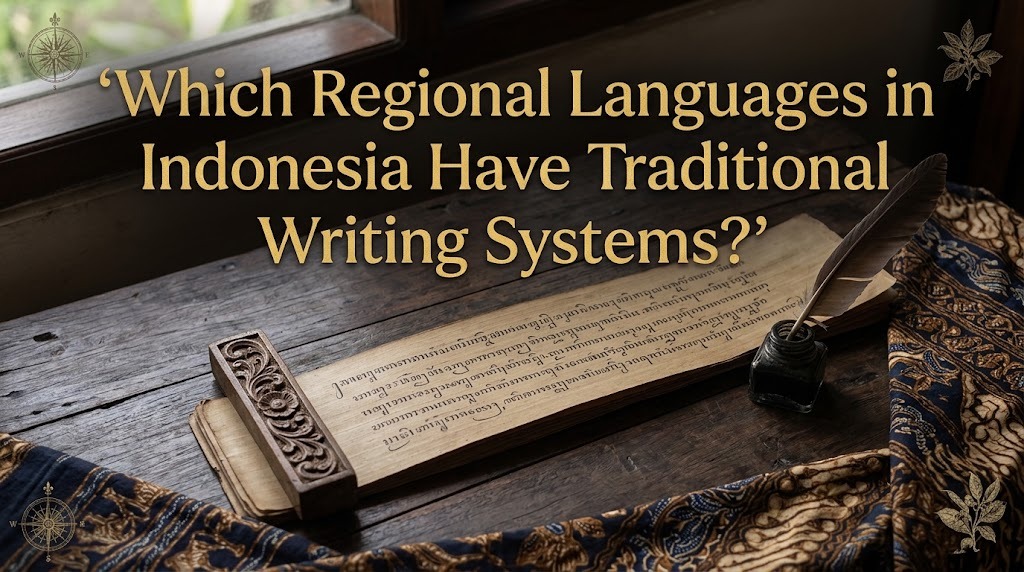
Indonesia is home to hundreds of regional languages that reflect the country’s rich cultural diversity. Some of these languages have traditional writing systems that were developed long before the widespread use of the Latin alphabet. These scripts were used to record historical events, religious teachings, literary works, and traditional knowledge. Examples include Javanese script, Sundanese script, Balinese script, and Batak scripts. Understanding traditional writing systems helps preserve Indonesia’s cultural heritage and ensures that future generations can access the knowledge recorded by their ancestors.
JAVANESE SCRIPT AND ITS CULTURAL SIGNIFICANCE
Javanese script, commonly known as Aksara Jawa or Hanacaraka, is one of Indonesia’s well-known traditional writing systems. It has historically been used to write the Javanese language in literary works, historical records, and traditional texts. The script consists of basic characters representing syllables, along with additional signs that modify their sounds. Many classical Javanese manuscripts contain stories, philosophical teachings, and cultural values written in this script.
Today, Javanese script is taught in some schools and introduced through cultural activities in Java. Digital fonts and educational applications also help people learn its characters. Preserving Aksara Jawa is important because it connects modern communities with centuries of Javanese literature and history.
SUNDANESE SCRIPT AND ITS HISTORICAL ROOTS
Sundanese script is associated with the Sundanese language, which is primarily spoken in West Java and parts of Banten. Historical forms of Sundanese writing appeared in inscriptions and manuscripts, while the modern standardized script is used in educational and cultural settings. It has its own characters and writing conventions that distinguish it from other Indonesian scripts. Traditional Sundanese manuscripts preserve information about local history, literature, beliefs, and community life.
Learning Sundanese script can strengthen people’s understanding of their cultural identity. Schools, museums, cultural organizations, and digital learning resources can introduce the script to younger generations. The continued use of Sundanese script helps maintain a written connection to the region’s linguistic and historical heritage.
BALINESE SCRIPT IN RELIGIOUS AND CULTURAL LIFE
Balinese script, known as Aksara Bali, remains closely connected to the island’s cultural and religious traditions. It is used to write Balinese and appears in traditional manuscripts, inscriptions, ceremonial materials, and religious texts. The script includes characters for syllables and additional signs that represent particular sounds or modify pronunciation. Its use requires knowledge of both the writing system and the cultural context in which written texts appear.
Although Latin letters are widely used in everyday communication, Balinese script continues to have an important place in cultural education and traditional activities. Some communities display it on public signs, buildings, and ceremonial objects. Protecting Aksara Bali helps preserve written traditions that remain meaningful in the daily and spiritual lives of many Balinese communities.
BATAK SCRIPTS AND MANUSCRIPT TRADITIONS
Batak scripts refer to traditional writing systems associated with several Batak communities in North Sumatra. These scripts have been used to write languages such as Toba Batak, Karo, Simalungun, and related linguistic varieties, although their historical forms and usage differ. Traditional Batak manuscripts were sometimes written on materials such as tree bark and bamboo. Their contents could include advice, medicine-related knowledge, calendars, stories, and other forms of traditional learning.
The Batak writing tradition demonstrates how communities developed methods to record knowledge before modern printing became widespread. Today, historical manuscripts are valuable resources for researchers, cultural institutions, and people interested in Batak heritage. Documenting and teaching Batak scripts can help prevent important written traditions from becoming unfamiliar to younger generations.
OTHER TRADITIONAL WRITING SYSTEMS IN INDONESIA
Besides Javanese, Sundanese, Balinese, and Batak scripts, Indonesia has several other traditional writing systems. The Bugis and Makassar communities have used Lontara script, particularly in South Sulawesi, to record literature, historical accounts, and traditional knowledge. Lampung script is another writing system associated with the Lampung language and its cultural heritage. Rejang script, used for the Rejang language in parts of Bengkulu and surrounding areas, also represents an important regional writing tradition.
Other scripts and manuscript traditions exist across the Indonesian archipelago, reflecting the historical development of local languages and societies. Their forms, uses, and levels of contemporary use vary from one community to another. These writing systems show that Indonesia’s cultural diversity includes not only spoken languages but also distinctive ways of recording knowledge in written form.
HOW TRADITIONAL SCRIPTS CAN BE PRESERVED
Traditional writing systems can be preserved through education, community activities, documentation, and digital technology. Schools can introduce regional scripts through language lessons, handwriting exercises, and local cultural projects. Families can support learning by sharing traditional stories, books, and manuscripts with children. Cultural institutions can organize exhibitions, workshops, and public events that explain the history and use of these scripts.
Technology also provides new opportunities to preserve and share traditional writing. Digital fonts, online dictionaries, learning applications, and scanned manuscript collections can make written materials easier to access. However, digitization should be accompanied by accurate documentation and support from knowledgeable speakers and cultural practitioners. The most effective preservation efforts combine digital access with real opportunities to read, write, teach, and use traditional scripts in community life.
CONCLUSION
Indonesia has several traditional writing systems, including Javanese, Sundanese, Balinese, Batak, Lontara, Lampung, and Rejang scripts. Each reflects the history, language, and cultural experiences of the communities that developed and used it. These scripts preserve literary works, historical records, religious knowledge, and traditional wisdom. Although their current use varies, education, cultural programs, and digital resources can help keep them accessible. Preserving traditional writing systems is an important step toward protecting Indonesia’s linguistic diversity and cultural heritage for future generations.
Recent Posts

Bagaimana Sistem SKS pada Program Kuliah... 22.11.2026/49 View

How Does Technology Make Daily Evaluation... 21.11.2026/77 View

Apa Strategi Menghadapi Kesenjangan antara Kompetensi... 21.11.2026/78 View

Mengapa Inventaris Aset Penting bagi Kelancaran... 21.11.2026/74 View

When Should Musicians Join a Record... 21.11.2026/79 View
