

Which Technology Skills Will Be Most Valuable in the Future?
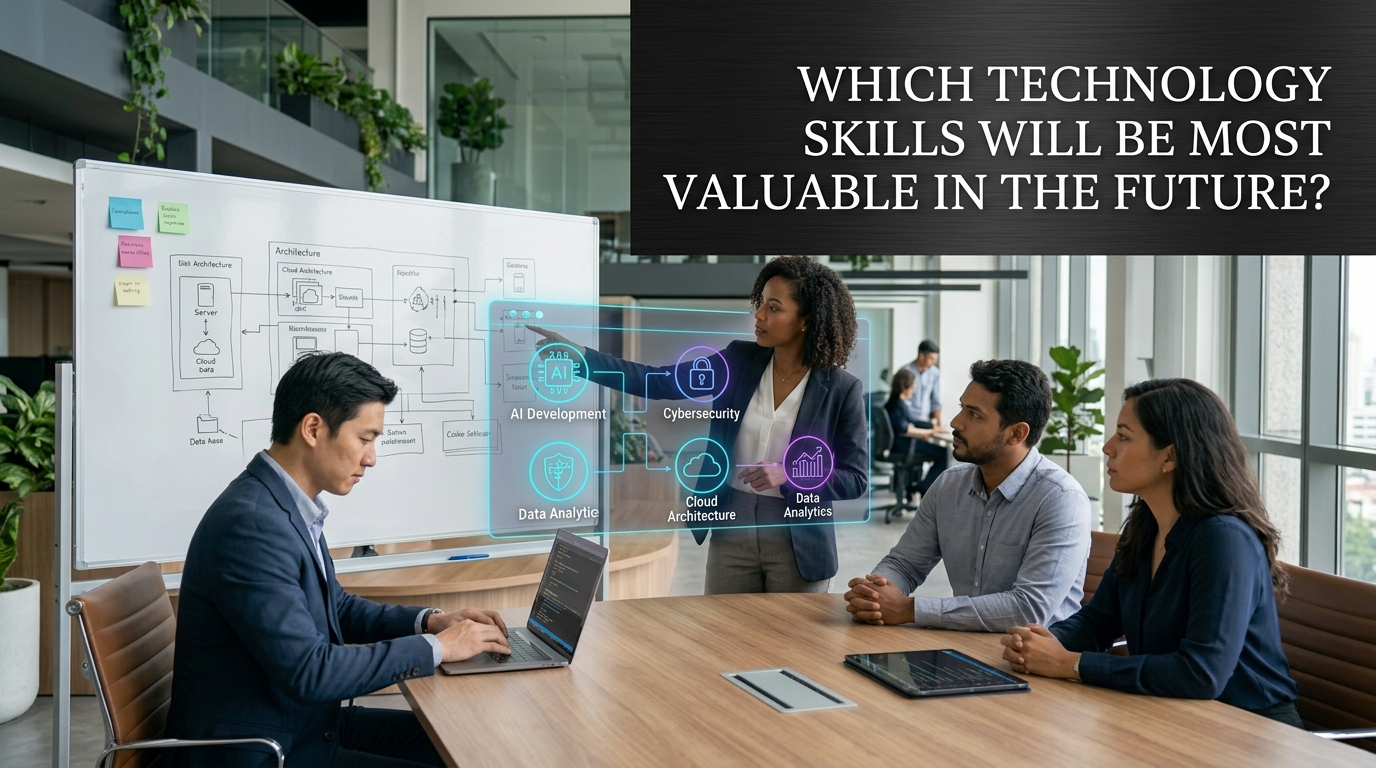
Technology continues to change the way people work, communicate, and solve problems. Many industries now depend on digital systems, automation, artificial intelligence, and online platforms to improve their performance. As a result, employees need to develop relevant technology skills to remain competitive in an increasingly digital workplace.
Understanding which technology skills will be valuable in the future can help students, graduates, and professionals prepare for new career opportunities. These abilities are not only important for people working in the technology industry but also for individuals in business, education, healthcare, finance, and other fields. Developing the right skills can help workers adapt to changes and become more prepared for future professional challenges.
1. ARTIFICIAL INTELLIGENCE AND MACHINE LEARNING
Artificial Intelligence (AI) is one of the most influential technologies shaping the future of work. AI allows computer systems to perform tasks that normally require human intelligence, such as recognizing patterns, analyzing information, and generating recommendations. Machine learning is a branch of AI that enables systems to learn from data and improve their performance over time.
Professionals who understand how to use AI tools can improve productivity and make certain tasks more efficient. For example, AI can support data analysis, customer service, content development, and business planning. However, workers must also understand its limitations, accuracy, and ethical considerations to use it responsibly.
2. DATA ANALYSIS AND DATA SCIENCE
Data analysis is an important technology skill because organizations rely on information to make business decisions. Professionals who can collect, organize, interpret, and present data help companies understand customer behavior, identify trends, and evaluate performance. These abilities are valuable in marketing, finance, healthcare, education, and many other industries.
Learning tools such as Microsoft Excel, SQL, Python, and data visualization platforms can help individuals develop this capability. Data science also combines statistics, programming, and analytical methods to discover useful insights from large datasets. Data literacy will remain valuable because businesses need people who can turn complex information into practical decisions.
3. CYBERSECURITY AND DATA PROTECTION
As more activities move online, cybersecurity has become increasingly important. Companies must protect their systems, networks, and sensitive information from cyberattacks, unauthorized access, and data theft. This creates a growing need for professionals who understand digital security and risk management.
Basic cybersecurity knowledge is also useful for employees outside the technology industry. Understanding strong passwords, secure networks, phishing attacks, and safe data handling can reduce security risks in everyday work. Individuals who want to specialize in this field can study network security, ethical hacking, and security monitoring. Digital security awareness will be an essential ability in the future workplace.
4. PROGRAMMING AND SOFTWARE DEVELOPMENT
Programming is the process of creating instructions that allow computers and digital systems to perform specific tasks. It is an important foundation for developing websites, mobile applications, software, and automated systems. Languages such as Python, JavaScript, Java, and C++ are commonly used in different areas of software development.
Learning programming helps individuals understand how digital products work and how technology can solve practical problems. Software developers also need logical thinking, creativity, and attention to detail when designing applications. Even for people who do not plan to become programmers, basic coding knowledge can improve their understanding of modern technology.
5. CLOUD COMPUTING AND DIGITAL INFRASTRUCTURE
Cloud computing allows individuals and organizations to store data, run applications, and access computing resources through the internet. Many companies use cloud services because they offer flexibility, scalability, and easier collaboration between employees in different locations. This technology supports modern business operations and digital transformation.
Professionals who understand cloud platforms can help organizations manage digital infrastructure more effectively. Learning about services such as Amazon Web Services, Microsoft Azure, and Google Cloud can provide useful technical knowledge. Cloud computing skills are particularly valuable for careers in IT support, software engineering, system administration, and cloud architecture.
6. DIGITAL COMMUNICATION AND COLLABORATION TOOLS
Modern workplaces increasingly depend on digital platforms to communicate and complete tasks. Employees need to understand how to use video conferencing applications, project management software, shared documents, and online collaboration systems. These tools help teams coordinate activities even when members work from different locations.
Professionals should also know how to communicate clearly through digital channels and manage information responsibly. Familiarity with tools such as Microsoft Teams, Slack, Google Workspace, and project management platforms can support daily productivity. Strong digital collaboration skills help employees work efficiently and maintain professional relationships in modern workplaces.
7. DIGITAL MARKETING AND SEARCH ENGINE OPTIMIZATION
Digital marketing is becoming increasingly important as businesses use online platforms to reach customers and promote their products. Professionals need to understand social media marketing, online advertising, content creation, and customer engagement. These abilities help companies build brand awareness and connect with their target audiences.
Search Engine Optimization (SEO) is another valuable skill because it helps websites become more visible in search engine results. Learning keyword research, content optimization, website performance, and basic analytics can improve digital marketing strategies. These skills are useful not only for marketing specialists but also for entrepreneurs, content creators, and business owners.
8. CRITICAL THINKING AND TECHNOLOGY ADAPTABILITY
Technical knowledge alone is not enough to succeed in a technology-driven workplace. Professionals must also develop critical thinking to evaluate information, identify problems, and choose appropriate solutions. These abilities are important when working with AI systems, digital data, and complex software.
Technology also changes rapidly, so employees need to be willing to learn new tools and update their knowledge. Adaptability and continuous learning help individuals respond to changing industry demands and new workplace systems. Combining technical expertise with problem-solving and communication skills can create a stronger professional foundation.
CONCLUSION
Technology skills will play an increasingly important role in future career opportunities. Artificial intelligence, data analysis, cybersecurity, programming, cloud computing, digital collaboration, and digital marketing are among the abilities that can help professionals remain competitive in a changing job market.
However, learning technology should not stop at understanding specific tools. Individuals also need critical thinking, adaptability, creativity, and a willingness to keep learning. By developing a combination of technical and professional skills, students and workers can prepare themselves for future challenges and take advantage of new opportunities in the digital economy.
Recent Posts

Bagaimana Sistem SKS pada Program Kuliah... 22.11.2026/40 View

How Does Technology Make Daily Evaluation... 21.11.2026/71 View

Apa Strategi Menghadapi Kesenjangan antara Kompetensi... 21.11.2026/73 View

Mengapa Inventaris Aset Penting bagi Kelancaran... 21.11.2026/69 View

When Should Musicians Join a Record... 21.11.2026/73 View
