

Which Thesis Sections Usually Require the Most Revisions?
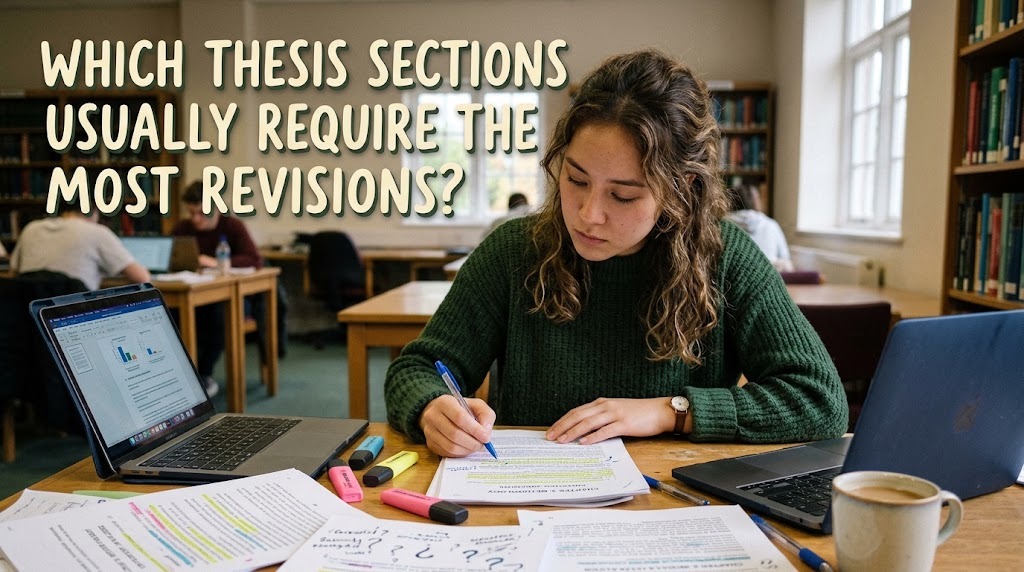
Writing a thesis involves several interconnected sections, each serving a different purpose in presenting academic research. During the thesis revision process, students may receive feedback on everything from the research background to the final conclusion. However, some sections often require more attention because they involve complex explanations, academic arguments, research procedures, or data interpretation.
Understanding which thesis sections usually require the most revisions can help students prepare for supervisor feedback and organize their corrections. Although the specific requirements depend on the research topic and university guidelines, several parts of a thesis commonly need careful review. Identifying these sections early can make the revision process more focused and manageable.
INTRODUCTION AND RESEARCH BACKGROUND
The introduction is one of the sections that may require substantial thesis revisions because it establishes the foundation of the research. Students need to explain the background of the problem, identify the research gap, and show why the topic deserves further investigation. If the explanation is too general or lacks relevant evidence, supervisors may ask for a clearer and more focused discussion.
The research questions, objectives, and significance of the study may also need adjustments. These elements should be connected to the problem described in the background section. For example, if the research problem changes, the research objectives may also need to be revised. Students should ensure that the introduction presents a logical explanation of the research direction and clearly communicates what the study aims to investigate.
LITERATURE REVIEW AND THEORETICAL FRAMEWORK
The literature review often requires detailed revisions because students must demonstrate their understanding of previous research and relevant academic theories. Common issues include using outdated references, relying on sources that are not sufficiently relevant, or presenting summaries without explaining how the studies relate to the current research.
Supervisors may ask students to include more recent academic publications, compare findings from previous studies, or strengthen the theoretical foundation. The theoretical framework may also need improvement if the selected concepts do not adequately support the research questions. Students should avoid adding references simply to increase the number of citations. Instead, they should select credible sources and explain how each one contributes to the development of their research argument.
RESEARCH METHODOLOGY
The research methodology is another thesis section that frequently requires careful revision. This chapter explains how the research is conducted, including the research design, data sources, participants, sampling procedures, data collection methods, and analytical techniques. If these elements are not described clearly, readers may have difficulty understanding how the research findings were obtained.
Supervisors may request revisions when the chosen method does not adequately address the research questions or when important procedures are not explained. For example, students may need to clarify how participants were selected, how research instruments were developed, or how collected data were analyzed. The methodology should provide enough information for readers to evaluate the research process. Any substantial methodological changes should also be discussed with the supervisor because they may affect the analysis and interpretation of findings.
RESULTS AND DISCUSSION
The results and discussion sections can require extensive revisions because they involve presenting and interpreting research findings. In the results section, students need to organize information clearly through explanations, tables, figures, or other relevant forms of presentation. Problems may occur when the findings are incomplete, difficult to follow, or not presented according to the research objectives.
The discussion section requires students to explain what the findings mean and how they relate to previous studies or relevant theories. Supervisors may ask for stronger interpretations when students only describe the results without analyzing their significance. Students should also avoid making conclusions that go beyond the available evidence. A clear distinction between presenting findings and discussing their meaning helps improve the accuracy and depth of the research.
CONCLUSION, REFERENCES, AND FINAL DOCUMENT FORMATTING
The conclusion may also require revisions if it does not directly answer the research questions or introduces information that was not discussed earlier. Students should summarize the main findings, explain how the research objectives have been addressed, and present recommendations when required. A conclusion should be concise while remaining consistent with the evidence presented in the previous chapters.
In addition to the conclusion, references and thesis formatting need careful attention before final submission. Students may need to correct incomplete citation details, ensure that every in-text citation appears in the reference list, and follow the university's required referencing style. Formatting elements such as headings, page numbers, margins, table captions, and figure numbering should also be reviewed. These final checks help ensure that the thesis meets academic and administrative requirements.
CONCLUSION
Several thesis sections commonly require substantial revisions, including the introduction, literature review, research methodology, results and discussion, and final document components. Each section has different requirements, but all of them should contribute to a clear and consistent research argument. The amount of revision needed depends on the research topic, academic standards, supervisor feedback, and the quality of the original document.
Students can manage thesis revisions more effectively by reviewing each chapter systematically and understanding how changes in one section may affect another. They should prioritize corrections that influence the research direction, methodology, or interpretation of findings before completing final language and formatting checks. With careful planning and communication with supervisors, students can improve every part of their thesis and prepare a more complete academic document.
Recent Posts

Bagaimana Sistem SKS pada Program Kuliah... 22.11.2026/47 View

How Does Technology Make Daily Evaluation... 21.11.2026/74 View

Apa Strategi Menghadapi Kesenjangan antara Kompetensi... 21.11.2026/75 View

Mengapa Inventaris Aset Penting bagi Kelancaran... 21.11.2026/72 View

When Should Musicians Join a Record... 21.11.2026/75 View
