

Which Valuable Skills Should University Students Learn Before Graduation?
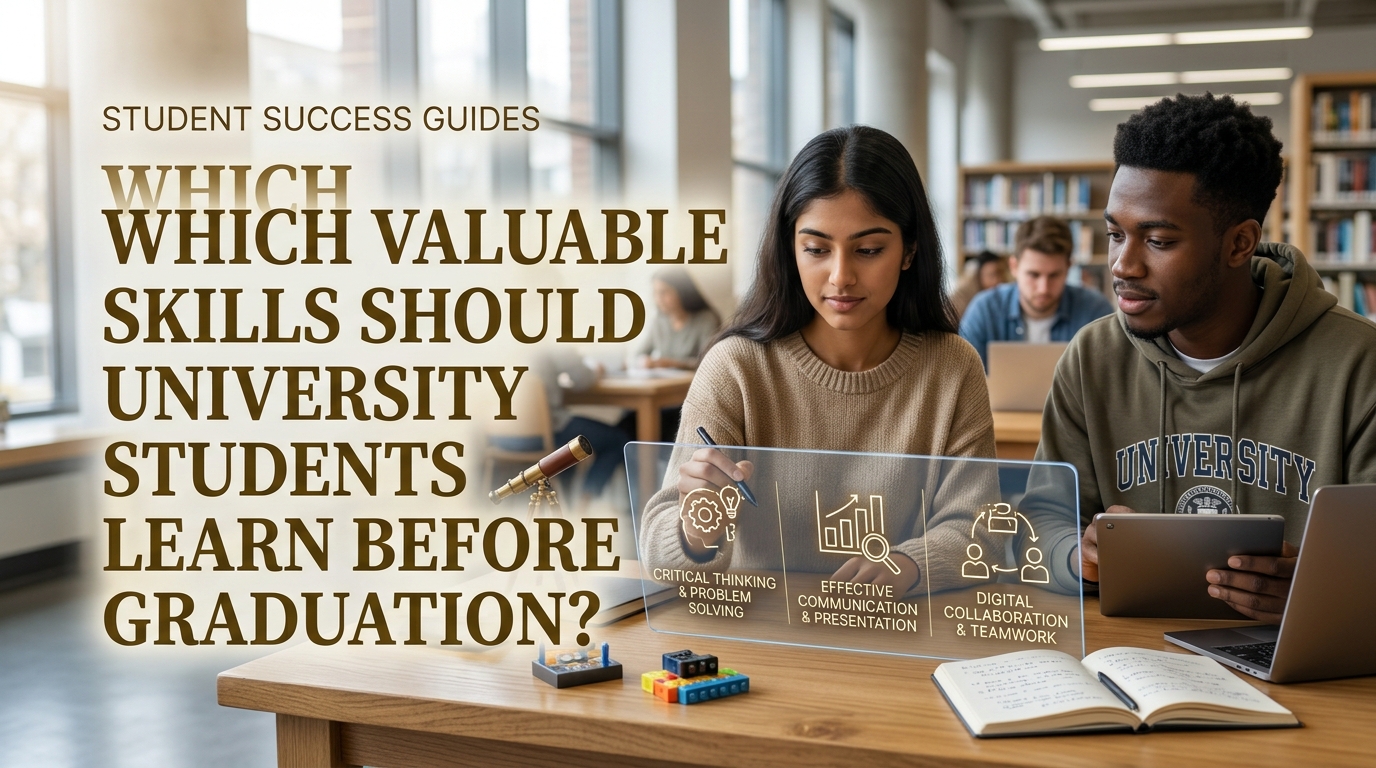
Graduating from university is an important milestone, but entering the professional world brings new challenges that require more than academic knowledge. Companies increasingly look for candidates who can demonstrate practical abilities, communicate effectively, solve problems, and adapt to changing workplace demands. Although a university degree can provide a strong educational foundation, students also need additional competencies to prepare themselves for professional responsibilities.
Developing valuable skills before graduation can help university students become more confident and competitive when applying for jobs. These abilities can improve employability, support career development, and make the transition from academic life to professional life easier. From communication and critical thinking to digital literacy and leadership, learning the right skills can provide long-term benefits for future careers.
WHY SHOULD UNIVERSITY STUDENTS DEVELOP VALUABLE SKILLS BEFORE GRADUATION?
University students should develop valuable skills before graduation because academic qualifications alone may not fully meet employers' expectations. Companies often seek candidates who can apply their knowledge to real workplace situations, work effectively with others, and handle professional challenges. Students who develop practical competencies during university can become better prepared for these expectations.
Learning these skills early also gives students more time to explore their interests and identify suitable career paths. They can participate in internships, student organizations, research projects, and other activities that provide practical experience. These opportunities help students understand workplace expectations while building confidence in their abilities. Therefore, skill development before graduation can create a stronger foundation for entering the job market.
1. COMMUNICATION SKILLS
Communication skills are among the most important abilities university students should develop before graduation. In professional environments, employees need to explain ideas clearly, share information, listen to instructions, and communicate with colleagues or clients. Good communication helps prevent misunderstandings and supports effective teamwork.
Students can improve these abilities through class presentations, group assignments, academic discussions, and organizational activities. Practicing professional writing is also important because many workplace responsibilities involve emails, reports, and formal documents. Learning how to communicate confidently and respectfully can make graduates more prepared for interviews and professional interactions. Strong communication skills are useful in almost every industry and career position.
2. CRITICAL THINKING AND PROBLEM-SOLVING
Employers value individuals who can analyze information, evaluate different perspectives, and make logical decisions. Critical thinking helps students understand complex situations instead of accepting information without examining its accuracy. This ability is particularly important when dealing with tasks that require research, evaluation, and independent judgment.
Meanwhile, problem-solving skills allow individuals to identify challenges and develop practical solutions. University students can strengthen these abilities through research assignments, case studies, group projects, and real-world problem-solving activities. For example, students may analyze a business problem and recommend strategies based on available evidence. Developing these competencies before graduation can help students become more independent and effective professionals.
3. DIGITAL LITERACY AND TECHNOLOGICAL SKILLS
Technology plays an increasingly important role in modern workplaces, making digital literacy essential for university students. Employers expect graduates to understand how to use computers, productivity applications, online communication platforms, and digital information systems. These abilities help employees complete tasks efficiently and adapt to technology-driven working environments.
Students should become familiar with tools that are relevant to their chosen career fields. Examples include Microsoft Excel, Google Workspace, presentation software, project management platforms, and basic data analysis applications. Learning about artificial intelligence tools and cybersecurity awareness can also provide additional advantages. By improving their digital competencies, students can become more prepared for professional responsibilities and technological changes.
4. TIME MANAGEMENT AND ORGANIZATIONAL SKILLS
Time management is important because university students must balance academic responsibilities, personal activities, and professional preparation. Learning how to organize tasks and prioritize deadlines can help students maintain productivity without becoming overwhelmed. These abilities are also highly relevant in workplaces where employees often handle multiple responsibilities.
Students can improve time management by creating realistic schedules, setting daily priorities, and dividing large assignments into smaller tasks. Using digital calendars and task management applications can also help monitor deadlines and progress. Developing organizational habits during university makes it easier to adjust to professional routines after graduation. Effective time management can improve productivity, reliability, and personal discipline.
5. TEAMWORK AND COLLABORATION
Most professional environments require employees to cooperate with people who have different responsibilities, experiences, and perspectives. Therefore, teamwork skills are important for students who want to prepare for their future careers. Being able to share ideas, respect different opinions, and contribute to common objectives can improve both individual and team performance.
University students can develop teamwork through group assignments, student organizations, competitions, and volunteer activities. These experiences teach them how to divide responsibilities, coordinate tasks, and manage disagreements. Students also learn that successful collaboration requires accountability and mutual respect. Understanding how to work effectively with others can make graduates more adaptable to different workplace environments.
6. LEADERSHIP AND DECISION-MAKING SKILLS
Leadership is not limited to individuals who hold managerial positions. It also involves taking initiative, accepting responsibility, supporting others, and helping a group achieve shared objectives. Companies value graduates who demonstrate leadership potential because these abilities can contribute to teamwork and organizational development.
Students can develop leadership skills by becoming involved in campus organizations, leading academic projects, or coordinating volunteer activities. These opportunities provide experience in planning, delegation, communication, and decision-making. Students also learn how to handle challenges and take responsibility for the outcomes of their actions. Building leadership abilities before graduation can prepare individuals for greater professional responsibilities in the future.
7. ADAPTABILITY AND FLEXIBILITY
The modern job market continues to change due to technological innovation, economic developments, and evolving business requirements. Graduates need to be prepared to learn new systems, adjust to different responsibilities, and respond to unexpected situations. Adaptability is the ability to handle these changes while maintaining a productive approach.
Students can improve flexibility by exploring different learning experiences, joining unfamiliar activities, and accepting constructive feedback. Participating in internships or working on projects outside their main academic interests can also expose them to new challenges. Being willing to learn from mistakes helps students develop confidence and resilience. These qualities can make graduates better prepared for changing workplace expectations.
8. FINANCIAL LITERACY
Financial literacy is a valuable life and career skill that university students should understand before entering professional life. It involves knowing how to manage income, expenses, savings, debt, and basic financial decisions. These abilities can help graduates become more responsible when handling their personal finances and planning their future.
Students can develop financial literacy by learning how to create budgets, track spending, understand interest rates, and build emergency savings. They should also understand the importance of distinguishing between essential expenses and unnecessary purchases. Basic knowledge of financial planning can reduce money-related difficulties when graduates begin earning an income. Developing these habits early can support long-term financial stability.
9. EMOTIONAL INTELLIGENCE AND INTERPERSONAL SKILLS
Emotional intelligence refers to the ability to recognize, understand, and manage emotions while responding appropriately to other people's feelings. This skill helps individuals communicate respectfully, maintain professional relationships, and manage stressful situations. It is especially valuable in workplaces where employees need to cooperate with different personalities.
University students can strengthen emotional intelligence by practicing empathy, active listening, self-awareness, and emotional regulation. Participating in group activities can also help them understand different perspectives and manage disagreements constructively. These abilities support better teamwork and conflict resolution. Graduates with strong interpersonal skills may find it easier to build positive relationships in professional environments.
10. PROFESSIONAL WRITING AND PRESENTATION SKILLS
Professional writing and presentation skills are important because employees frequently need to communicate information in a structured and understandable way. Writing abilities are useful for preparing reports, proposals, emails, research documents, and business correspondence. Meanwhile, presentation skills help individuals explain ideas confidently to colleagues, managers, clients, or audiences.
Students can develop these competencies through academic writing, seminar presentations, research projects, and organizational activities. They should practice organizing information logically, using appropriate language, and adjusting communication styles to different audiences. Learning how to present data and explain conclusions clearly can also provide professional advantages. Strong writing and presentation abilities can help graduates demonstrate their knowledge and communicate their ideas effectively.
HOW CAN UNIVERSITY STUDENTS DEVELOP THESE SKILLS BEFORE GRADUATION?
Developing valuable skills requires consistent practice and active participation in learning opportunities. Students should not depend entirely on classroom activities because professional competencies often develop through real experiences. Combining academic learning with practical activities can help them understand how different abilities are used in professional environments.
Here are several practical ways to improve skills before graduation:
- Join Student Organizations: Participate in campus activities to develop leadership, teamwork, and communication abilities.
- Take Online Courses: Learn additional competencies such as digital marketing, data analysis, programming, and project management.
- Apply for Internships: Gain practical experience and understand professional expectations in real workplace environments.
- Participate in Volunteer Activities: Improve interpersonal skills, responsibility, adaptability, and problem-solving abilities.
- Build a Professional Portfolio: Collect project results, certifications, research, and other examples that demonstrate your capabilities.
- Attend Workshops and Seminars: Gain new knowledge and connect with professionals from different industries.
- Seek Feedback: Ask lecturers, mentors, and experienced professionals for suggestions to improve your performance.
Students should also create realistic learning goals and evaluate their progress regularly. It is better to develop several relevant skills consistently than to attempt to master everything at once. Choosing competencies that match career interests can make the learning process more focused and beneficial.
THE IMPORTANCE OF INTERNSHIPS AND PRACTICAL EXPERIENCE
Internships provide university students with opportunities to apply academic knowledge in real professional environments. Through internships, students can understand workplace responsibilities, learn industry procedures, and experience how teams collaborate to achieve business objectives. They can also identify which skills are most important for their desired careers.
Practical experience can strengthen a graduate's resume and provide examples to discuss during job interviews. Students may also develop professional networks and receive feedback from experienced colleagues or supervisors. However, internships are not the only way to gain practical experience. Freelance projects, volunteering, research activities, and independent projects can also help students demonstrate their abilities. Real-world experience makes it easier for graduates to connect theoretical knowledge with professional expectations.
HOW VALUABLE SKILLS HELP STUDENTS COMPETE IN THE JOB MARKET
The job market can be competitive, especially for fresh graduates who have limited professional experience. Employers often compare candidates based on their education, technical abilities, communication skills, practical experience, and potential to contribute to the organization. Students who develop valuable skills before graduation can demonstrate that they are prepared to handle more than academic responsibilities.
These competencies can also help graduates explore different employment opportunities. For example, digital literacy and analytical thinking may support careers in business, technology, marketing, and administration. Meanwhile, communication, adaptability, and teamwork are transferable abilities that can be applied across many industries. Combining academic qualifications, practical experience, and professional skills can help graduates build a stronger profile and improve their employability.
CONCLUSION
University students should develop valuable skills before graduation to prepare themselves for the challenges of the modern workplace. Communication, critical thinking, digital literacy, time management, teamwork, leadership, adaptability, financial literacy, and emotional intelligence are among the abilities that can support long-term career development.
A university degree provides important academic knowledge, but practical competencies help graduates apply that knowledge effectively. Students can improve their abilities through internships, online courses, campus organizations, volunteer activities, and independent projects. By investing in continuous skill development before graduation, students can become more confident, improve their employment opportunities, and build a stronger foundation for a successful professional future.
Recent Posts

Bagaimana Sistem SKS pada Program Kuliah... 22.11.2026/40 View

How Does Technology Make Daily Evaluation... 21.11.2026/71 View

Apa Strategi Menghadapi Kesenjangan antara Kompetensi... 21.11.2026/73 View

Mengapa Inventaris Aset Penting bagi Kelancaran... 21.11.2026/69 View

When Should Musicians Join a Record... 21.11.2026/73 View
