

Who Are Considered Members of an Extended Family?
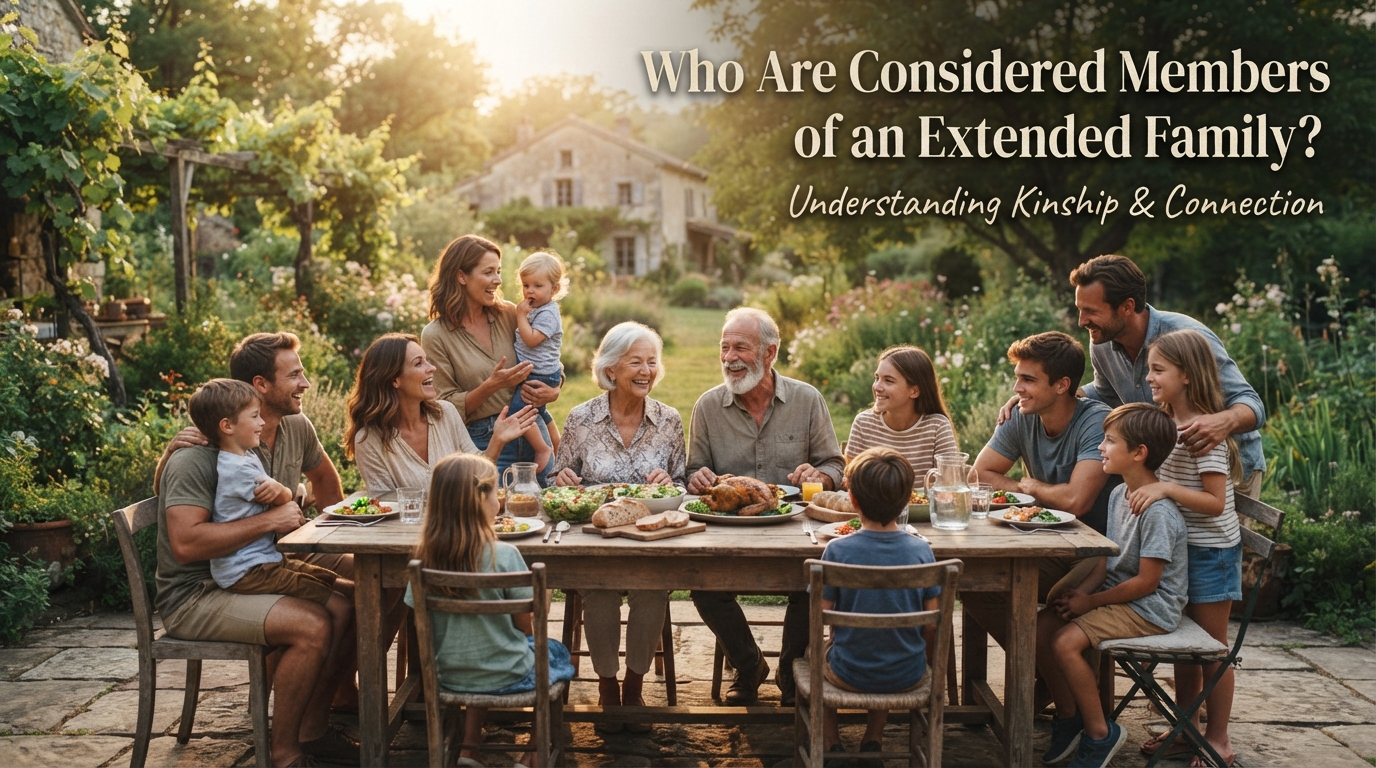
An extended family consists of family members beyond parents and their children. It includes relatives who are connected through blood relationships, marriage, or adoption. These family members may include grandparents, uncles, aunts, cousins, nieces, nephews, and other relatives from different generations. Some extended family members live in the same household, while others live separately but maintain close relationships.
The structure of an extended family can vary depending on cultural traditions, family circumstances, and personal preferences. In some families, relatives regularly participate in daily activities and share household responsibilities. In others, family members maintain their connections through visits, celebrations, and digital communication. Understanding who belongs to an extended family helps people recognize the different relationships and roles that contribute to a wider family network.
GRANDPARENTS
Grandparents are among the most important members of an extended family. They include a person's maternal grandparents, who are the parents of their mother, and paternal grandparents, who are the parents of their father. Grandparents often contribute to family life by sharing experiences, providing advice, and passing down family traditions. Their knowledge can help younger generations understand their family history and cultural background.
In many families, grandparents also provide emotional support and help care for grandchildren when necessary. They may teach children important values such as patience, respect, honesty, and responsibility. Although not all grandparents live with their grandchildren, maintaining regular communication can strengthen their relationships. Their involvement can create meaningful connections between different generations.
UNCLES AND AUNTS
Uncles and aunts are relatives who are generally the brothers and sisters of a person's parents, as well as their parents' siblings' spouses in many family contexts. They can become important figures in children's lives by offering guidance, encouragement, and companionship. Their experiences and perspectives may provide additional learning opportunities beyond what children receive from their parents. They can also participate in family celebrations and important events.
Uncles and aunts may help support their nieces and nephews in different ways, such as providing advice about education, careers, or personal development. Some also assist with childcare or other family responsibilities when needed. The closeness of these relationships depends on communication, distance, and individual family circumstances. Nevertheless, they are commonly recognized as important members of an extended family.
COUSINS
Cousins are the children of a person's aunts and uncles. They are usually considered part of the same extended family and may become close companions while growing up. Cousins often share family gatherings, celebrations, childhood experiences, and personal memories. These interactions can help children develop friendships within their wider family network.
Relationships between cousins can also encourage social development and cooperation. They learn how to share, communicate, respect differences, and participate in group activities. As they become adults, cousins may continue supporting one another through education, careers, and important life events. Although some cousins may be geographically distant, regular communication can help maintain their connections.
NIECES AND NEPHEWS
Nieces and nephews are the children of someone's brothers and sisters. They belong to the extended family because they are connected through the relationships between siblings and their children. Aunts and uncles may develop close relationships with their nieces and nephews by spending time together and participating in their activities. These relationships can provide additional emotional support and positive experiences for children.
In some families, aunts and uncles help their nieces and nephews with education, personal development, and everyday challenges. They may also become trusted adults who offer advice and encouragement. Meanwhile, nieces and nephews can strengthen family connections through visits, conversations, and shared celebrations. These relationships help maintain bonds between different branches of a family.
GREAT-GRANDPARENTS AND GREAT-GRANDCHILDREN
Great-grandparents are the parents of a person's grandparents, while great-grandchildren are the children of their grandchildren. They represent additional generations within an extended family. Although these relatives may have significant age differences, their relationships can create valuable opportunities to share family history and experiences. Great-grandparents may tell stories about earlier generations and explain how family traditions developed.
Great-grandchildren can also bring happiness and a sense of continuity to older family members. Through family gatherings and regular communication, different generations can become familiar with one another. These relationships help younger relatives understand their family background and appreciate the experiences of older generations. However, not every family has living great-grandparents or opportunities for direct interaction.
BROTHERS-IN-LAW AND SISTERS-IN-LAW
Brothers-in-law and sisters-in-law are relatives connected through marriage or certain family relationships. For example, a brother-in-law may be a person's spouse's brother or their sibling's husband. A sister-in-law may be a person's spouse's sister or their sibling's wife. These relationships expand the family network beyond biological relatives.
In many families, in-laws participate in gatherings, celebrations, and important family decisions. They may develop close relationships with other relatives through shared activities and mutual support. Building positive relationships with in-laws requires communication, understanding, and respect for different family backgrounds. Their involvement can contribute to a more connected extended family.
STEPPARENTS AND STEPSIBLINGS
Stepparents and stepsiblings can also become part of an extended family through blended family relationships. A stepparent is the spouse or partner of someone's biological parent, while a stepsibling is the child of a stepparent from another relationship. These family connections may develop when parents remarry or form new households. Depending on the family arrangement, they can become important parts of a person's daily life.
Building relationships in a blended family may require time, patience, and mutual understanding. Children and adults need opportunities to become comfortable with one another without feeling pressured to develop immediate emotional closeness. Respecting individual experiences and establishing healthy family boundaries can help create positive relationships. Over time, these connections may become meaningful parts of the wider family network.
ADOPTIVE AND FOSTER RELATIVES
Adoptive relatives can become full members of a family through legal adoption. Adopted children have a recognized parent-child relationship with their adoptive parents, and they may also develop connections with grandparents, aunts, uncles, and cousins in the adoptive family. These relationships demonstrate that family connections are not limited to biological relationships. Love, responsibility, and long-term commitment are also important foundations of family life.
Foster relatives may also become important figures in a child's life through temporary or longer-term caregiving arrangements. However, foster care and adoption have different legal meanings. Foster children do not automatically become legal members of a foster family in the same way adopted children do. Nevertheless, supportive relationships formed through caregiving can provide children with stability, care, and a sense of belonging.
OTHER RELATIVES IN THE EXTENDED FAMILY
An extended family may also include great-aunts, great-uncles, second cousins, and other distant relatives. Great-aunts and great-uncles are generally the siblings of someone's grandparents, while second cousins usually share a common great-grandparent. These relatives may not participate in everyday family activities, but they can still maintain meaningful family connections. Their involvement often becomes more visible during reunions, weddings, holidays, and other special occasions.
The size and structure of an extended family depend on how relatives define and maintain their relationships. Some families include distant relatives in regular gatherings, while others focus mainly on close family connections. Cultural traditions and personal preferences can influence how broadly a family network is recognized. What matters is maintaining respectful relationships and understanding the connections between family members.
CONCLUSION
Members of an extended family include various relatives connected through blood relationships, marriage, adoption, and blended family arrangements. They may consist of grandparents, uncles, aunts, cousins, nieces, nephews, great-grandparents, in-laws, and other relatives. Each family member can contribute to the wider family network through emotional support, shared experiences, guidance, and cooperation.
Although not every extended family has the same structure, its main characteristic is the involvement of relatives beyond parents and their children. Understanding these relationships helps individuals appreciate their family background and maintain connections across generations. Ultimately, an extended family is built not only through family connections but also through care, respect, communication, and a sense of belonging.
Recent Posts

How Does Technology Make Daily Evaluation... 21.11.2026/57 View

Apa Strategi Menghadapi Kesenjangan antara Kompetensi... 21.11.2026/59 View

Mengapa Inventaris Aset Penting bagi Kelancaran... 21.11.2026/55 View

When Should Musicians Join a Record... 21.11.2026/54 View

Daily Evaluation or Daily Planning Which... 21.11.2026/61 View
