

Who Is Eligible to Apply for Lecturer Certification?
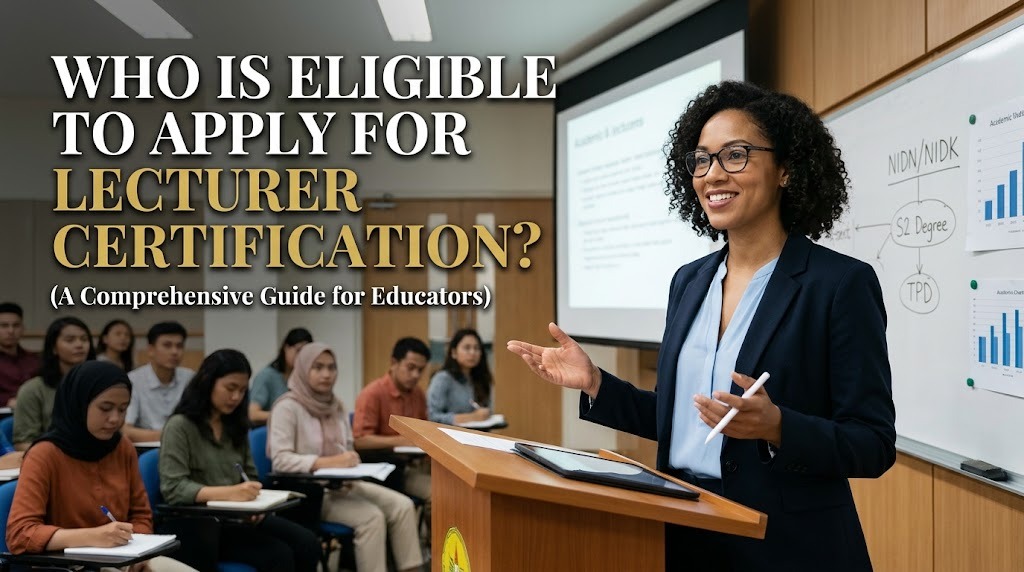
Lecturer certification eligibility refers to the qualifications and conditions that educators must meet before applying for professional recognition in higher education. In Indonesia, certification is intended for lecturers who fulfill the requirements established by the government and the relevant higher education authorities. These requirements help ensure that applicants have the appropriate academic background, professional status, and experience to carry out their responsibilities.
Not every lecturer automatically qualifies for certification. Eligibility may depend on academic qualifications, employment status, lecturer registration, academic position, and other conditions specified in the current regulations. Understanding these criteria can help educators determine whether they are ready to apply and what they need to prepare before entering the certification process.
LECTURERS WITH RECOGNIZED ACADEMIC QUALIFICATIONS
One important requirement for lecturer certification eligibility is having the academic qualifications specified in the applicable regulations. Lecturers generally need to hold a recognized higher education degree that meets the standards for their position and teaching responsibilities. Their educational background should also be relevant to the academic field in which they work.
Academic qualifications demonstrate that lecturers have completed formal education appropriate to their professional duties. Applicants should ensure that their diplomas and academic records are valid and properly documented. If their educational information has not been recorded correctly, they may need to coordinate with their university to make the necessary corrections before applying.
LECTURERS WITH ELIGIBLE EMPLOYMENT STATUS
Employment status is another factor that determines whether someone can apply for professional lecturer certification. The applicable rules may distinguish between lecturers employed by public universities, private universities, or other higher education institutions. Each category may have specific administrative conditions that applicants must fulfill.
Lecturers should check whether their employment relationship and institutional affiliation meet the requirements of the certification program. Their information must also be recorded accurately in the relevant higher education data system. Coordination with the university's human resources or academic administration office can help confirm whether their employment records are complete and consistent.
LECTURERS REGISTERED IN THE HIGHER EDUCATION DATA SYSTEM
Accurate lecturer registration is essential in the certification process. In Indonesia, lecturer information is recorded through the higher education data system, commonly known as PDDikti. The data may include personal identity, institutional affiliation, academic qualifications, employment information, and other academic records.
Lecturers who plan to apply should review their information and confirm that it matches their official documents. Incorrect or incomplete records may create difficulties during administrative verification. If an issue is found, the lecturer should contact the university responsible for managing the data rather than attempting to make changes independently through unofficial channels.
LECTURERS WHO MEET ACADEMIC POSITION AND EXPERIENCE REQUIREMENTS
Some certification programs establish conditions related to academic positions and professional experience. These conditions help determine whether applicants have fulfilled the career and work requirements associated with professional recognition. The specific criteria may differ depending on the regulations and certification pathway applied during a particular period.
Teaching experience can also provide evidence of a lecturer's ability to manage learning activities and fulfill academic responsibilities. Applicants should review the current technical guidelines to understand whether their academic position, length of service, and professional background meet the required standards. They should not assume that the same conditions apply to every lecturer category.
LECTURERS WHO FULFILL DOCUMENTATION AND ASSESSMENT REQUIREMENTS
Meeting the basic eligibility criteria is only the beginning of the lecturer certification process. Applicants must also prepare the documents required by the relevant program. These may include academic certificates, employment information, lecturer registration records, and evidence of teaching, research, or community service activities.
Depending on the applicable procedure, lecturers may also need to complete a professional assessment or prepare a portfolio. The evaluation helps determine whether applicants demonstrate the competencies expected of professional educators. Lecturers should follow the official submission instructions and complete every required stage within the announced schedule.
CONCLUSION
Lecturers who may be eligible for lecturer certification are those who meet the applicable academic qualifications, employment conditions, registration requirements, and professional criteria. Their academic and employment information must be accurate, while supporting documents and assessment requirements must be completed according to the relevant guidelines.
However, eligibility cannot be determined from one general condition alone. The exact requirements may differ according to lecturer categories, certification pathways, and government regulations in effect. Therefore, lecturers should confirm their status through their universities and official higher education authorities before applying for professional certification.
Recent Posts

Bagaimana Sistem SKS pada Program Kuliah... 22.11.2026/45 View

How Does Technology Make Daily Evaluation... 21.11.2026/73 View

Apa Strategi Menghadapi Kesenjangan antara Kompetensi... 21.11.2026/75 View

Mengapa Inventaris Aset Penting bagi Kelancaran... 21.11.2026/71 View

When Should Musicians Join a Record... 21.11.2026/75 View
