

Who Is Eligible to Receive an SKTM?
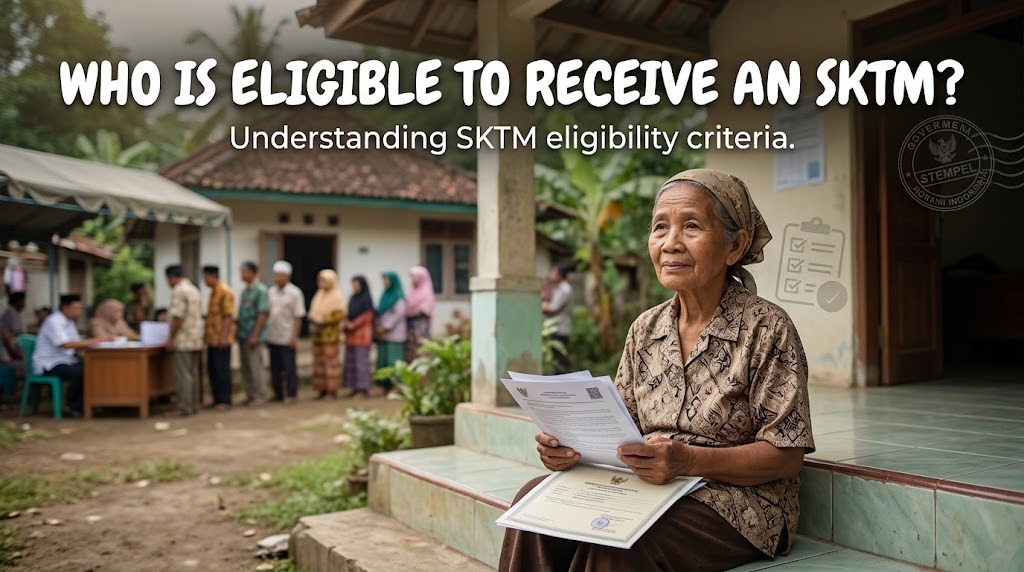
An SKTM (Surat Keterangan Tidak Mampu) is an official document issued by an authorized local government office in Indonesia to help individuals or families demonstrate their financial circumstances. It may be required when applying for certain educational assistance programs, healthcare support, or other public services. However, not everyone can automatically receive this certificate because applicants may need to meet specific administrative and economic criteria.
Understanding who is eligible to receive an SKTM can help applicants determine whether they should submit a request and what information they may need to provide. Eligibility is generally assessed based on household circumstances and local government procedures. The requirements may also differ depending on the region and the assistance program for which the certificate will be used.
LOW-INCOME INDIVIDUALS AND FAMILIES
One group that may be eligible for an SKTM certificate is individuals or families experiencing financial difficulties. These households may have limited income and struggle to meet basic needs, such as food, housing, education, and other essential expenses. The certificate can serve as supporting documentation when they need to demonstrate their economic circumstances to an institution.
However, having a low income does not automatically guarantee approval. Local authorities may consider additional information, including household conditions, available resources, and applicable regional criteria. Applicants should provide accurate details so that their circumstances can be assessed appropriately.
FAMILIES WITH LIMITED AND IRREGULAR INCOME
Families whose income is limited or irregular may also need an SKTM for financial assistance. For example, households that depend on temporary employment, daily wages, or seasonal work may experience changes in their income from month to month. This situation can make it difficult to maintain consistent financial support for household needs.
During the application process, local officials may review information about employment, income sources, and household responsibilities. Applicants may be asked to provide supporting documents or explanations about their financial situation. The assessment helps determine whether the applicant meets the requirements established by the local government.
STUDENTS FROM ECONOMICALLY DISADVANTAGED FAMILIES
Students from low-income households may need an SKTM for educational assistance. The document can support applications for certain scholarships, tuition assistance, or other education-related programs that consider the financial circumstances of students and their families.
An SKTM may help schools, universities, or scholarship administrators understand an applicant's household situation. Nevertheless, each educational program has its own eligibility rules. Some programs may also consider academic performance, student registration status, household records, and other supporting information. Therefore, students should check the official scholarship requirements before preparing their applications.
INDIVIDUALS WHO NEED SUPPORT FOR CERTAIN PUBLIC SERVICES
People experiencing financial difficulties may also request an SKTM for public services when a particular institution requires supporting documentation. Depending on the applicable regulations, the certificate may be used as part of an application for certain healthcare-related assistance, social programs, or administrative services.
However, an SKTM does not automatically provide access to every public service or guarantee that all costs will be covered. The institution responsible for the service determines whether the certificate is accepted and whether additional requirements apply. Applicants should confirm the relevant conditions before submitting the document.
APPLICANTS WHO MEET LOCAL ADMINISTRATIVE REQUIREMENTS
In addition to financial circumstances, applicants generally need to meet the administrative requirements established by the local government. These may include having a valid identity card, being registered as a resident in the relevant area, and providing a family card or other supporting documents. The issuing office may also conduct verification to confirm the information submitted.
Because SKTM eligibility requirements can differ between regions, applicants should contact their local village or urban community office (desa or kelurahan) for accurate information. Providing complete and consistent documents can help the verification process proceed more smoothly. Applicants should also explain the intended purpose of the certificate so that the office can provide guidance on the appropriate procedure.
CONCLUSION
Individuals and families experiencing financial difficulties may be eligible to receive an SKTM, particularly when they need supporting documentation for education, healthcare-related assistance, or other public services. Potential applicants include low-income households, families with irregular earnings, and students from economically disadvantaged backgrounds.
However, eligibility is not determined by income alone. Applicants must also follow local administrative procedures and complete any required verification. Since SKTM eligibility criteria may vary between regions and assistance programs, checking the latest requirements with the authorized local government office is essential before submitting an application.
Recent Posts

Bagaimana Sistem SKS pada Program Kuliah... 22.11.2026/49 View

How Does Technology Make Daily Evaluation... 21.11.2026/76 View

Apa Strategi Menghadapi Kesenjangan antara Kompetensi... 21.11.2026/78 View

Mengapa Inventaris Aset Penting bagi Kelancaran... 21.11.2026/74 View

When Should Musicians Join a Record... 21.11.2026/78 View
