

Who Is Eligible to Receive Government Subsidies?
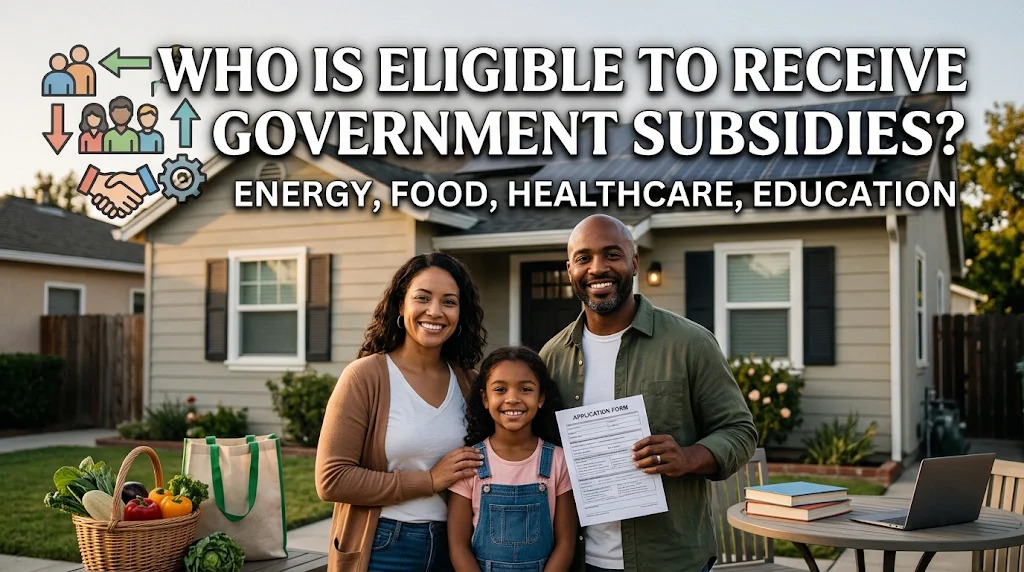
Government subsidies are provided to help individuals, households, farmers, and businesses manage their financial expenses and access essential goods and services. In Indonesia, these programs cover several sectors, including energy, agriculture, housing, and business financing. However, not everyone automatically qualifies for government subsidies because each program has specific eligibility requirements. The government considers factors such as household income, economic conditions, occupation, electricity capacity, business activities, and beneficiary registration. Understanding who is eligible to receive government subsidies can help people identify the support available to them and understand the requirements they must meet.
LOW-INCOME HOUSEHOLDS AND VULNERABLE COMMUNITIES
Low-income households are among the main groups targeted by government subsidy programs. These families may experience financial difficulties when paying for essential needs such as electricity, cooking fuel, food, education, and healthcare. Government subsidies are designed to reduce some of these expenses and help eligible households maintain a reasonable standard of living. Household economic conditions and relevant government records may be considered when determining eligibility.
Vulnerable communities may also qualify for specific forms of government support. These can include disadvantaged families, people with limited financial resources, and individuals who face difficulties accessing essential public services. However, eligibility depends on the requirements of each program and the accuracy of the available beneficiary data. Economic conditions and verified household information are important considerations in determining whether someone qualifies for particular assistance programs.
ELIGIBILITY REQUIREMENTS FOR ENERGY SUBSIDIES
Energy subsidies in Indonesia are provided to eligible consumers to help make essential energy sources more affordable. Electricity subsidies, for example, are available to qualifying household customers under certain tariff categories. Eligible household customers generally include those with 450 VA connections and qualifying 900 VA connections whose consumer information matches the required government data. Therefore, having a particular electricity capacity alone does not always guarantee eligibility.
Subsidized 3-kilogram LPG is another example of government support with specific eligibility requirements. The government uses consumer registration and data collection to improve distribution accuracy. Consumers who are not yet recorded may need to register through an official LPG distribution point by presenting their identification documents. Meanwhile, eligibility for subsidized fuel depends on the type of fuel and the applicable government regulations. Energy subsidy recipients must meet the relevant consumer requirements rather than assuming that every household automatically receives the same benefits.
FARMERS AND AGRICULTURAL PRODUCERS
Farmers are another important group that can qualify for government subsidies in Indonesia. Agricultural subsidies are intended to help eligible farmers reduce production expenses and maintain their farming activities. One example is subsidized fertilizer, which allows qualifying farmers to obtain certain agricultural inputs at more affordable prices. This support can be particularly important for farmers who depend on fertilizers to maintain crop productivity.
However, farmers generally need to meet specific administrative and agricultural requirements to receive subsidized fertilizers. Their farming activities, registered agricultural information, and compliance with the applicable distribution rules may be considered. The government also needs accurate beneficiary records to prevent subsidized products from being distributed to unauthorized recipients. Registered and eligible farmers can benefit from this support while contributing to agricultural production and national food security.
SMALL BUSINESS OWNERS AND ELIGIBLE ENTREPRENEURS
Government-supported business financing programs are available to eligible entrepreneurs, particularly those operating micro and small enterprises. In Indonesia, one example is Kredit Usaha Rakyat (KUR), which provides financing with government-supported interest or margin subsidies. The program aims to improve access to affordable financing for productive businesses that need additional capital to develop their operations.
Prospective microbusiness recipients generally need to operate a productive and financially viable business for at least six months. Applicants must also have a valid National Identification Number (NIK) and an appropriate business identification document, such as a Business Identification Number (NIB) or an authorized business certificate. Additional requirements may apply depending on the financing category and loan amount. Therefore, small business owners who meet the program's financial and administrative criteria may qualify for KUR financing.
ELIGIBILITY FOR HOUSING, EDUCATION, AND HEALTHCARE SUPPORT
Government support is also available in housing, education, and healthcare. In the housing sector, eligible households may access subsidized housing financing through programs such as the Housing Financing Liquidity Facility (FLPP). Applicants generally need to meet income limits, homeownership conditions, and other administrative requirements established by the government. These conditions help ensure that housing support reaches households that need more affordable access to homeownership.
In education, students from eligible families may receive assistance through programs such as the Indonesia Smart Program (PIP) and KIP Kuliah. Healthcare support is also available through the Health Insurance Contribution Assistance Program (PBI JKN), which helps eligible individuals obtain health insurance coverage. These programs have different eligibility and verification procedures, and not all are technically classified as direct subsidies in the government budget. Meeting the specific requirements of each program is essential for receiving the intended benefits.
CONCLUSION
People who may qualify for government subsidies in Indonesia include low-income households, eligible energy consumers, registered farmers, small business owners, and households or individuals meeting specific housing, education, and healthcare assistance requirements. However, eligibility varies depending on the type of program, economic conditions, administrative documents, and government regulations. Applicants should check the official requirements and ensure that their personal or business information is accurate. With appropriate eligibility verification and accurate beneficiary data, government subsidies can reach the people and sectors that need financial support.
Recent Posts

Bagaimana Sistem SKS pada Program Kuliah... 22.11.2026/27 View

How Does Technology Make Daily Evaluation... 21.11.2026/65 View

Apa Strategi Menghadapi Kesenjangan antara Kompetensi... 21.11.2026/65 View

Mengapa Inventaris Aset Penting bagi Kelancaran... 21.11.2026/62 View

When Should Musicians Join a Record... 21.11.2026/63 View
