

Who Is Involved in the State Budget Preparation Process?
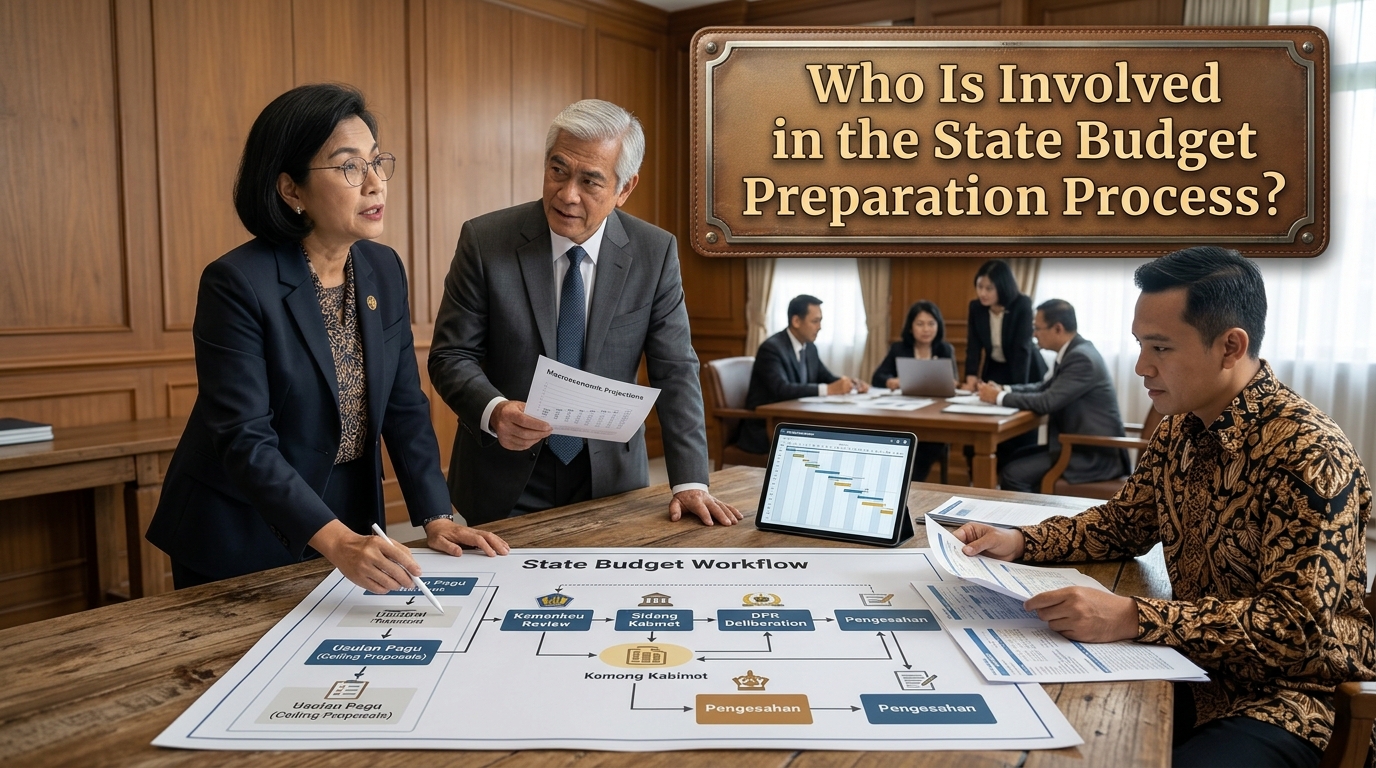
The state budget preparation process involves several government institutions and public representatives who work together to plan how a country's money will be collected and spent. In Indonesia, this process is particularly important because the State Budget, known as the Anggaran Pendapatan dan Belanja Negara (APBN), finances public services, infrastructure, education, healthcare, and national development. Each institution has specific responsibilities, from setting development priorities to reviewing budget proposals and approving spending plans. Cooperation among these institutions helps ensure that public funds are allocated according to national needs. Understanding who is involved in state budget preparation also helps citizens recognize the importance of transparency, accountability, and responsible financial management.
THE PRESIDENT AND THE GOVERNMENT
The President of Indonesia plays a central role in determining the government's development priorities and fiscal direction. These priorities guide the preparation of the annual state budget and help determine which programs require funding. The President leads the executive branch, which prepares the proposed APBN before submitting it to the House of Representatives (DPR). Government policies may focus on improving education, strengthening healthcare, developing infrastructure, or supporting economic growth. Therefore, presidential leadership helps establish the overall direction of national budget planning.
The government also coordinates the work of ministries and other public institutions to ensure that budget proposals support national objectives. Each institution must develop programs that reflect the government's priorities and available financial resources. The President and the government must also consider economic conditions, public needs, and fiscal risks when developing the budget. These considerations help ensure that proposed spending remains realistic and responsible. Through this coordination, the government establishes the foundation for an effective state budget preparation process.
THE MINISTRY OF FINANCE
The Ministry of Finance is one of the most important institutions involved in preparing Indonesia's state budget. It estimates government revenue, develops fiscal policies, establishes spending guidelines, and coordinates the preparation of the proposed APBN. The ministry also considers economic indicators such as inflation, economic growth, and tax revenue when determining the government's financial capacity. These estimates help establish how much money may be available for public programs. Accurate financial planning is essential for maintaining fiscal discipline and preventing unrealistic spending commitments.
The Ministry of Finance also reviews budget proposals submitted by ministries and government institutions. It helps ensure that proposed expenditure follows financial regulations and fits within established budget limits. After the APBN receives legislative approval, the ministry supports budget execution, financial monitoring, and government reporting. It also evaluates revenue collection and spending performance throughout the fiscal year. These responsibilities make the ministry a key institution in maintaining effective public financial management.
THE MINISTRY OF NATIONAL DEVELOPMENT PLANNING
The Ministry of National Development Planning, commonly known as Bappenas, helps connect the state budget with Indonesia's development objectives. It coordinates national development planning and helps formulate the annual Government Work Plan, known as the Rencana Kerja Pemerintah (RKP). This plan identifies priority programs and development targets that government institutions should support. Bappenas works with the Ministry of Finance to align development objectives with available funding. This coordination helps ensure that the APBN supports national development priorities rather than focusing only on annual spending requirements.
Bappenas also helps assess whether proposed government programs contribute to measurable development outcomes. For example, a proposed infrastructure program may be evaluated based on its contribution to transportation access and regional economic development. The institution helps coordinate planning across sectors so that government programs complement one another. This reduces the risk of overlapping projects and inconsistent policy objectives. Through development planning and coordination, Bappenas helps improve the relevance and effectiveness of public spending.
MINISTRIES AND GOVERNMENT INSTITUTIONS
Individual ministries and government institutions are responsible for identifying their operational needs and proposing budgets for their programs. Each institution prepares a work plan and budget proposal based on its responsibilities, development targets, and available funding limits. For example, the Ministry of Education may propose funding for schools, teacher development, and educational facilities. The Ministry of Health may request funds for healthcare services, medical facilities, and public health programs. These proposals help translate national priorities into practical activities that benefit citizens.
After preparing their proposals, ministries and institutions submit them for review and adjustment through the government budget process. Their requests must explain the expected results, estimated costs, and reasons for the proposed spending. Budget authorities may ask institutions to revise their plans if the costs are excessive or the programs do not match national priorities. Once the APBN is approved, each institution is responsible for implementing its authorized programs and managing its allocated funds. This makes budget accountability an essential responsibility of every government institution.
THE HOUSE OF REPRESENTATIVES
The House of Representatives (DPR) plays a crucial role in reviewing and approving Indonesia's proposed state budget. Under Indonesia's constitutional framework, the President submits the draft APBN to the DPR for discussion, and the DPR exercises its budgetary authority in deciding whether to approve the proposal. Lawmakers examine revenue estimates, expenditure allocations, financing plans, and the government's development priorities. They can question government officials and discuss whether the proposed allocations adequately address public needs. This legislative review helps strengthen oversight of public spending.
The DPR conducts budget discussions through its relevant committees and budgetary mechanisms. During these discussions, lawmakers and government representatives examine financial assumptions and proposed programs in greater detail. The process provides an opportunity to evaluate whether public resources are being distributed appropriately across sectors. The DPR's approval is a necessary part of establishing the APBN under the applicable legal framework. Through this responsibility, the DPR helps ensure that state budget decisions receive legislative scrutiny.
THE REGIONAL REPRESENTATIVE COUNCIL
The Regional Representative Council (DPD) represents regional interests at the national level and has a role in the state budget process. Under Indonesia's constitutional and legislative framework, the DPD may provide considerations to the DPR regarding the draft APBN, particularly on matters related to regional taxation, education, and religion. Its input can help highlight differences in regional needs and development conditions. For example, regions with limited transportation access may require greater attention to infrastructure planning. This contribution helps bring regional perspectives into national budget discussions.
Although the DPD does not have the same budget approval authority as the DPR, its considerations can inform legislative deliberations. Regional perspectives are important because Indonesia has diverse geographic, economic, and social conditions. National budget policies may affect provinces and communities in different ways. Considering these differences can help the government develop more inclusive development programs. The DPD therefore contributes to the broader discussion of fair regional development within the state budget process.
THE AUDIT BOARD OF INDONESIA
The Audit Board of Indonesia (BPK) is responsible for examining the management and accountability of state finances. Its role is especially important after budget approval and during or after the implementation of government spending. BPK audits government financial reports and examines whether public funds are managed in accordance with applicable laws and standards. It can identify financial irregularities, weaknesses in internal controls, and areas requiring improvement. These audits strengthen financial transparency and accountability.
BPK's findings can help government institutions improve their financial management practices. Audit results may also be considered by the DPR when exercising oversight of government finances. However, BPK does not prepare or approve the state budget itself; its primary role is independent auditing. This distinction helps maintain a separation between budget preparation, legislative approval, implementation, and financial examination. Through independent audits, BPK supports more responsible state financial management.
THE PUBLIC AND CIVIL SOCIETY
The public and civil society organizations can contribute to state budget preparation by communicating community needs and monitoring government decisions. Citizens may express their priorities through public consultations, representatives, research, and other participation channels available under applicable procedures. Organizations working in education, healthcare, environmental protection, and poverty reduction can provide evidence about the needs of specific communities. Their input can help policymakers understand how budget decisions may affect people's daily lives. Public participation therefore supports more responsive budget planning.
Citizens and civil society groups can also examine publicly available budget information and question whether government spending achieves its intended objectives. Researchers and journalists may analyze budget allocations, implementation reports, and audit findings to identify problems or opportunities for improvement. Public scrutiny can encourage government institutions to explain their decisions and use public funds responsibly. Although citizens do not formally approve the APBN, their participation can influence priorities and strengthen oversight. An informed public is an important part of transparent and accountable government.
CONCLUSION
The state budget preparation process in Indonesia involves several institutions with different but interconnected responsibilities. The President and government establish priorities, the Ministry of Finance manages fiscal planning, and Bappenas aligns budget proposals with national development objectives. Ministries and government institutions prepare program proposals, while the DPR reviews and approves the APBN and the DPD provides regional considerations. BPK examines state financial management, and the public contributes through participation and oversight. Together, these roles help ensure that state budget preparation is more coordinated, transparent, and accountable, supporting national development and the welfare of Indonesian citizens.
Recent Posts

Bagaimana Sistem SKS pada Program Kuliah... 22.11.2026/47 View

How Does Technology Make Daily Evaluation... 21.11.2026/75 View

Apa Strategi Menghadapi Kesenjangan antara Kompetensi... 21.11.2026/76 View

Mengapa Inventaris Aset Penting bagi Kelancaran... 21.11.2026/73 View

When Should Musicians Join a Record... 21.11.2026/77 View
