

Who Is Most Affected by Rising Inflation Rates?
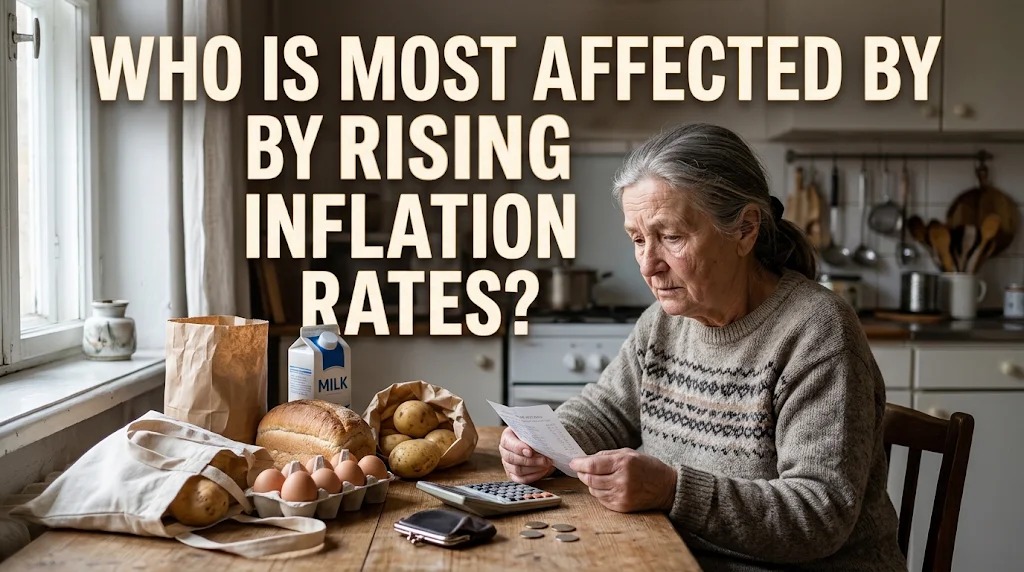
Rising inflation rates affect almost everyone because they increase the cost of goods and services. However, the impact is not equally distributed across society. Some groups experience greater financial pressure because their income is limited, their expenses are difficult to reduce, or their earnings do not increase at the same pace as prices. Understanding who is most affected by inflation helps explain why rising prices can create serious economic challenges for households, workers, and businesses.
LOW-INCOME HOUSEHOLDS
Low-income households are among the groups most affected by rising inflation rates. They usually spend a large portion of their income on essential needs such as food, housing, transportation, electricity, and healthcare. When the prices of these necessities increase, they have less money available for other expenses.
Unlike wealthier households, families with limited incomes often have fewer financial reserves to manage unexpected price increases. They may need to reduce nonessential spending, change their consumption habits, or postpone certain purchases. If their income remains unchanged while living costs continue to rise, maintaining a stable standard of living becomes increasingly difficult.
WORKERS WITH FIXED OR LOW INCOMES
Workers who receive fixed salaries or low wages can experience significant financial pressure during periods of inflation. Their purchasing power decreases when the prices of everyday necessities rise faster than their income. Even if they continue receiving the same salary, the amount of goods and services they can afford becomes smaller.
This situation is particularly challenging for employees whose wages are not regularly adjusted to reflect changes in the cost of living. Workers may find it harder to cover transportation, meals, rent, and other daily expenses. Salary increases that are smaller than the inflation rate may also fail to protect their real income.
RETIRED PEOPLE AND PENSIONERS
Retired people and pensioners can also be strongly affected by rising inflation, especially when they depend on a fixed monthly pension. Their income may not increase automatically when the prices of food, medicine, healthcare services, and other necessities become more expensive.
Older people may face additional financial challenges because healthcare and medication can represent important parts of their budgets. When pension payments do not keep up with inflation, their purchasing power gradually declines. As a result, some retirees may need to adjust their spending, use personal savings, or seek additional financial support from family members.
SMALL BUSINESSES AND ENTREPRENEURS
Small businesses are vulnerable to inflation because increases in operating costs can directly affect their profitability. Higher prices for raw materials, transportation, electricity, packaging, and employee wages can make it more expensive to produce and sell goods. Businesses that have limited financial resources may struggle to absorb these additional expenses.
Raising product prices is one possible response, but it can also create problems. Customers may reduce their purchases or switch to cheaper alternatives when prices increase. Small business owners must therefore balance production costs, selling prices, and customer demand to maintain their operations during inflation.
SAVERS AND PEOPLE WITH LIMITED FINANCIAL RESERVES
People who keep most of their money in cash or savings accounts with low interest rates may also experience the effects of inflation. When prices rise faster than the interest earned on their savings, the real value of money decreases. This means the same amount of money can purchase fewer goods and services over time.
People with limited financial reserves are particularly vulnerable because they have fewer resources to handle unexpected expenses. Inflation can make it harder to save money for education, housing, emergencies, and future financial goals. Without careful financial planning, rising living costs may gradually weaken their financial security.
CONCLUSION
Rising inflation rates affect different groups in different ways, but low-income households, fixed-income workers, retirees, small businesses, and people with limited savings often experience greater financial pressure. Their ability to respond to higher prices depends on income stability, financial resources, and access to economic support. Understanding these effects is important for developing policies that protect vulnerable groups and maintain economic stability.
Recent Posts

Bagaimana Sistem SKS pada Program Kuliah... 22.11.2026/35 View

How Does Technology Make Daily Evaluation... 21.11.2026/69 View

Apa Strategi Menghadapi Kesenjangan antara Kompetensi... 21.11.2026/69 View

Mengapa Inventaris Aset Penting bagi Kelancaran... 21.11.2026/67 View

When Should Musicians Join a Record... 21.11.2026/68 View
