

Who Is Responsible for Managing Dapodik Data at School?
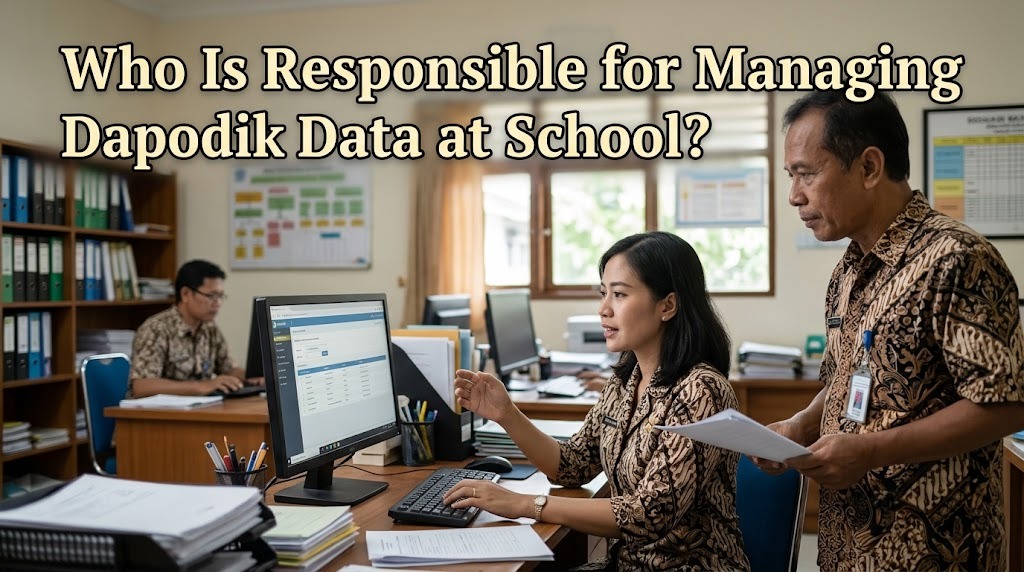
Dapodik, which stands for Data Pokok Pendidikan or Basic Education Data, is an important education data system used in Indonesia. It contains information about schools, students, teachers, education personnel, and school facilities. The data helps the government plan educational programs, allocate resources, and evaluate the condition of educational institutions. However, maintaining accurate information requires cooperation between several parties at the school level. Understanding who is responsible for managing Dapodik data helps schools maintain reliable records and support better educational services.
THE ROLE OF SCHOOL OPERATORS IN MANAGING DAPODIK DATA
School operators play an important role in the technical management of Dapodik data. They are generally appointed by the school to operate the application, enter information, update records, and address technical problems related to data submission. Their responsibilities may include recording student information, updating teacher profiles, maintaining school facility data, and checking the completeness of administrative records. They must ensure that the information entered into the system reflects the actual conditions of the school.
School operators also coordinate with teachers, administrative staff, and school leaders to collect the information needed for data updates. They may identify missing information, correct data entry errors, and communicate technical issues to the appropriate support teams. However, operators should not independently invent or change information without reliable supporting documents. Accurate data entry and regular updates are essential because errors can affect the quality of information used by education authorities. Although operators handle many technical tasks, they do not carry the entire responsibility for the accuracy of school data.
THE RESPONSIBILITIES OF THE SCHOOL PRINCIPAL
The school principal holds an important leadership and supervisory role in Dapodik management. The principal is responsible for ensuring that the data submitted by the school is accurate, complete, and consistent with actual conditions. This responsibility includes reviewing information entered by the operator and ensuring that relevant school personnel provide correct records. The principal must also coordinate the process so that data updates are completed according to applicable instructions and deadlines.
In addition, the principal helps establish accountability within the school. When information is incomplete or inconsistent, the principal should coordinate with the relevant staff to resolve the problem before the data is finalized. The principal may also need to review or approve required declarations and administrative documents associated with data submission. Supervision and verification by the principal help prevent errors from being overlooked during the reporting process. Therefore, Dapodik management should be treated as a school responsibility rather than a task assigned exclusively to the operator.
THE ROLE OF TEACHERS AND EDUCATION PERSONNEL
Teachers and education personnel also contribute to maintaining accurate Dapodik records. Teachers may need to verify information about their personal details, employment status, teaching assignments, and other relevant professional records. Administrative personnel may help provide information about staffing, school administration, facilities, and other institutional requirements. Their cooperation allows school operators to work with reliable information instead of relying on incomplete or outdated records.
When personal or professional information changes, the relevant individuals should report those changes to the appropriate school staff and provide supporting documents when required. For example, a teacher who receives a new assignment should ensure that the school has the correct information and necessary documentation. School operators can then process the relevant updates according to the applicable procedures. Cooperation between teachers, administrative staff, and operators reduces the possibility of inconsistent records and makes data verification more efficient. Each person should check the information relevant to their responsibilities before it is submitted.
THE RESPONSIBILITIES OF THE EDUCATION OFFICE
The local Education Office, known as the Dinas Pendidikan, supports Dapodik management by providing supervision, guidance, and technical assistance to schools under its authority. Its responsibilities may include monitoring data submission, communicating official instructions, helping schools understand new procedures, and coordinating the resolution of data problems. Education offices can also provide training or technical support when operators encounter difficulties with the application. These activities help improve data quality across schools within a district or province.
However, the Education Office does not replace the school's responsibility to provide accurate information about its own conditions. School personnel must ensure that the data they submit reflects the actual situation at their institution. When problems cannot be resolved at the school level, operators and principals can coordinate with the appropriate education office or official support channel. Effective coordination between schools and education authorities helps resolve errors and maintain consistent records. This cooperation is especially important when data updates affect educational planning, staffing, or eligibility for government programs.
WHY ACCURATE AND UPDATED DAPODIK DATA MATTERS
Accurate Dapodik data is important because it supports educational planning and government decision-making. Information about students, teachers, school facilities, and institutional conditions helps authorities understand the needs of individual schools and the wider education system. Depending on the applicable program and eligibility requirements, Dapodik data may also be used in processes related to educational assistance, teacher administration, school development, and resource allocation. Inaccurate records can therefore create administrative difficulties and may affect how school needs are identified.
Schools should establish a regular process for reviewing and updating their information. Operators can maintain checklists, record outstanding corrections, and coordinate with staff responsible for particular data categories. Principals should monitor progress and ensure that unresolved issues receive appropriate attention before relevant deadlines. Schools must also protect personal information and restrict system access to authorized personnel. Accurate, complete, current, and secure data helps improve administrative accountability and supports more appropriate educational decisions.
HOW SCHOOLS CAN IMPROVE DAPODIK DATA MANAGEMENT
Schools can improve Dapodik management by establishing clear responsibilities for everyone involved in the data collection process. The principal can coordinate the overall process, while the operator manages technical entry and updates. Teachers and administrative personnel should verify the information they provide and promptly report any changes that require correction. This division of responsibilities helps prevent confusion and reduces dependence on a single person.
Another useful approach is to conduct regular data reviews instead of waiting until submission deadlines approach. Schools can compare system records with supporting documents, identify missing information, and correct inconsistencies through the appropriate procedures. Operators should follow official application guides and use authorized accounts to protect the integrity of school records. When technical problems arise, schools should seek assistance through the relevant education office or official support channels. A systematic and collaborative data management process makes Dapodik administration more efficient and helps schools maintain reliable educational information over time.
CONCLUSION
Managing Dapodik data at school involves several parties, with the school operator responsible for technical data management and the school principal responsible for supervision and ensuring data accuracy. Teachers and education personnel contribute by providing correct and updated information, while the local Education Office offers guidance, monitoring, and technical support. Each party has a role in maintaining reliable educational records.
Schools should not treat Dapodik as a routine administrative task performed by the operator alone. Instead, they should establish clear responsibilities, verify information regularly, protect personal data, and complete updates according to official procedures. Through effective teamwork and consistent supervision, schools can maintain accurate Dapodik records and support better educational planning and administration in Indonesia.
Recent Posts

Bagaimana Sistem SKS pada Program Kuliah... 22.11.2026/50 View

How Does Technology Make Daily Evaluation... 21.11.2026/79 View

Apa Strategi Menghadapi Kesenjangan antara Kompetensi... 21.11.2026/79 View

Mengapa Inventaris Aset Penting bagi Kelancaran... 21.11.2026/75 View

When Should Musicians Join a Record... 21.11.2026/80 View
