

Who Receives Royalties When Songs Are Played on Digital Platforms?
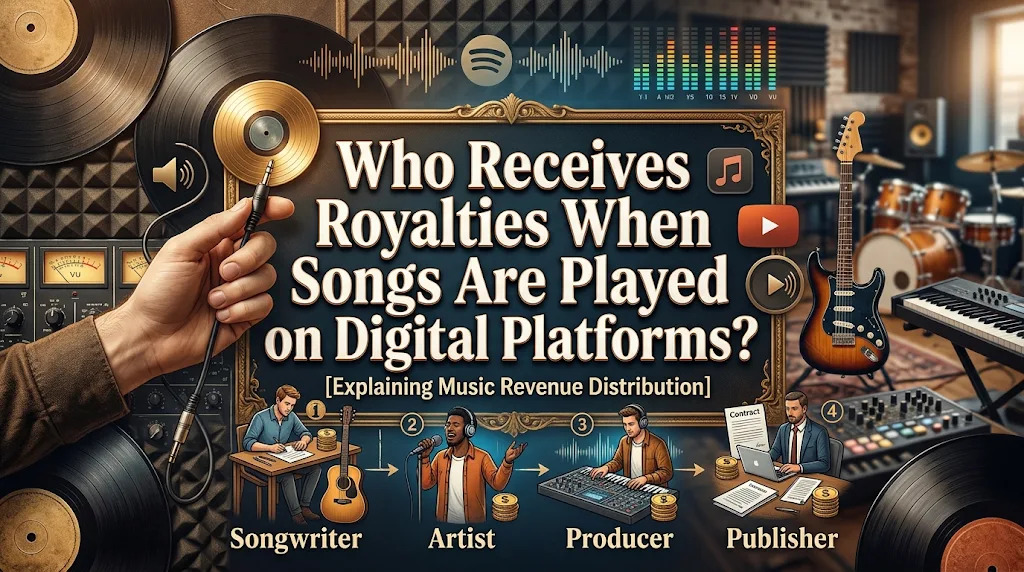
Music royalties are payments made to individuals or companies that own or control the rights to musical works and sound recordings. When songs are played on digital platforms such as Spotify, Apple Music, and YouTube Music, the platforms generate revenue through subscriptions and advertising. A portion of this revenue is distributed to eligible rights holders according to licensing agreements and payment arrangements.
However, royalties do not always go directly to the singer. Several parties may receive payments depending on their contributions, ownership rights, and contractual agreements. Understanding who receives these royalties helps explain how the digital music business operates.
SONGWRITERS AND COMPOSERS
Songwriters and composers are among the main recipients of music royalties because they create the musical composition. Songwriters generally write the lyrics, while composers create the melodies and musical arrangements. When a song is played on digital platforms, the composition may generate royalties for the people who own or control its publishing rights.
These payments are commonly managed through music publishers, collective management organizations, or other authorized rights administrators. The amount received depends on ownership shares, licensing arrangements, and the type of royalty involved. If several people contribute to writing a song, the royalties may be divided according to their agreed ownership percentages. Therefore, proper songwriting credits and copyright registration are important for ensuring that creators receive their rightful payments.
SINGERS AND PERFORMING ARTISTS
Performing artists can receive royalties when their recorded performances are commercially distributed or played through digital services. However, the way these payments are calculated depends on the applicable rights system and contractual arrangements. A singer who owns the recording may receive income differently from a performer whose recording rights are controlled by a record label.
In some cases, singers receive payments through recording contracts, distribution agreements, or neighboring rights systems. Background performers and musicians may also have certain rights depending on local laws and applicable agreements. It is important to understand that being the person who sings a song does not automatically mean receiving all the royalties generated by that recording. Ownership rights and contract terms determine how the income is allocated.
RECORD LABELS AND SOUND RECORDING OWNERS
Record labels often own or control the rights to sound recordings released under their agreements with artists. These recordings are also known as master recordings. When digital platforms use licensed recordings, record labels or other master recording owners may receive payments based on their agreements with the platforms.
After receiving revenue, record labels distribute the artist's share according to the terms of their contracts. Some agreements provide artists with royalty percentages, while others include different payment structures. Independent musicians who own their master recordings may receive a larger portion of recording revenue through their distributors, depending on their service agreements. Therefore, understanding master ownership is essential when discussing digital music royalties.
MUSIC PUBLISHERS AND DISTRIBUTORS
Music publishers help manage the commercial rights of musical compositions. Their responsibilities may include administering copyrights, collecting publishing royalties, licensing songs, and supporting songwriting activities. Publishers generally receive an agreed share or administration fee based on their contracts with songwriters and composers.
Music distributors perform a different role by delivering recordings to digital platforms and managing certain payment processes. They help independent artists and record labels make their music available through streaming services. Distributors may collect recording revenue from platforms and transfer payments to the appropriate rights holders after deducting agreed fees or commissions. Publishers and distributors therefore support the administration and commercial use of music rights.
HOW DIGITAL PLATFORMS DISTRIBUTE ROYALTIES
Digital platforms such as Spotify, Apple Music, and YouTube Music generally operate through licensing agreements with record labels, distributors, publishers, and other rights holders. When users stream songs, the platforms record listening activity and calculate payments according to their individual business models. Revenue may come from paid subscriptions, advertising, and other services.
The money is then distributed through the relevant rights holders and administrative organizations. The final amount received by each party depends on factors such as recording ownership, publishing rights, contractual arrangements, and the platform's payment system. A single song can generate different types of royalties for multiple rights holders. This is why accurate music credits, ownership records, and transparent agreements are important in the digital music industry.
CONCLUSION
Royalties generated when songs are played on digital platforms can be received by songwriters, composers, performing artists, record labels, music publishers, and sound recording owners. Each party receives payments based on the rights they own or administer and the agreements involved. Digital platforms generally distribute revenue through licensed business relationships rather than paying every contributor directly. Understanding music ownership, copyright, and royalty agreements helps artists and creators protect their income and professional interests.
Recent Posts

How Does Technology Make Daily Evaluation... 21.11.2026/55 View

Apa Strategi Menghadapi Kesenjangan antara Kompetensi... 21.11.2026/57 View

Mengapa Inventaris Aset Penting bagi Kelancaran... 21.11.2026/51 View

When Should Musicians Join a Record... 21.11.2026/52 View

Daily Evaluation or Daily Planning Which... 21.11.2026/59 View
