

Who Should Take a Color Blindness Test?
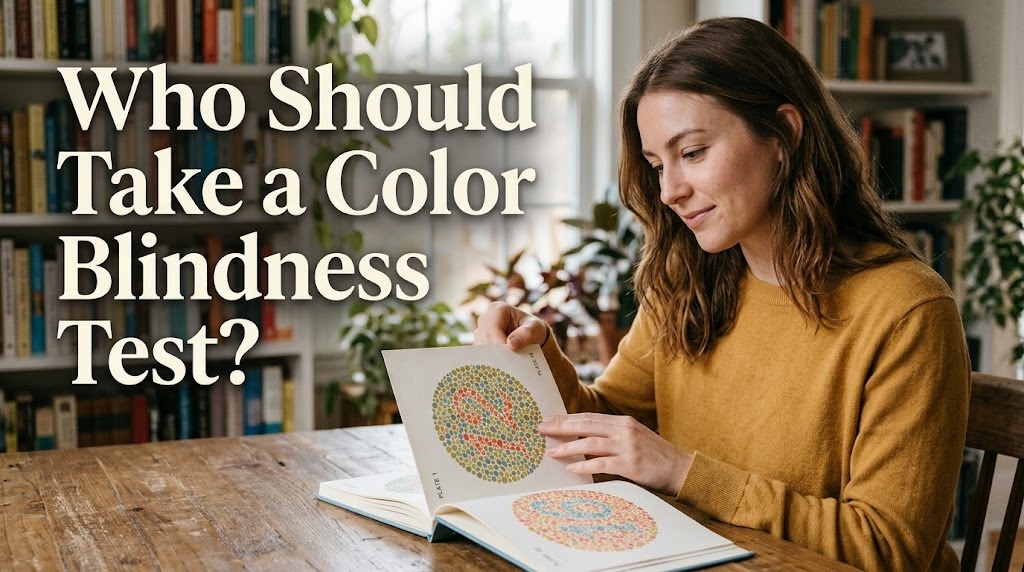
A color blindness test is an eye examination that helps determine whether someone has difficulty recognizing or distinguishing certain colors. Although color blindness is often present from birth, many people do not realize they have this condition until they encounter difficulties with everyday activities. Some individuals may confuse red and green, while others have trouble distinguishing blue and yellow. Taking a color blindness test can help identify these visual differences and provide a better understanding of a person's color vision.
Color vision testing is useful for people of different ages and backgrounds. Children may need testing to identify visual difficulties that affect their learning, while adults may benefit from examinations for occupational or health reasons. People who experience sudden changes in color perception should also consider professional evaluation. Understanding who should take a color blindness test can help individuals recognize the importance of early detection and proper eye care.
CHILDREN WHO HAVE DIFFICULTY RECOGNIZING COLORS
Children are among the most important groups who may benefit from a color blindness test. Color vision deficiencies can affect their ability to recognize colored objects, understand visual instructions, and complete activities involving colors. For example, a child may confuse red and green when coloring pictures or identifying objects in educational materials. These difficulties are sometimes mistaken for a lack of attention or understanding.
Parents and teachers should pay attention when children repeatedly struggle to identify certain colors. A child may also use unusual color combinations when drawing or have difficulty following instructions that depend on color recognition. However, these behaviors do not automatically indicate color blindness because children may still be developing their understanding of colors. An eye examination can help determine whether a color vision deficiency is present and whether additional learning support is necessary.
STUDENTS WHO EXPERIENCE LEARNING DIFFICULTIES RELATED TO COLORS
Students may benefit from color blindness testing when their learning activities involve frequent use of colored materials. School subjects such as science, geography, mathematics, and art often use charts, diagrams, maps, and illustrations to explain information. Students with color vision deficiencies may have difficulty distinguishing information when different colors are used without additional labels or patterns. This can make certain classroom activities more challenging.
A color blindness test can help students understand their visual abilities and identify suitable learning adjustments. Teachers can provide materials that combine colors with text, symbols, or different patterns to make information easier to recognize. Students can also use digital accessibility features that adjust how colors are displayed on screens. Identifying color vision difficulties early can help create a more comfortable and inclusive learning environment.
PEOPLE APPLYING FOR CERTAIN PROFESSIONS
Individuals applying for occupations that require accurate color recognition may need to undergo a color blindness test. Certain professions depend on the ability to distinguish colored signals, indicators, wires, or safety information correctly. Examples include pilots, railway workers, electricians, transportation personnel, and some technical specialists. In these occupations, color recognition can be important for performing tasks accurately and maintaining workplace safety.
The specific requirements depend on the profession, applicable regulations, and the responsibilities involved. Not every occupation requires perfect color vision, and some employers may use additional assessments to determine whether an applicant can perform essential tasks safely. People planning to enter professions with color vision requirements should understand the relevant medical standards before applying. A professional examination can provide reliable information about their color vision abilities.
PEOPLE WHO HAVE A FAMILY HISTORY OF COLOR BLINDNESS
People with family members who experience color blindness may also benefit from taking a color vision test. This is particularly relevant because many forms of color blindness are inherited through genetic factors. Red-green color vision deficiency, for example, is commonly associated with genes located on the X chromosome. As a result, the condition is more frequently found in males, although females can also experience it.
Someone may have inherited color blindness without realizing it because the symptoms are not always obvious. Family members may also have different levels of color vision deficiency, even when they share similar genetic factors. Taking an examination can help determine whether a person has inherited a color vision problem. Early identification can also help parents understand the possibility of color vision deficiencies in their children.
ADULTS WHO HAVE DIFFICULTY DISTINGUISHING COLORS
Adults who frequently confuse certain colors should consider taking a color blindness test. Some people have experienced mild color vision deficiencies since childhood but only become aware of them when performing activities that require more precise color recognition. Common examples include choosing matching clothing, reading color-coded charts, identifying electrical wires, or interpreting colored information on digital screens. These difficulties may indicate a color vision deficiency.
An examination can help determine whether the problem involves red-green, blue-yellow, or another type of color perception. It can also provide information about how strongly the condition affects everyday activities. Adults who have never undergone color vision testing may benefit from an examination if they notice repeated difficulties. Understanding their color vision can help them find practical ways to manage daily tasks more comfortably.
PEOPLE WHO EXPERIENCE SUDDEN CHANGES IN COLOR PERCEPTION
People who suddenly notice changes in how they see colors should seek professional eye care. Unlike inherited color blindness, which is generally present from birth, acquired color vision deficiencies can develop later in life. Certain eye diseases, optic nerve disorders, retinal damage, and medication side effects may contribute to these changes. Colors may appear faded, less vivid, or different between the two eyes.
These symptoms should not be ignored, especially when accompanied by blurred vision, eye pain, or reduced visual clarity. An eye care professional can perform appropriate examinations to identify possible causes and recommend further medical evaluation. Sudden vision changes may sometimes indicate a condition that requires urgent attention. Early assessment is important to protect eye health and prevent potentially serious complications.
CONCLUSION
A color blindness test can be beneficial for children, students, adults, people with a family history of color blindness, and individuals applying for certain professions. It is also important for anyone who experiences difficulty distinguishing colors or notices sudden changes in color perception.
Although not everyone needs frequent color vision testing, recognizing possible symptoms and undergoing an examination when necessary can provide valuable information about visual health. Early identification helps people understand their condition, adjust daily activities, and receive appropriate medical advice. If unusual changes in color perception occur, consulting an eye care professional is the best step toward identifying the underlying cause.
Recent Posts

Bagaimana Sistem SKS pada Program Kuliah... 22.11.2026/40 View

How Does Technology Make Daily Evaluation... 21.11.2026/71 View

Apa Strategi Menghadapi Kesenjangan antara Kompetensi... 21.11.2026/73 View

Mengapa Inventaris Aset Penting bagi Kelancaran... 21.11.2026/69 View

When Should Musicians Join a Record... 21.11.2026/73 View
