

Why Are Astronauts So Exposed to Cosmic Radiation in Space?
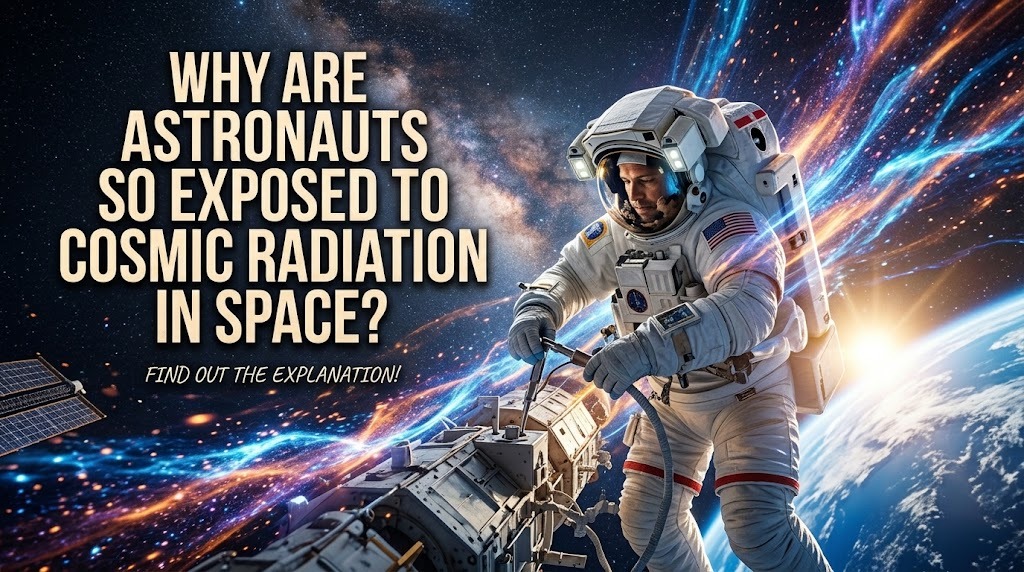
Cosmic radiation consists of high-energy particles and atomic nuclei traveling through space at nearly the speed of light. These particles originate from two primary sources: galactic cosmic rays coming from outside our solar system, and solar particle events emitted by the sun.
On Earth, humans are naturally shielded from these powerful rays by our planet’s heavy atmosphere and magnetic field. However, once astronauts travel beyond these protective barriers, they enter a harsh radiation environment that poses significant challenges for long-term space exploration.
THE ABSENCE OF EARTH'S NATURAL SHIELDING
Earth possesses two natural defenses that block the vast majority of space radiation: a dense atmospheric atmosphere and a protective magnetosphere. The magnetic field deflects charged particles away from the planet, while atmospheric gases absorb and scatter remaining radiation.
In deep space or on celestial bodies like the Moon and Mars, there is little to no atmosphere or magnetic field to deflect incoming particles. Without these massive natural barriers, space vehicles and astronauts absorb significantly higher doses of radiation than people on Earth.
PENETRATING POWER OF GALACTIC COSMIC RAYS
Galactic cosmic rays are particularly dangerous because they possess immense kinetic energy. These rays consist largely of heavy, highly charged atomic nuclei that can easily penetrate traditional spacecraft hulls and protective materials.
When high-energy particles hit the physical walls of a spacecraft, they can split atoms in the hull material, creating secondary radiation known as secondary neutron emissions. Managing both primary rays and these secondary radiation showers represents one of the most complex engineering challenges in modern space flight.
SOLAR PARTICLE EVENTS AND SPACE WEATHER
In addition to constant background galactic cosmic radiation, astronauts face unpredictable spikes in radiation caused by solar flares and coronal mass ejections. During a major solar particle event, the sun shoots massive quantities of high-energy protons into space.
These solar radiation storms can deliver potentially dangerous radiation doses over short timeframes if astronauts are not properly sheltered. Space agencies constantly monitor solar activity to provide advance warning so crews can take refuge in specially shielded safe rooms aboard their spacecraft.
HEALTH IMPACTS ON ASTRONAUT BODIES
Extended exposure to cosmic radiation presents both short-term operational risks and long-term health considerations for space travelers. Ionizing radiation can penetrate biological tissue, causing cellular disruption and DNA strand breaks.
- Short-Term Exposure Risks: Acute radiation sickness during severe solar storms if unshielded.
- Long-Term Exposure Risks: Elevated lifetime risk of developing cancer, cardiovascular complications, or cataracts.
Because of these biological risks, space agencies enforce strict career exposure limits to keep astronaut health well protected during missions.
HOW SPACE AGENCIES PROTECT ASTRONAUTS
To mitigate the risks of cosmic rays, space organizations like NASA and ESA employ advanced shielding technologies and operational protocols.
Spacecraft designers utilize materials rich in hydrogen, such as polyethylene and water barriers, which are exceptionally effective at absorbing lightweight subatomic particles. Additionally, mission planners monitor space weather forecasts and equip astronauts with wearable radiation detectors to continuously measure individual exposure levels.
CONCLUSION
In conclusion, astronauts face high cosmic radiation exposure because space lacks Earth's natural atmospheric and magnetic shielding. The combination of steady galactic cosmic rays and unpredictable solar flares creates a unique biological radiation environment.
Through ongoing research into advanced hydrogenous shielding, storm shelters, and active monitoring, space agencies continue to make long-duration space travel safer. Understanding cosmic radiation physics is essential for paving the way toward safe future missions to the Moon, Mars, and beyond.
Recent Posts

Bagaimana Sistem SKS pada Program Kuliah... 22.11.2026/53 View

How Does Technology Make Daily Evaluation... 21.11.2026/82 View

Apa Strategi Menghadapi Kesenjangan antara Kompetensi... 21.11.2026/81 View

Mengapa Inventaris Aset Penting bagi Kelancaran... 21.11.2026/77 View

When Should Musicians Join a Record... 21.11.2026/82 View
