

Why Are Audiobooks Becoming an Alternative to Reading Books?
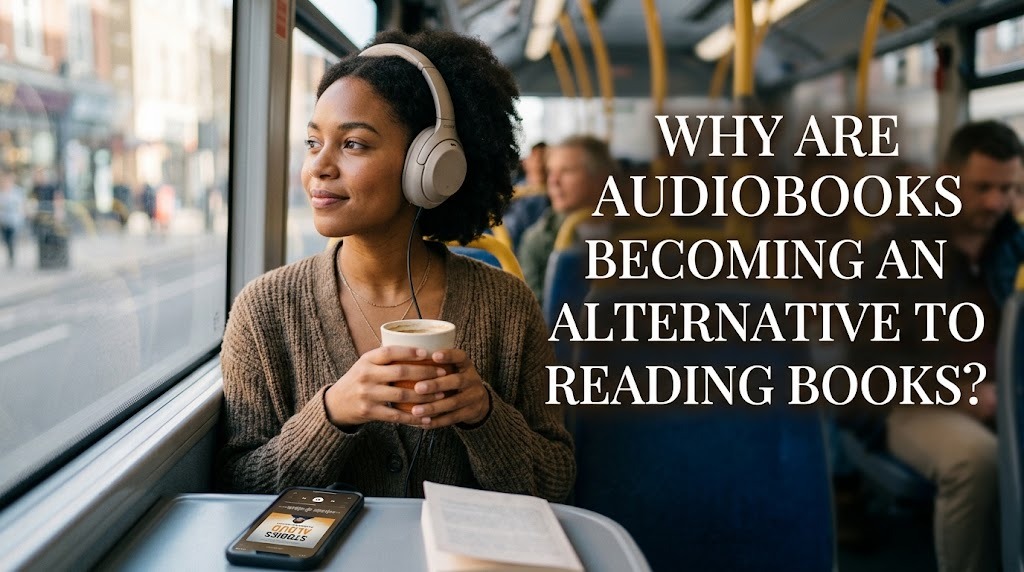
Reading books has traditionally involved printed pages, libraries, and physical book collections. However, digital technology has introduced new ways for people to access written content, including audiobooks. Through audio narration, readers can experience novels, biographies, educational materials, and other types of books without having to focus continuously on printed or digital text.
Audiobooks are becoming an alternative to reading books because they offer flexibility, convenient access, and a different way to experience information. They can be useful for people with busy schedules, individuals who prefer auditory learning, and those who want to explore books while performing suitable daily activities. Although audiobooks do not replace every benefit of traditional reading, they provide another option that can complement existing reading habits.
OFFERING GREATER FLEXIBILITY IN DAILY LIFE
One reason audiobooks are becoming more popular is their flexibility. People who have demanding schedules may find it difficult to set aside time to sit down with a printed book. Audiobooks allow them to listen during suitable periods, such as traveling by public transportation, relaxing at home, or taking a break between activities.
This flexibility can help people include books in their routines without always needing a dedicated reading session. For example, someone may listen to a biography during a commute or enjoy a novel while completing a simple household task. However, listening is not appropriate for every activity, particularly when full attention is necessary. By choosing safe and suitable moments, people can enjoy books in a way that fits their daily responsibilities.
PROVIDING EASY ACCESS THROUGH DIGITAL TECHNOLOGY
The development of smartphones, tablets, and digital platforms has made audiobook access more convenient. Many applications allow users to browse collections, purchase or borrow titles, manage listening progress, and continue books across compatible devices. These features reduce some of the practical difficulties associated with finding and carrying physical books.
Digital platforms also provide access to a wide variety of genres and subjects. Depending on the service, listeners may find fiction, history, self-development, biographies, educational content, and classic literature. Some platforms offer free collections or library borrowing, while others require payment or subscriptions. This range of access options allows people to explore books according to their interests, budgets, and available services.
CREATING A DIFFERENT AND ENGAGING READING EXPERIENCE
Audiobooks present stories and information through spoken narration, creating a listening experience that differs from reading printed text. A skilled narrator can use tone, rhythm, and expression to communicate emotions, distinguish characters, and make storytelling more engaging. These qualities may help some listeners become interested in books they might not otherwise choose to read.
The audio format can also make certain types of content easier to approach. For example, a listener may find a narrated biography more engaging when the speaker delivers the material clearly and naturally. Educational audiobooks can provide explanations in a spoken format that some learners find comfortable. However, the experience depends on the narrator, content, and individual preferences. Some people still prefer printed books because they can scan pages, examine written details, and control their reading pace more directly.
SUPPORTING LEARNING AND LANGUAGE DEVELOPMENT
Audiobooks for learning provide another way to explore information and reinforce knowledge. Listeners can discover new subjects, review educational content, and become familiar with vocabulary and spoken language. For people learning another language, audiobooks can offer exposure to pronunciation, sentence patterns, and natural speech.
Listening can also be combined with other learning methods. For example, students may follow a written text while listening to its narration, pause to take notes, or replay sections that are difficult to understand. These activities can help them connect spoken information with written language and review important concepts. Nevertheless, audiobooks are not equally effective for every learning task. Subjects that require diagrams, mathematical notation, or hands-on practice may need additional materials and activities.
COMPLEMENTING TRADITIONAL READING HABITS
Although audiobooks offer an alternative to reading books, they do not need to replace printed or digital reading completely. Each format has different strengths, and the most suitable choice depends on the purpose. Printed books may be more practical for studying complex passages, highlighting information, or examining illustrations, while audiobooks can provide a convenient way to experience stories and spoken explanations.
Using multiple formats can help people maintain a flexible approach to reading. Someone might listen to a novel for entertainment and read a printed textbook when detailed visual information is necessary. Another person may listen to a book first and later consult its written version to review specific sections. By combining formats according to their needs, readers can enjoy the advantages of audiobooks without losing the benefits of traditional reading.
CONCLUSION
Audiobooks are becoming an alternative to reading books because they offer flexibility, convenient digital access, engaging narration, and opportunities for learning. They allow people to experience books through listening and may help those who have limited time for traditional reading develop a stronger connection with books.
However, audiobooks and printed books serve different purposes and offer distinct experiences. Choosing between them depends on personal preferences, learning goals, accessibility needs, and the type of content involved. By using audiobooks alongside printed and digital books, people can create a more flexible approach to reading, learning, and entertainment.
Recent Posts

Bagaimana Sistem SKS pada Program Kuliah... 22.11.2026/40 View

How Does Technology Make Daily Evaluation... 21.11.2026/72 View

Apa Strategi Menghadapi Kesenjangan antara Kompetensi... 21.11.2026/73 View

Mengapa Inventaris Aset Penting bagi Kelancaran... 21.11.2026/69 View

When Should Musicians Join a Record... 21.11.2026/73 View
