

Why Are Campus Buses Important for Student Mobility?
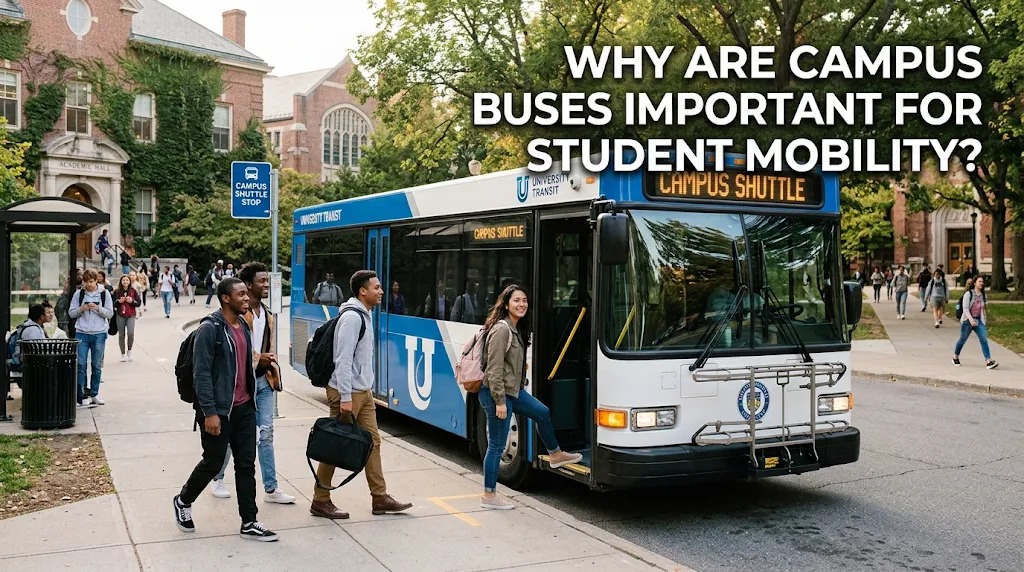
Campus buses play an important role in helping students travel around university areas safely, comfortably, and efficiently. As universities continue to grow, students often need reliable transportation to reach classrooms, libraries, laboratories, dormitories, and other campus facilities. Walking or using private vehicles may not always be practical, especially when buildings are located far apart.
Campus bus services provide a convenient transportation solution that supports students' daily activities. Besides making transportation easier, these services can reduce travel expenses, improve campus accessibility, and create a more organized university environment.
IMPROVING ACCESS TO CAMPUS FACILITIES
One of the main reasons campus buses are important for student mobility is that they make it easier to reach different university facilities. Large campuses often have buildings spread across wide areas, making it difficult for students to walk between locations, especially when they have limited time between classes. Campus buses help students travel from one building to another without spending too much time walking. This service is particularly useful for students who have classes in different locations throughout the day.
Campus buses also help students access facilities such as libraries, sports centers, laboratories, cafeterias, and student activity buildings. With convenient transportation, students can participate in more academic and extracurricular activities. They do not need to depend entirely on private vehicles or other transportation services. As a result, campus transportation can make university facilities more accessible to everyone.
SAVING STUDENTS TIME AND TRANSPORTATION COSTS
Campus buses help students manage their daily schedules more efficiently. Instead of walking long distances or waiting for public transportation, students can use designated bus routes to reach their destinations more quickly. This advantage is especially important for students who have several classes in different buildings. Reliable transportation allows them to spend less time traveling and more time studying, completing assignments, or participating in campus activities.
Another important benefit is reducing transportation expenses. Students who regularly use motorcycles, cars, taxis, or online transportation services may spend a significant amount of money on daily travel. Campus buses can provide a more affordable alternative, particularly when the service is free or offered at a low cost. The money saved can be used for educational materials, meals, and other essential needs. Therefore, campus buses support both time management and students' financial well-being.
SUPPORTING SAFE AND COMFORTABLE STUDENT TRAVEL
Safety is another important reason universities should provide campus bus services. Students who travel across campus using private vehicles may face traffic congestion, parking difficulties, and potential road accidents. Campus buses can reduce the number of individual vehicles moving around university areas. When properly managed, these services create a more organized transportation system and help improve traffic safety.
Comfort is also an important consideration, especially for students who need to travel several times a day. Campus buses provide a place to rest during short journeys between buildings. They can also protect students from direct sunlight and rain while traveling around campus. To maintain service quality, universities should provide well-maintained vehicles, comfortable seating, clear route information, and trained drivers. These facilities help students feel safer and more comfortable during their daily journeys.
REDUCING TRAFFIC CONGESTION AND ENVIRONMENTAL IMPACT
Campus buses can help reduce traffic congestion by encouraging students to use shared transportation instead of individual vehicles. When more students travel together, fewer motorcycles and cars are needed to transport the same number of people. This can reduce traffic density, particularly during busy periods when students arrive for morning classes or leave campus in the afternoon. It can also reduce competition for limited parking spaces.
Shared transportation can also contribute to environmental protection. Fewer individual vehicles on campus may lead to lower fuel consumption and reduced vehicle emissions. Universities can strengthen these environmental benefits by using energy-efficient buses, electric vehicles, or other low-emission transportation options. Through these efforts, campus bus services can support sustainable mobility and encourage students to develop environmentally responsible habits.
CONCLUSION
Campus buses are important for student mobility because they provide convenient, affordable, and reliable transportation around university areas. These services help students access campus facilities, save time and money, and travel more comfortably. They also contribute to better traffic management and environmental sustainability by reducing the need for individual vehicles.
Universities should continue improving campus bus services through appropriate routes, regular schedules, vehicle maintenance, and accessible facilities. With effective management, campus buses can create a more connected, safe, and environmentally friendly learning environment while supporting students' academic activities.
Recent Posts

Bagaimana Sistem SKS pada Program Kuliah... 22.11.2026/31 View

How Does Technology Make Daily Evaluation... 21.11.2026/67 View

Apa Strategi Menghadapi Kesenjangan antara Kompetensi... 21.11.2026/66 View

Mengapa Inventaris Aset Penting bagi Kelancaran... 21.11.2026/64 View

When Should Musicians Join a Record... 21.11.2026/65 View
