

Why Are Data and Observation Important in Learning Research?
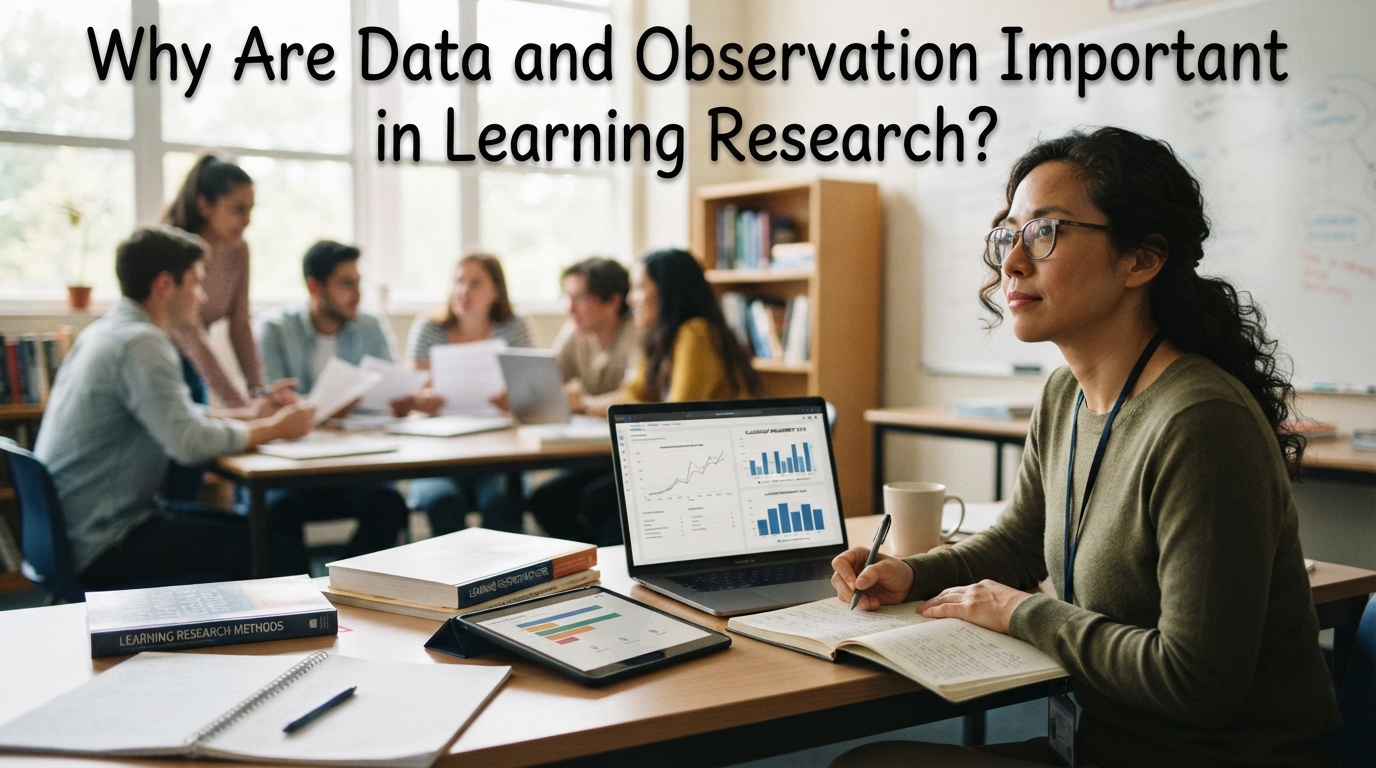
Learning research is an important process for understanding how students develop knowledge, respond to teaching methods, and overcome educational challenges. To produce meaningful research findings, researchers need accurate information about what happens during the learning process. Two essential elements that support this process are data and observation. Data provides information that can be examined and analyzed, while observation allows researchers to understand students' behavior, classroom interactions, and teaching activities directly. By combining these two elements, researchers can gain a clearer understanding of educational conditions and develop appropriate solutions to improve learning quality.
UNDERSTANDING DATA IN LEARNING RESEARCH
Data in learning research refers to information collected to answer research questions and understand educational situations. This information can include students' test scores, attendance records, questionnaire responses, interview results, and classroom activity reports. Data can be divided into two main types: quantitative data, which consists of numerical information, and qualitative data, which describes experiences, opinions, and behaviors. Both types provide different perspectives that help researchers examine the learning process more comprehensively. Collecting relevant and accurate data is essential because research conclusions depend on the quality of the information being analyzed.
UNDERSTANDING OBSERVATION IN THE LEARNING PROCESS
Observation is a research technique used to examine activities, behaviors, and interactions in real learning environments. Researchers may observe how students participate in discussions, respond to teachers' explanations, complete assignments, and interact with classmates. This method provides direct information about classroom situations that may not appear in test results or questionnaires. For example, a student may achieve a good examination score but rarely participate in classroom discussions. Through observation, researchers can identify these differences and understand aspects of learning that require further investigation.
PROVIDING ACCURATE AND RELIABLE RESEARCH FINDINGS
Accurate data and systematic observation help researchers produce more trustworthy research findings. When information is collected carefully, researchers can reduce errors and avoid making conclusions based only on personal opinions. Using several sources of information, such as assessments, interviews, and classroom observations, can also help researchers compare findings from different perspectives. This process is known as data triangulation when different sources, methods, or perspectives are combined to examine the same research issue. Reliable information allows educators to understand educational problems more clearly and make decisions based on evidence.
IDENTIFYING STUDENTS' LEARNING NEEDS AND DIFFICULTIES
Data and observation help teachers and researchers recognize the different needs and challenges experienced by students. Academic assessments can reveal subjects or skills that students find difficult, while classroom observations can show how they respond to teaching activities. Researchers may also use interviews to understand students' feelings, learning preferences, and personal experiences. Combining these sources provides a more complete picture of individual learning conditions. As a result, educators can develop suitable support strategies, provide additional explanations, and create learning activities that match students' needs.
EVALUATING THE EFFECTIVENESS OF TEACHING METHODS
Teachers need information to determine whether their instructional approaches are helping students achieve learning objectives. Data from assignments, examinations, and classroom assessments can show changes in academic performance. Meanwhile, observation can reveal whether students participate actively, understand instructions, and respond positively to classroom activities. Researchers can compare information collected before and after a teaching strategy is introduced to examine possible improvements. This evaluation helps educators identify effective approaches and make adjustments when teaching methods do not produce the expected results.
SUPPORTING EVIDENCE-BASED EDUCATIONAL DECISIONS
Educational decisions should be supported by relevant information rather than assumptions. Data and observation provide evidence that teachers, researchers, and school administrators can use when improving educational programs. For example, attendance records and classroom observations may help schools understand why student participation is decreasing. Research findings can then guide decisions about teaching strategies, learning facilities, or student support programs. Through evidence-based decision-making, educational institutions can develop solutions that respond more accurately to actual classroom conditions.
COMBINING QUANTITATIVE DATA AND QUALITATIVE OBSERVATION
Quantitative data and qualitative observation can complement each other in learning research. Quantitative information helps researchers identify numerical patterns, such as changes in examination scores or attendance rates. Qualitative observations provide deeper explanations about classroom experiences, student behavior, and interactions between teachers and learners. For example, improved examination results may indicate academic progress, while observations can help explain which classroom activities contributed to that improvement. Combining both approaches allows researchers to understand not only what happens during learning but also the possible reasons behind those results.
MAINTAINING DATA QUALITY AND RESEARCH ETHICS
Collecting information is not enough if researchers fail to maintain its quality and protect participants' rights. Research instruments should be appropriate, questions should be clear, and observation procedures should be consistent. Researchers also need to avoid changing or manipulating information to support their expected conclusions. When research involves students, teachers, or other participants, privacy and confidentiality must be protected, and informed consent should be obtained when required. Following research ethics and careful data management helps maintain the credibility of research findings and protects everyone involved in the study.
CONCLUSION
Data and observation are important in learning research because they provide the information needed to understand educational conditions and evaluate the effectiveness of teaching activities. Data helps researchers identify patterns and measure learning outcomes, while observation provides direct insights into student behavior and classroom interactions. Combining both elements produces a more comprehensive understanding of students' needs and educational challenges. With accurate information, systematic research procedures, and responsible data management, educators can make better decisions and improve teaching practices. Ultimately, data and observation form an essential foundation for reliable learning research and continuous educational improvement.
Recent Posts

How Does Technology Make Daily Evaluation... 21.11.2026/62 View

Apa Strategi Menghadapi Kesenjangan antara Kompetensi... 21.11.2026/63 View

Mengapa Inventaris Aset Penting bagi Kelancaran... 21.11.2026/59 View

When Should Musicians Join a Record... 21.11.2026/58 View

Daily Evaluation or Daily Planning Which... 21.11.2026/66 View
