

Why Are Digital Libraries Becoming Essential in Higher Education?
THE ROLE OF DIGITAL LIBRARIES IN HIGHER EDUCATION
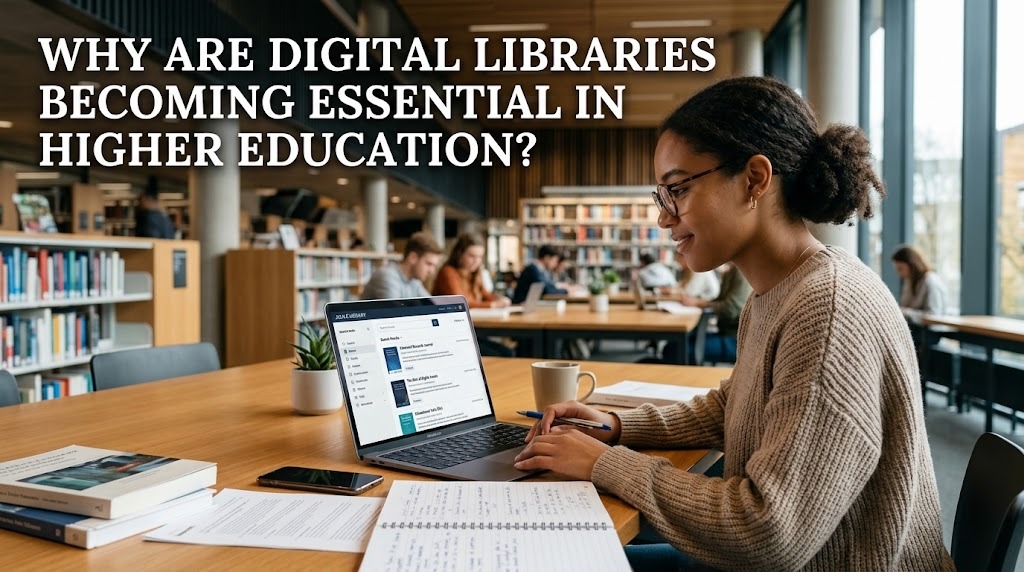
Digital libraries have become an important part of higher education as universities increasingly integrate technology into teaching, learning, and research. A digital library provides electronic access to books, academic journals, research papers, reports, and other educational materials. Students and lecturers can use these resources through computers, tablets, or smartphones. This makes academic information easier to discover and use in different learning environments.
The growing importance of digital libraries is closely connected to the changing needs of universities. Modern students often need information quickly for assignments, presentations, examinations, and research projects. Digital platforms can provide convenient tools for searching and organizing academic resources. As a result, digital libraries can complement traditional library services and support a more technology-based academic environment.
PROVIDING BROADER ACCESS TO ACADEMIC RESOURCES
One major reason digital libraries are becoming essential is their ability to provide broader access to academic resources. Students can search for electronic books, scholarly journals, conference proceedings, research publications, and other references through available digital collections. This can help students find materials that may not be available in their university's physical library. Access to diverse sources can also encourage students to explore subjects from different academic perspectives.
Digital libraries can be particularly useful when students are studying outside the university campus. Depending on institutional access and licensing agreements, users may be able to reach resources remotely. This reduces the need to depend entirely on physical collections. However, access to specific publications can vary according to the university's subscriptions and agreements with content providers.
SUPPORTING FLEXIBLE AND MODERN LEARNING
Higher education is no longer limited to traditional face-to-face classroom activities. Students may participate in online courses, blended learning, distance education, and independent study. Digital libraries support these learning models by providing educational materials through online platforms. Students can therefore incorporate library resources into different study environments.
Flexible access can also help students manage their academic responsibilities more effectively. They may search for references before attending class, review research materials while working on assignments, or read academic publications during independent study sessions. This convenience can support continuous learning beyond the classroom. Digital libraries therefore fit naturally into the increasingly flexible structure of modern higher education.
IMPROVING ACADEMIC RESEARCH AND INFORMATION LITERACY
Research is one of the central activities in higher education, and digital libraries can make the process more efficient. Search tools allow students and researchers to locate relevant academic sources using keywords, subjects, authors, and publication information. Some platforms also provide filtering options that help users narrow large numbers of search results. These functions can save time during the information-gathering stage of research.
At the same time, digital library use can strengthen information literacy. Students need to learn how to evaluate the credibility, relevance, authority, and publication date of information before using it. Digital libraries can provide access to high-quality academic materials, but users still need to assess whether each source is appropriate for their research. Developing these skills helps students become more careful and independent researchers.
SUPPORTING UNIVERSITY STUDENTS AND LECTURERS
Digital libraries benefit not only students but also lecturers and academic researchers. Lecturers can use digital resources when preparing teaching materials, developing course content, and identifying recent academic studies. Students can use the same resources to support assignments, research projects, and academic discussions. This creates a shared information environment that can strengthen teaching and learning.
Universities can also use digital library systems to support more efficient management of academic collections. Digital materials can be categorized and made searchable through centralized platforms. Nevertheless, universities need to consider issues such as licensing, copyright, cybersecurity, system maintenance, and user training. Proper management is necessary to ensure that digital library services remain reliable and useful.
CONCLUSION
Digital libraries are becoming essential in higher education because they provide convenient access to academic resources, flexible learning opportunities, efficient research tools, and information literacy support. They can help students and lecturers access useful materials without depending entirely on physical library collections. Their integration with online and blended learning also makes them highly relevant to modern university education. These advantages make digital libraries an important component of contemporary academic services.
However, digital libraries should complement rather than completely replace traditional library services. Physical collections, librarians, study spaces, and direct academic support continue to have important functions. Universities can achieve better results by combining digital resources with effective library services and user education. When managed properly, digital libraries can help create a more accessible, flexible, and research-oriented higher education environment.
Recent Posts

Bagaimana Sistem SKS pada Program Kuliah... 22.11.2026/35 View

How Does Technology Make Daily Evaluation... 21.11.2026/69 View

Apa Strategi Menghadapi Kesenjangan antara Kompetensi... 21.11.2026/70 View

Mengapa Inventaris Aset Penting bagi Kelancaran... 21.11.2026/67 View

When Should Musicians Join a Record... 21.11.2026/69 View
