

Why Are Digital Libraries Important for Modern Students?
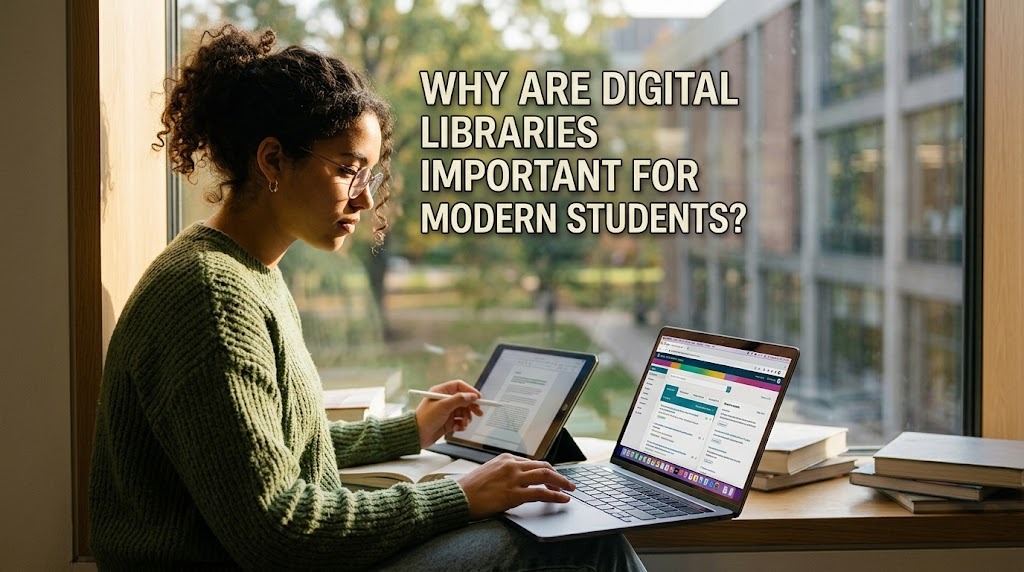
Digital libraries have become an important part of modern education as students increasingly depend on technology for learning. Unlike traditional libraries that require visitors to come to a physical location, digital libraries allow users to access books, journals, research papers, and other educational resources online. This convenience makes learning more flexible and accessible for students with different schedules and learning needs. Digital libraries also help students discover information more efficiently without spending too much time searching through physical collections. As education continues to develop alongside digital technology, understanding the role of digital libraries is becoming increasingly important.
EASY ACCESS TO EDUCATIONAL RESOURCES
One of the main reasons digital libraries are important for modern students is their easy access to educational resources. Students can search for electronic books, academic journals, conference papers, and other learning materials through a computer, tablet, or smartphone. This means they do not always need to visit a physical library to find information for their studies. Digital collections can also contain materials from different subjects, allowing students to explore information according to their academic interests. With an internet connection and appropriate access rights, students can study resources from various locations.
Digital libraries are especially useful when students need references outside normal library operating hours. A student working on an assignment at night, for example, can search for relevant materials without waiting for the library to open. This makes information more available and supports independent learning. However, students should still check whether the resources they access are reliable, relevant, and appropriate for academic use.
SUPPORT FOR FLEXIBLE LEARNING
Modern students often have different schedules because of classes, organizations, internships, part time jobs, and other responsibilities. Digital libraries support this situation by providing learning materials that can be accessed according to individual schedules. Students can read an electronic book during a break, review an academic article at home, or search for references while studying remotely. This flexibility allows learning to continue beyond the traditional classroom and library environment.
Digital libraries also support different learning habits. Some students prefer reading from a laptop, while others may use tablets or mobile devices. When digital resources are available in suitable formats, students can choose the device that best fits their situation. This flexibility can make learning more practical while encouraging students to take greater responsibility for managing their own study activities.
HELP STUDENTS CONDUCT ACADEMIC RESEARCH
Academic research requires students to find information that can support arguments, explanations, and conclusions. Digital libraries make this process easier by providing search tools, digital catalogs, academic databases, and organized collections. Instead of checking physical shelves one by one, students can use keywords to locate potentially relevant resources. Search functions may also allow users to filter information based on subject, author, publication date, or document type.
Using digital libraries effectively can improve the quality of student assignments and research projects. Students can compare information from multiple sources and identify references that are closely related to their topics. However, having many resources does not automatically guarantee good research. Students still need to evaluate the credibility of authors, publishers, publication dates, and supporting evidence before using a source in academic work.
SAVE TIME AND IMPROVE LEARNING EFFICIENCY
Another important advantage of digital libraries is their ability to help students save time during information searches. Digital search systems can identify relevant materials much faster than manual searches in large physical collections. Many platforms also provide features such as keyword searches, filters, electronic indexes, and links to related resources. These functions allow students to focus more of their time on reading, analyzing, and understanding information.
Digital resources can also make study materials easier to organize. Students may be able to bookmark useful sources, save documents when permitted, or record important information for later review. These features can support a more organized study process. Nevertheless, students should avoid collecting large numbers of sources without actually evaluating and understanding them, because effective learning depends on critical reading and thoughtful analysis, not simply on having access to information.
DEVELOP DIGITAL AND INFORMATION LITERACY
Digital libraries do more than provide access to information. They can also help students develop digital literacy and information literacy, which are increasingly important in education and professional life. Students need to learn how to search for information, identify trustworthy sources, distinguish facts from unsupported claims, and use information responsibly. These skills become especially valuable because the internet contains both high quality information and unreliable content.
Learning to use digital library resources can encourage students to become more careful researchers. They may learn how to use academic keywords, compare sources, check publication details, and recognize the difference between scholarly and non scholarly materials. Students can also become more aware of copyright, citation, and responsible information use. These abilities can support academic success while preparing students to handle information effectively in their future careers.
CONCLUSION
Digital libraries are important for modern students because they provide convenient access to educational resources, flexible learning opportunities, research support, and efficient information searching. They allow students to access many types of learning materials without depending entirely on the physical library environment. Digital libraries can also contribute to stronger digital literacy and information literacy when students use them carefully and critically.
However, students should not assume that every digital resource is automatically reliable. They need to evaluate sources, use appropriate references, respect copyright, and understand the information they find. When used responsibly, digital libraries can become valuable learning tools that support independent study, academic research, and lifelong learning.
Recent Posts

Bagaimana Sistem SKS pada Program Kuliah... 22.11.2026/35 View

How Does Technology Make Daily Evaluation... 21.11.2026/69 View

Apa Strategi Menghadapi Kesenjangan antara Kompetensi... 21.11.2026/70 View

Mengapa Inventaris Aset Penting bagi Kelancaran... 21.11.2026/67 View

When Should Musicians Join a Record... 21.11.2026/69 View
